
Projects

Nancy and Andrew Persily Scholarship
By Cornell University
35%
Funded
3
Donors
0
days
left
AAP Class of 1984
By AAP Class of 1984
Gifts to this fund to help aid students with financial need to fully engage in the college, and the incredible opportunities presented at AAP!
Gifts to this fund to help aid students with financial need to fully engage in the college, and the incredible opportunities presented at AAP! Gifts this year: raised by donors. AAP Class of 1984 AAP Class of 1984 In recent years, the Class of 1984 has come together annually to provide resources for the AAP Student Support Fund in the College of Architecture, Art, and Planning. Gifts to this fund ensure students with unmet financial need have resources for materials and supplies, emergencies, transformative educational opportunities, and other challenges and opportunities that may arise during their academic careers. We plan to reach even greater heights with our support of this resource as we approach our 40th Reunion year in 2024. Our ambitious fundraising goal of $30,000 is within reach, and we hope you will consider making a gift of any size toward those aspirations. In addition, it would truly be meaningful to strive for 50% participation in this milestone year for our class. We recognize that many of you have committed to and continue to support the AAP Annual Fund, but we’re asking the class to stretch a little further and contribute to this important safety net. Beyond fundraising, this endeavor enables us to honor the memories of classmates David Bushnell, Nick Ktenas, and Lynette Huang, who positively touched our lives and their communities. We are grateful for this opportunity to remember them and for a meaningful way to contribute to the fund’s growth. To those who have already made a gift, thank you! If you haven’t made a gift yet, we hope you will consider a contribution in support of this worthy effort!
50%
Funded
26
Donors
0
days
left
Sephardi and Mizrahi Council
By Sephardi And Mizrahi Council
Help us bring students and faculty to Israel for one week in order to enrich the greater Cornell community's understanding of Sephardi history and traditions!
Help us bring students and faculty to Israel for one week in order to enrich the greater Cornell community's understanding of Sephardi history and traditions! Sephardi And Mizrahi Council Who We Are The Sephardi & Mizrahi Council is a student group at Cornell aimed at spreading the warmth and wisdom of Sephardi & Mizrahi tradiitons to the larger Cornell community. In doing so we aim to enrich our members' understanding of their own origins and identities, while also creating experiences that spread awareness and appreciation of our minority group. About Our Project This project will bring a group of Cornell students and faculty to Israel for one week in order to enrich the greater Cornell community's understanding of Sephardi history and traditions. The trip will be focused on telling the history of Jews in Israel and students will learn about methods by which Israel society simultaneously upheld and oppressed Jewish communities for thousands of years, up until their mass exodus in the 20th century. Students will be engaging with members of the Jewish community as well as experts in history and geopolitics in the Middle East. Additionally, students will be engaged in service projects aimed at providing food and other essential resources for communities that are experiencing hardships due to the current political situation. This hands-on involvement will offer students a deeper insight into the challenges faced by these communities and a chance to actively contribute to their well-being during their time in Israel.
0%
Funded
2
Donors
0
days
left
Akwe:kon Healing & Honoring Garden
By AIIS Program
The Garden utilizes the Full Circle approach to life, community, indigenous values, and indigenous people's relationship to the environment.
The Garden utilizes the Full Circle approach to life, community, indigenous values, and indigenous people's relationship to the environment. AIIS Program About AIISP The American Indian Indigenous Studies Program (AIISP) provides student support services, cultural programming, activities, events, an academic minor, and support for research, internships, external educational opportunities to indigenous Cornell students that lend themselves to student success. AIISP provides support and advisement to the Native American Indigenous student organizations, provides support to Akwe:kon, the Native-themed residence house for cultural programming, activities, and faculty engagement. Akwekon Garden Project The purpose of the Akwe:kon Garden project is to provide Indigenous students an opportunity to develop, nurture, and maintain a medicinal plants garden that will be dedicated to the Healing and Honoring of Indigenous Students, past and present. The project will include an agricultural medicinal plants educational and Gayogoh:no language component. The project will work with the Learning by Leading student team and faculty members affiliated with the Botanic Gardens, members of the Gayogoh:no Learning Project, as well as the leader of Sustainable Futures, a local non profit for expertise on sustainable gardening practices, Native culture, and Indigenous plants, Native knowledge and agri-practices. Full Circle Approach The Akwekon Healing and Honoring Garden utilizes the Full Circle approach to life, community, indigenous values, and indigenous people's relationship to the environment. This project seeks to serve as a space for honoring Indigenous student's lives, those who attended Cornell, and for those currently in need of healing. The Indigenous students at Cornell will work and nurture the medicinal plants and have an opportunity to learn about agricultural practices, medicinal plants, and expand their knowledge and practice of indigenous values. A QR code at the site of the garden will educate non-Native Cornell students and the public about medicinal plants, Indigenous values and the Full Circle approach. YOUR GIFT will give Native students an opportunity to realize the garden project, and help educate other students and the public about medicinal plants, their uses, and traditional Indigenous values.
64%
Funded
32
Donors
0
days
left

The Alice Project: Cornell Center on the Death Penalty Worldwide
By The Alice Project
Building a movement lies at the heart of our advocacy to promote the rights of women and gender non-conforming people facing a sentence of death
Building a movement lies at the heart of our advocacy to promote the rights of women and gender non-conforming people facing a sentence of death The Alice Project Overview: Advocates, activists, and scholars have long neglected the plight of women facing capital punishment, whose unique needs and challenges are often overlooked in criminal legal systems designed by and for men. The Alice Project is the first global research-based advocacy project fighting gender discrimination in death penalty cases. We combine research, advocacy, training, and legal representation for women and gender minorities facing the death penalty to illuminate the intersectional discrimination they face before, during, and after trial. The Alice Project honors Alice Nungu and the many women and girls who have suffered under legal systems blind to the discrimination and inequality that have marked their lives. Click Here to learn about Alice's story Research: Women and gender non-conforming people represent an understudied population on death row. Only a handful of scholars and activists have devoted attention to the impact of gender on capital sentencing patterns, and none have examined the issue from a global perspective. The empirical comparative data is often fragmentary and superficial. For many countries, we lack even the most basic information, such as the number of women on death row and the offenses for which they were convicted. The Center aims to bridge these gaps in knowledge by conducting qualitative and quantitative research into the causes and consequences of women’s capital sentences. In September 2018, the Center published a global study on the situation of women and girls facing the death penalty around the world, Judged for More than Her Crime. The report analyzes the available evidence from around the world to conclude that women often receive death sentences in proceedings inflected by gender bias and in a legal system that is blind to the gendered realities of women’s lives. Many courts, for instance, fail to consider domestic violence as a factor mitigating against the imposition of capital punishment in cases where women kill their abusers. Courts frequently fail to consider the gendered reality of women’s lives when deciding whether or not to pass a sentence of death, and women who do not conform to gender expectations are likely to receive harsher sentences. Our report also emphasizes that the death penalty exacerbates pre-existing gender inequalities, exposing women to lower quality legal representation (because women generally have fewer resources than men), a dearth of critical family support, and harsh conditions of imprisonment. Our research will lead to further thematic reports exploring the intersection between gender and the death penalty. Erica Sheppard: a teenaged victim of rape, domestic violence, and discrimination. Read more about her case here. Advocacy: Building a movement lies at the heart of our advocacy to promote the rights of women and gender non-conforming people facing a sentence of death. Whether we are fighting an individual injustice or a group harm, our advocacy before national courts and international human rights bodies builds upon the data and analysis we develop in our research, and the precedent-setting strategies we refine with our partners. Our objective is to strengthen legal actions that highlight the systemic nature of gender-based discrimination, so that our work benefits not only our individual clients, but also the development of international law itself. We focus on an intersectional approach to advocacy for women on death row. This means that we rely on partnerships with organizations and experts working in other fields, including gender, mental health, poverty, and migrant rights, to understand how each sphere of disadvantage interacts with criminal law. Merri Utami and her daughter, Devi. Click to read Merri's Alice profile. Training: In order to build a movement for positive change, it is critical that advocates educate stakeholders on issues of gender and intersectional discrimination. Our gender-sensitive training program increases the capacity of criminal defense lawyers to defend women and gender non-conforming people facing the death penalty, to investigate and present gender-specific mitigation, and to combat gender bias in the courts. We have also participated in regional judicial trainings and developed resources for use by lawyers, judges, and policy-makers to offer practical guidance on how to incorporate a gender lens into their work. Our plans for the future: represent vulnerable women around the world facing the death penalty, bringing strategic litigation on the issue of gender-based violence assist death row clients on Tanzania to bring their cases before the African Court on Human and Peoples' rights educate decision makers and the public about the connection between gender-based violence and the crimes for which women are sentenced to death in the United States and around the world.
8%
Funded
22
Donors
0
days
left
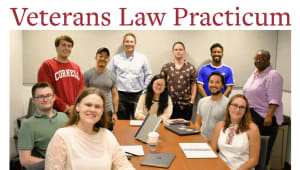
Veterans Law Practicum
By Cornell Law School
Veterans Law Practicum provides members of our local veteran community with information, legal advice, and representation.
Veterans Law Practicum provides members of our local veteran community with information, legal advice, and representation. Cornell Law School "Thank you for your service." It’s something we don’t think twice about saying to the brave men and women who volunteered to serve our country. But are we following through? As members of the inaugural Veterans Law Practicum, our students are committed to doing just that. Launched in fall 2023, the Veterans Law Practicum is an opportunity for Cornell Law students to translate their knowledge from the classroom to the real work by providing members of our local veteran community with information, legal advice, and representation. Right now, our current cohort of 8 students are working one-on-one with veterans to help them access medical care and benefits, secure service-related disability compensation, and file discharge upgrades. “When we talk with clients there is a feeling of relief that there is something that can be done about what’s happened to them. They know that there is someone who will be there to walk them through it and give them direction and options.” – Daniel Imakyure ’24, pictured with Michael Gabel (KIA in 2007, Afghanistan) served in the United States Army before attending Cornell Law School. _______________________________________________________________________________ Help Us Close a Critical Gap In just a few short months, our students have already impacted real lives by providing dedicated support and attention to issues that have impeded their ability to secure and retain jobs, seek proper medical care, and receive the government benefits they’re entitled to. Our students are providing a vital service to our community’s veterans. In fact, many veterans earn above the federal poverty guidelines, but don’t have the resources to afford or hire a private attorney. In Ithaca alone, the need for these services is real! Within the practicum’s first few weeks of operation, more than 30 veterans and their cases were identified, however, we only 5-6 cases could be accepted due to limited resources. _______________________________________________________________________________ Every Gift Counts Your gift today would direct funds to areas that would: Grow our program and create access to more students Enable students and faculty to increase their caseload Expand our services to include direct legal representation, appellate advocacy, and impact litigation and systemic advocacy Supplement travel outside of Ithaca to serve even more veterans Every gift impacts a life – both of our student learners, and the veterans we owe so much to. _______________________________________________________________________________
40%
Funded
31
Donors
0
days
left
Cornell Prison Reform and Education Project
By PREP
We also aim to educate the general Cornell population about the criminal justice systems and ways the can get involved!
We also aim to educate the general Cornell population about the criminal justice systems and ways the can get involved! PREP Who We Are PREP strives to achieve prison reform for all people. We work with the Ithaca community to help incarcerated people in our community. We also aim to educate the general Cornell population about the criminal justice systems and ways the can get involved. PREP is organized around two pillars: education and advocacy. We strive to raise awareness on campus about issues relating to mass incarceration and criminal justice through biweekly discussions, public speaking events, and educational campaigns. We also lead and support direct actions around prison reform efforts in the immediate community and in the New York State legislature. To learn more about our projects this semester, click here. Our Mission To humanize the American experience of incarceration and reentry. To put an end to the Prison Industrial Complex (PIC) that has dramatically increased the number of U.S. prisoners, broken families, and shattered communities; and which has limited historically marginalized peoples’ access to adequate housing and education, cost taxpayers millions, and simultaneously failed to keep us safe. To do this, we seek to stop the expansion of correctional facilities by forcing empirical discussion about America’s broken system and advocating for the improvement of conditions in already existing prisons. To humanize the American experience of incarceration and reentry. To put an end to the Prison Industrial Complex (PIC) that has dramatically increased the number of U.S. prisoners, broken families, and shattered communities; and which has limited historically marginalized peoples’ access to adequate housing and education, cost taxpayers millions, and simultaneously failed to keep us safe. To do this, we seek to stop the expansion of correctional facilities by forcing empirical discussion about America’s broken system and advocating for the improvement of conditions in already existing prisons. Day at Cornell In Spring 2023, PREP hosted its first ever Day at Cornell. Day at Cornell is a multi-day event in which our organization hosts justice-impacted youth to explore what Cornell has to offer. For this event, we partner with S.T.R.O.N.G Youth, an organization focused on empowering justice-impacted youth, and providing them with creative and educational opportunities. Day at Cornell aims to provide youth with the opportunity to experience what it means to pursue higher-education and career-planning. As a part of this initiative, we have a number of guest lecturers, seminars, alumni Q&As, Cornell student shadowing, tours, professional exploration, and fun campus activities. Day at Cornell Spring 2023 was an enormous success, and we hope to be able to host a greater number of STRONG youth this year.
2%
Funded
4
Donors
0
days
left
Undergraduate Student Veterans Program
By Student Veterans Program
Help provide support and community to military-connected students seeking to pursue their higher education goals at Cornell University!
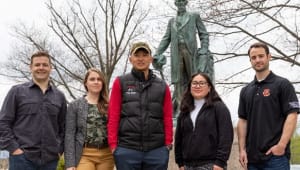
Help provide support and community to military-connected students seeking to pursue their higher education goals at Cornell University! Student Veterans Program About Us The Undergraduate Student Veterans Program Director, in collaboration with the Veteran and Military-Connected Student Ambassadors, provides support and community to military-connected students seeking to pursue their higher education goals at Cornell University. Although many veterans make the decision to attend college after serving, students may perceive an Ivy League education to be “out of reach”. With your assistance, we can continue to build support, services, and programming to serve those who have served our country by perpetuating Cornell’s mission of “...any person... any study.” student veterans at Cornell Our Cause Student veterans bring unique needs to the table that most traditional-aged students do not. Several have families (spouses and children) and most bring with them financial responsibilities outside of the academic. The various GI Bills provide modest financial support; however, it often falls short of providing for basic needs and costs of living. Additionally, we strive to provide funding which allows student veterans to fully embrace their academic journey though semester and summer experiences, professional development, orientation events, resource fairs specifically hosting veteran-supportive organizations, and recognition at commencement events. With your support, we can assist student veterans with these and other costs, i.e., exorbitant childcare expenses, emergency funds for daily essentials, provide opportunities to present at and attend professional conferences, purchase professional attire, and support attendance at networking events. Spring 2023 Student Veteran Graduation Dinner Celebration 2022 Military Appreciation Veteran Gravesite Cleanup
118%
Funded
34
Donors
0
days
left
McGraw Hall Renovation
By Cornell Arts & Sciences
Gifts of any size will bring us closer to our goal and keep us on track to break ground in 2024-2025!
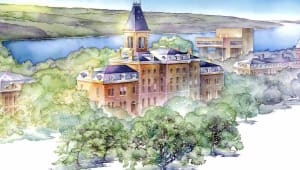
Gifts of any size will bring us closer to our goal and keep us on track to break ground in 2024-2025! Cornell Arts & Sciences The Project We are committed to bringing the iconic McGraw Hall into the 21st century. McGraw Hall is the current home to both history and anthropology while also serving as the previous home to our government departments. Whichever of these programs you were involved with – or possibly none of these – chances are McGraw Hall left an impact on you. Perhaps you are among the countless students who were inspired by esteemed faculty members such as Walter LaFeber, Mary Beth Norton, Isaac Kramnick – and many others - within the walls of McGraw Hall. Ensuring the structural integrity of the building is long overdue. Beyond the structure itself we are transforming the space into a modern facility for students and faculty with a brand new interior complete with active learning classrooms and state of the art technology. Reinvigorating McGraw Hall is key to the College’s continuing academic excellence and broader impact on generations to come. Based on the urgency of the need, we are approaching the McGraw renovation as a community-wide, all-hands-on-deck effort. We are in the final stretch of our $45M campaign having raised more than $43.3M– and we need your help to close the gap! Gifts of any size will bring us closer to our goal and keep us on track to break ground in 2024/5. If you would like to learn about available naming opportunities, please contact the College of Arts & Sciences Development office at as_alumni@cornell.edu. The History One of the first buildings constructed as part of Cornell’s campus, McGraw Hall first opened in 1872. Now, more than 150 years later, it remains an iconic centerpiece of Cornell’s Arts Quad. The building has survived significant world events, seismic cultural shifts, and the marked impact of technology. The time is now to restore McGraw Hall, not only because it symbolizes Cornell’s liberal arts core, but to ensure that today’s students and faculty may continue to push the boundaries of knowledge and to advance critical thinking for the benefit of humanity.
80%
Funded
48
Donors
0
days
left
Cornell Mock Trial
By Cornell Mock Trail Association
The Mock Trial Association is a nationally competitive, entirely student-run trial-simulation program that sends dozens of students to national competitions!
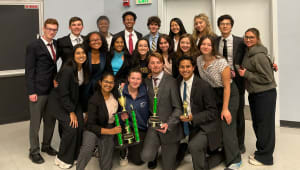
The Mock Trial Association is a nationally competitive, entirely student-run trial-simulation program that sends dozens of students to national competitions! Cornell Mock Trail Association Who We Are The Cornell University Mock Trial Association is a nationally competitive, entirely student-run trial-simulation program that sends multiple teams and dozens of Cornell students to competitions across the US every single year. In the spring semester, our teams consistently succeed at the regional and semifinal levels to compete at the National Final Tournament. In recent years, representing Cornell university on a national stage, our teams have earned numerous individual awards, repeatedly won first place at the semifinal level, and have placed as well as third in the nation at the national competition. This spring, we are once again aiming high and will continue to uphold Cornell Mock Trial’s legacy of competitive excellence at all levels of competition. Skills We Build As an organization, we are firm believers of the idea that competitive success begins and ends outside of the courtroom. Because of that, we are committed to training our members to advocate for themselves and those around them for the years they spend at Cornell and for the rest of their lives. Being a part of Mock Trial not only builds skills in writing, public speaking, and creative thinking but also invites you to be a part of a lifelong community of highly motivated and tightly linked individuals. While many of our members go on to careers in various public and private legal sectors, we have alumni across the US and around the world working in physics research, education, clinical psychology, and many other fields. For us, Cornell Mock Trial is more than just a pre-law organization or a competitive program: it is a family. We Need You This November, we need your help. As a result of recent changes in the way student organizations are funded at Cornell, our budget has been reduced to less than half the normal amount. While we have continued to work as hard as usual to prepare for competition, we have already had to slash the number of tournaments we competed at in the Fall and are currently unable to afford the plane tickets, hotels, and other costs associated with competing at the semifinal and national level in the coming months. We have already had to use almost all of our available resources outside of Cornell’s funding and will likely be in an even more difficult financial position for years to come. Your support could be the deciding factor in whether or not we are able to keep the legacy of Cornell Mock Trial alive.
45%
Funded
27
Donors
0
days
left
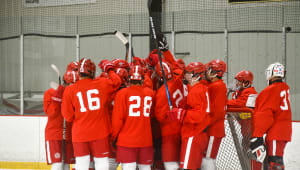
Cornell Club Ice Hockey
By Cornell Club Ice Hockey
Help us put one in the back of the net and make a gift today!
Help us put one in the back of the net and make a gift today! Cornell Club Ice Hockey ABOUT THE TEAM Our team is dedicated to developing hockey players at Cornell, providing them with the skills and experience necessary to elevate them to the Cornell Club Ice hockey DI team in the future. We believe in fostering a strong sense of teamwork, discipline, and sportsmanship among our players. The team competes at the Division II level of AAU College Hockey. In our inaugural season, our goal is to make it to the AAU National Championships. Currently, the team has 29 players, practices two times a week, and plays in one to two games on average each week. WHY DONATE? Your generous support is the driving force behind our team's success. Every contribution plays a crucial role in covering our essential expenses, ensuring that our players can focus on their passion for hockey and reaching their full potential. Here's how your donation directly impacts our team: Weekly practice ice time Game costs: ice, refs, and trainer Team Travel: gas, bus, hotel, and tournament fees Team Gear: game jerseys, hockey bags, shells, socks, team apparel Thank you for supporting Cornell Club Ice Hockey and helping us achieve our goals!
44%
Funded
39
Donors
0
days
left

New Technologies Can Help Prevent Cultural Erasure
By Caucasus Heritage Watch
CHW is a Cornell-based research initiative that uses high-resolution satellite imagery to monitor cultural heritage in conflict zones.
CHW is a Cornell-based research initiative that uses high-resolution satellite imagery to monitor cultural heritage in conflict zones. Caucasus Heritage Watch Who We Are Caucasus Heritage Watch is an innovative research initiative centered at Cornell whose mission is to document and monitor abuses of cultural heritage in conflict zones using high-resolution satellite imagery. Focused on the conflict between Armenia and Azerbaijan, we harness the latest technologies of earth observation to reveal visual evidence of cultural erasure and other abuses of heritage, past and present. Our purpose is to encourage accountability, inform public policy, support truth and reconciliation, and remove cultural heritage from the front lines of regional conflicts. The Problem War, ethnic cleansing, and genocide tear human societies apart, creating unfathomable losses and enduring scars. Cultural erasure – the systematic eradication of the monuments, sacred places, and memorials of a people – often precedes or follows mass atrocities, forestalling the rebuilding of communities, erasing evidence of human rights crimes, and preventing historical trauma from ever finding resolution. When cultural heritage is targeted, not only are human connections to the past disrupted, but surviving communities are deprived of the fundamental human right to cultural life. Nowhere is the link between cultural heritage and human rights more evident today than in the 30 year conflict between Armenia and Azerbaijan, an enduring tragedy that has cost thousands of lives and caused numerous waves of forced displacement. In a groundbreaking forensic study, CHW used satellite imagery to show that Azerbaijan carried out a state-sponsored program of cultural erasure in the Nakhchivan region beginning in 1997. Virtually all traces of medieval and modern Armenian heritage were wiped out. Extraordinary monasteries, historic churches, and cemeteries of exquisite carved stone were bulldozed out of existence, an unparalleled loss for Armenians and for all of humanity. The risks to cultural heritage in the Caucasus have only intensified in recent years. Wars waged by Azerbaijan in 2020 and 2023 resulted in the forced displacement of some 140,000 people and have exposed hundreds of Armenian monasteries, churches, cemeteries and other historic sites to the threat of damage or destruction. Since 2020, CHW has already documented numerous abuses of Armenian cultural heritage in the Karabakh region. Today, over 500 Armenian medieval and early modern sites in Karabakh are under threat, endangered by Azerbaijan's policy of zero tolerance for Armenian cultural remains. Azerbaijan has not permitted UNESCO to visit the region. And independent researchers also cannot conduct assessments on the ground. What can be done to save these irreplaceable monuments that testify to centuries of Armenian cultural life in Karabakh? Our Solution CHW uses high-resolution satellite imagery to systematically monitor the condition of Armenian cultural heritage in Azerbaijan, producing verifiable evidence that can be used in a court of law, or by publics seeking truth and reconciliation. Historically, assessments of damage and destruction to cultural heritage in zones of conflict and atrocities are carried out long after the fact. But thanks to the latest satellite imaging technology, it is now possible to monitor heritage at-risk in something close to real-time. Our innovative approach allows us to sound the alarm before it’s too late and work to deter bad actors by making our findings publicly visible and accessible. Through our website, reports, social media, scholarly publications, and presentations in public fora, we bring concerning impacts on cultural heritage to the attention of policy makers, journalists, legal experts, stakeholders, and researchers as they unfold. We seek funding to support our efforts to monitor approximately 500 critically endangered Armenian cultural heritage sites in Azerbaijan using high-resolution satellite imagery. Your donation will allow us to “task” satellites to capture images of these sites multiple times a year and detect changes to their condition. Through regular surveillance, we seek to deter further cultural erasure in the Caucasus and develop a model for saving threatened heritage anywhere in the world. Our Impact Already, our research is shaping international cultural heritage law and diplomacy. Our findings have been used as evidence in a case currently before the International Court of Justice in the Hague, Armenia v. Azerbaijan. Partly on the basis of our research, in 2021 the World Court indicated a provisional measure ordering Azerbaijan to, "“[t]ake all necessary measures to prevent and punish acts of vandalism and desecration affecting Armenian cultural heritage….” This ongoing case can establish a new legal pathway for securing heritage preservation in Azerbaijan and around the globe. The monitoring work for which we are seeking funding will continue to provide evidence for this precedent-setting case, the first to recognize a link between cultural heritage destruction and racial discrimination. Our findings have also informed discussions, hearings, and policy reports of the United Nations, the U.S. Department of State, the U.S. Commission on International Religious Freedom (USCIRF), the U.S. Foreign Relations Committee, and the European Parliament. CHW’s work is establishing an entirely new field that we call "heritage forensics". As a result of our work, Cornell has already emerged as a key leader in the global effort to document attacks on cultural heritage and deter erasure and cultural genocide. Support for CHW's work will establish Cornell as the center of heritage forensics and catalyze new collaborations across the campus and beyond, from law and policy to archaeology and aerospace.
66%
Funded
88
Donors
0
days
left
NOMAS
By Cornell NOMAS
Help us create a supportive space for young creatives and innovators that is free of bias!
Help us create a supportive space for young creatives and innovators that is free of bias! Cornell NOMAS The National Organization of Minority Architecture Students is an organization that is dedicated to increasing diversity and nurturing a community of students from marginalized backgrounds in the field of architecture. This community serves as a resource for professional development, guidance, and opportunities for students. This year, our chapter has attended the 2023 NOMA conference held in Portland Oregon. To cover the costs of travel, we are in need of raising the funds necessary for travel and accommodation expenses while attending the conference. This fundraiser aims to make up the gap in funding for sending 10 students to Portland, Oregon to attend the conference in-person; covering air travel, hotel, and conference costs, as well as supplement our funds for next year's conference. The Cornell University Chapter of NOMAS serves as an organization that creates a supportive space for young creatives and innovators that is free of bias. We are dedicated to building unity among individuals within the profession of architecture, regardless of race, ethnicity, or creed. We serve as a resource to students for mentorship, scholarship, and much more. The Conference The National Organization of Minority Architects held their 52nd annual conference in Portland, Oregon from Oct 11 to Oct 15. This conference provides students with access to lectures, graduate schools and internship fairs, and networking opportunities with both professionals and students. This year, the conference brought together a record-breaking 1200 professionals and students from 39 universities across the country. The challenge for this year's competition is to create a mixed use development in the historically black neighborhood of Albina that "encompasses mixed income housing, commercial/retail tenants, and community space," with an emphasis on "providing a solution that simultaneously sustains and grows the community". This past summer, the project has gone through an iterative process of research, design solutions, and critique before we attended the competition. The hard work we put in to this project was then showcased at the student design competition, where we then presented to a panel of judges ranging from professionals within the field of architecture to community leaders. We are excited to announce that Cornell University placed 1st nationally! Through NOMAS and the conference we were able discuss and explore issues and topics such as cultural and socioeconomic integration, sustainability, social justice, economic vitality and opportunity. There are many communities that have been denied the resources to succeed and through discourse and action this organization and its members have begun to take steps towards implementing the necessary change within these communities through architecture. Impact With your help, we will be able to continuously send students to participate in the NOMA conference and design competitions in the future. We will reap an unimaginable amount of benefits from being exposed to this national network of professionals. From the competition to the lectures and mentorship, the knowledge we will get will help us to navigate not only our education, but also careers in the field of architecture. NOMAS also extends beyond the conference and into the daily lives of students in the Cornell Community. That is why each and every donation is important; by donating to our cause you are helping secure a foundation of knowledge and resources in the lives of young architects and designers who may not have had these opportunities otherwise.
4%
Funded
5
Donors
0
days
left
AFROTC Detachment 520
By AFROTC
The goal of AFROTC Detachment 520 is to equip cadets with the necessary leadership skills and knowledge to serve as officers in the US Air Force & Space Force!
The goal of AFROTC Detachment 520 is to equip cadets with the necessary leadership skills and knowledge to serve as officers in the US Air Force & Space Force! AFROTC Organization Air Force Reserve Officer Training Corps (AFROTC) Detachment 520, also known as the 520th Cadet Wing, is a student organization hosted at Cornell University. Students from Ithaca College, SUNY Cortland, Elmira College, and Binghamton University also participate in the training provided here at Cornell University. Website | Instagram | Facebook Mission The mission of AFROTC Detachment 520 is to recruit, educate, and develop cadets in a high-quality training environment and commission the strongest leaders for the United States Air Force and Space Force. Goals The goal of AFROTC Detachment 520 is to train cadets in order to equip them with the necessary leadership skills and knowledge to serve as officers in the United States Air Force and Space Force. Impact This project aims to support the growth, preparation, and readiness of cadets within AFROTC Detachment 520, here at Cornell University. Cadets will develop important skills such as leadership, followership, problem-solving, and project management. Moreover, cadets will receive training in crucial aspects like effective communication, teamwork, time management, adaptability, and resilience, all of which hold significant importance in both military and civilian leadership roles. This comprehensive approach not only equips cadets for their future military careers but also empowers them with indispensable life skills that enhance their personal and professional success.
54%
Funded
25
Donors
0
days
left
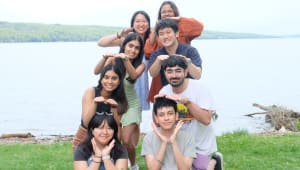
Cornell Hack4Impact
By Hack4Impact
We connect student software developers with socially responsible organizations to develop powerful new tools for social change to help further their mission!
We connect student software developers with socially responsible organizations to develop powerful new tools for social change to help further their mission! Hack4Impact Hack4Impact? What's that? Hack4Impact exists for both nonprofits and students. We connect student software developers with nonprofits and socially responsible organizations to develop powerful new tools for social change to help further their mission. We are committed to increasing awareness of technology's potential for good through talks and workshops. With the rapid advancement of technology comes the onset of techno solutionism, the belief that just about any problem in the world can be solved using technology. But is that really the case? Far too often, products of techno solutionism end up becoming creations that, while technically impressive, fail to solve real problems at hand, which defeats the purpose of them altogether. But at Hack4Impact, we believe in using tech for good. In today's world, we are capable of changing the lives of those halfway across the country. While tech has enabled us to have a larger reach, we also understand that we have a responsibility to build tools that are more than just pet projects. We strive to deliver incredible value to the nonprofits we are fortunate enough to work with and look forward to seeing our products continue to be used for years to come. Our Design Process Each semester, we work with non-profits with the opportunity to build a great product that solves a core need, generally in relation to their mission statements. We work in small groups led by a product manager and technical lead to scope and develop the application, taking into account our clients’ requirements and suggestions, and making the most of our technical, design, and business skills to create a product that can be used for social good. Let's Talk DEI. The mission of our Diversity Equity & Inclusion Committee is to address the critical issue of underrepresentation in the tech industry and the broader workforce. By contributing to our initiative, you are supporting events and activities aimed at raising awareness about the effects that arise from the absence of proper diversity, equity, and inclusion practices within these spaces. In the past, we have partnered with various organizations to facilitate informative panel discussions. These events create a safe and welcoming environment for individuals to hear and learn from the experiences of those in the tech industry who belong to underrepresented groups. Our goal is to continue building upon these efforts to establish safe, educational spaces that are accessible to all, whether they are on or off-campus. Our belief is that even the smallest seed of awareness can bring about positive disruption in the current landscape of underrepresentation. By fostering understanding and promoting diversity, equity, and inclusion, we aim to lay the foundation for more inclusive industries in the future. Our hope is that these incremental changes will gradually create a "domino effect," ultimately leading to a society where individuals of all backgrounds can collaborate and bridge the significant gaps we face today. Your support will help us make this vision a reality, one step at a time.
11%
Funded
15
Donors
0
days
left
CUAUV
By CUAUV
Help the seven-time RoboSub champions continue a tradition of excellence!
Help the seven-time RoboSub champions continue a tradition of excellence! CUAUV The Team CUAUV is entirely undergraduate-run, consisting of over 50 students spanning numerous academic disciplines. The team offers a holistic engineering experience developing cutting-edge technology; students control the entire design, manufacturing, testing, and revision cycle. As a seven-time RoboSub champion, CUAUV embodies a tradition of excellence and continuously pushes the envelope of autonomous underwater vehicle technology. The Competition CUAUV designs, builds, programs, and tests two completely autonomous underwater vehicles every year to compete in AUVSI’s international RoboSub Competition. In late July, we travel with our AUVs to San Diego, drop them in a recommissioned Navy testing pool, press the green button, and cheer them on as they navigate a complicated underwater obstacle course with no human intervention whatsoever: ramming buoys, dropping weighted darts on targets, firing torpedoes through differently colored rings, picking up PVC structures, and more. The Vehicles Our vehicles Polaris and Sirius are the culmination of CUAUV’s over 20 years of experience in designing, manufacturing, and competing with AUVs. Our team has worked diligently during the 2022-2023 academic year to complete both vehicles and are proud to showcase them in their current forms. Sirius is this year’s project, and will be completely assembled and constructed by competition this July. Polaris is the sub built during the 2022-2023 academic year. The design was focused on control and modularity, maximizing stability and enclosure accessibility. For the first time, Polaris features a ZED stereo camera and a servo powered actuator system. Other improvements include an optimized and spacious rack, longer and in the field of view manipulator arm, and a control maximizing thruster. Sirius is currently being developed, and features a rectangle-shaped “Lunch Box” design that deviates from the traditionally compact vehicles CUAUV produced in past years. For the first time, the mechanical team is utilizing underwater servos to actuate manipulators and the torpedo-droppers system. In addition, we integrated cam followers to actuate two torpedoes and two droppers independently with a single servo. The electronics rack will include a fan cooling system designed with computational fluid dynamics. Polaris and Sirius are both designed to be able to complete a majority of the course on their own, we intend to have them both complete their own designated tasks so that they work as one cohesive unit.
144%
Funded
61
Donors
0
days
left
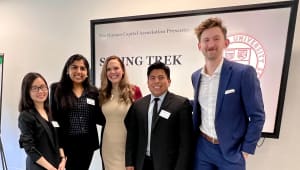
Human Capital Association Spring Trek
By Human Capital Association
HCA is a student-run organization focused on preparing future HR leaders.
HCA is a student-run organization focused on preparing future HR leaders. Human Capital Association HCA Spring Trek Human Capital Association Spring Trek is an annual event that allows students interested in leadership development to spend a day with HR professionals. Past treks have taken students to the US Military Academy at West Point, a retail coffee organization in Seattle, and a telecom provider in New York City. The benefits for students are twofold. They connect with HR professionals and learn directly from practitioners solving today's most pressing human capital issues. With your help, students will develop the leadership skills needed to become successful leaders at the S.C. Johnson School of Graduate Management and the ILR School. Who We Are The Human Capital Association at Cornell University is a student-led organization that operates across the S.C. Johnson Graduate School of Management and the School of Industrial and Labor Relations. Our programming includes Spring Trek, Fall Symposium, and fireside chats with HR executives. We believe that people are the most crucial element of any organization, and we are committed to linking our members with leaders who share this belief. By providing educational and professional opportunities, HCA enables its members to view the world of work through labor and business lenses.
1%
Funded
3
Participants
0
days
left

Cornell Baja Racing
By Baja Racing
Help us race across the finish line and make a gift today!
Help us race across the finish line and make a gift today! Baja Racing Race to the Top! Cornell University’s Baja Racing Team is an undergraduate-led engineering project team dedicated to designing and building the best off-road vehicle to compete in the Society of Automotive Engineering (SAE) Collegiate Design Series. Since our founding in 2003, the collective innovation and work ethic of our members has grown into a winning culture, earning us top 5 finishes every year for the last 12 years. We elect to develop an entirely new model each year, both to hone our engineering skills and to remain competitive with a field of over 100 teams. Having made huge improvements over previous iterations, we are currently building our best car yet! Cornell Baja 2023-2024 This year, our team consists of 52 students from 13 different majors who are placed onto 6 different subteams. We pride ourselves on our diversity, with a 50/50 ratio of women to men. We are primed to return to all three Baja SAE competition events during 2024: the first is California in April, then Williamsport in May, and we will end our circuit with Michigan in the Fall. Perpetually in the pursuit of optimization, we have many exciting changes planned for our new car, TGXX. This year, we are completely revamping our four wheel drive system to make it more reliable and durable for continued use. We will be implementing fully custom hobbed bevel and spur gears as well as a custom dog clutch. The changes in our four wheel drive system have also allowed use to drop our center of gravity while still maintaining the same ground clearance, as it allowed us to move our heaviest components, the engine and the driver, down relative to the chassis. Finally we will be using carbon fiber shafts to drive our four wheel drive system as well as experimenting with carbon fiber half shafts to to drive our wheels. About the Competition Baja SAE challenges engineering students to design and build an off-road vehicle that will survive rough terrain and water, ensuring power and efficiency all the while. Baja teams compete triannually, and each competition requires collegiate engineers to balance design and cost with performance under a strict set of safety guidelines. The competition is comprised of dynamic and static events, testing not only acceleration, endurance, and traction, but also design, cost efficiency, and commercial viability. Each year, our research moves through three stages of review before our design is finalized: Preliminary Review, Critical Review, and Final Review. During this time, we’re also modifying our older cars, so we can test new designs on prior years’ vehicles. We move to the build phase following Final Review, and then it's all hands on deck; each Cornell Baja subteam, while working on their specialized projects, communicates with the rest of the team to ensure that integration is seamless. Each year, we continue to innovate and improve—rethinking and redesigning even the smallest components. Our unmatched work ethic and team culture create a passion for our car, and we think that passion really makes the difference. Why Your Support Matters A donation to our team will be a tremendous help to our lab space and manufacturing process, while simultaneously providing for our travel and housing costs during competitions. Because of higher travel costs associated with traveling to California for competition this year, your donations are especially appreciated. Your funds will also help us enhance the capabilities of our custom-built engine and transmission dynamometer and purchase sensors that are vital for testing and tuning. A donation will furthermore allow us to bring purchase state-of-the-art manufacturing equipment, giving our team members the opportunity to gain familiarity with the tools that they will see in the industry. Through our support network, we are afforded the opportunity to compete, honing our engineering skills with experience that simply can't be replicated in a lecture hall. Winning competitions with Cornell Baja instills confidence in our members, instilling in them the creativity and adaptability to succeed in their next steps. Our active Cornell Baja alumni network is a testament to this, boasting recent former team members at Anduril, Rivian, SpaceX, Capital One, Blackstone, Ridgeline, Google, and Neuralink, to name a few. We continually improve and optimize our cars, but also ourselves, so that we may thrive after graduation. By donating to Cornell Baja Racing, you’ll help develop the engineers and leaders of the future. Thank you for your support! Visit our website to learn more: https://baja.mae.cornell.edu/ Facebook: facebook.com/CornellBajaRacing Twitter: twitter.com/cubaja Instagram: https://www.instagram.com/cornellbajaracing/
101%
Funded
102
Donors
0
days
left

Hotel Leadership Development Program
By HLDP
Your donation provides students with invaluable hands-on leadership experience and on-the-job mentorship from industry leaders!
Your donation provides students with invaluable hands-on leadership experience and on-the-job mentorship from industry leaders! HLDP About Us Hotel Leadership Development Program provides students with invaluable hands-on leadership experience. The program offers intensive exposure to the full range of hotel operations and on-the-job mentorship from industry leaders. Students apply the critical thinking skills and management theory knowledge gained in the classroom to real-life situations at the Statler Hotel. The insights that students gain through their experiences at the Statler can then be brought to the industry after their graduation to change the world of hospitality. Industry Immersion Trips Through industry immersion trips students are inspired through their exposure to the latest innovations in the hospitality field while gaining cultural perspective in different markets. Real world learning from alternative areas of the field give students insights into different career paths within the hospitality industry and how to best pursue them. The industry immersion trips allow students to learn about aspects of the hospitality industry that they may not be exposed to in their curriculum on the school side.
98%
Funded
44
Donors
0
days
left
Dr Lorna Breen Healthcare Legacy Fund
By Breen Healthcare Legacy Fund
To honor Lorna, memorialize her life’s work, and to make an impact on the issue of mental health, we have created the Dr. Lorna Breen Healthcare Legacy Fund.
To honor Lorna, memorialize her life’s work, and to make an impact on the issue of mental health, we have created the Dr. Lorna Breen Healthcare Legacy Fund. Breen Healthcare Legacy Fund Our friend, Dr. Lorna BreenDuring the pandemic, the 2021 Executive MBA and Masters in Healthcare Leadership (EMBA/MS) Cohort, endured the tragic passing of our friend and classmate, Dr. Lorna Breen, who took her own life after suffering from COVID-19 and dealing with the emotionally taxing duty of saving the lives of others as a talented emergency department physician in New York City. To honor Lorna, to memorialize her life’s work, and to make an impact on the complex issue of mental health, we have created the Dr. Lorna Breen Healthcare Legacy Fund. Why Focus on Mental Health? Even before COVID-19, the prevalence of mental illness among adults was increasing. In 2018, 19% of adults experienced a mental illness, an increase of 1.5 million people over the prior year. Suicidal ideation among adults is increasing. The time is now to shift a focus to this growing problem, for both healthcare workers and the public. How Your Gift Helps The Dr. Lorna Breen Healthcare Legacy Fund allows the EMBA/MS program to present a monetary award to one student annually who exemplifies extraordinary contributions to the class through camaraderie, collaboration, caring spirit, and leadership. The awardee will be granted an opportunity to collaborate with the administration and staff to design initiatives within the EMBA/MS program to expand mental health support for healthcare workers, students and the community. The Legacy Fund In Action Last year's fellow, Madalina Sucala, brought together experts from Columbia University, the New York State Psychiatric Institute, and the Icahn School of Medicine at Mt. Sinai for a compelling panel focused on the important topic of Resilience Building in Healthcare Settings. The event also included a co-creation activity where participants came together to product problem statements related to receiving mental health care in healthcare systems which will be used during the next EMBA/MS cohort's human-centered design course. The Future We've only just begun making an impact on the complex issues surrounding mental health. Your support helps keep awareness and innovation efforts alive in Lorna's memory for years to come.
21%
Funded
18
Donors
0
days
left
Social Impact Internship Fund (SIIF)
By JGSM
SIIF supports students at the SC Johnson Graduate School who take a low- or no-compensation summer internship involved in social or environmental impact.
SIIF supports students at the SC Johnson Graduate School who take a low- or no-compensation summer internship involved in social or environmental impact. JGSM Context Established in 2015, the Social Impact Internship Fund (SIIF) at the Samuel Curtis Johnson Graduate School of Management provides funding to Johnson MBA students who take a low- or no-compensation summer internship directly involved in social or environmental impact. Administered by the Center for Sustainable Global Enterprise (CSGE), the fund supports students seeking internship opportunities in organizations dedicated to addressing critical social and environmental challenges. Funding for the SIIF is made possible by the generosity of fellow Johnson students and alumni. SIIF Supports: Yimi Zhao, MBA ’22 Preparing for the Greener Future of Electric Garbage Trucks Gap As most of our MBA students arrive seeking a career transition, their summer internship is a critical stepping-stone into a new direction, giving them a story to tell when looking for full-time employment. For students looking for mission-driven career opportunities, it is often the case that these roles do not offer competitive compensation and it may not even be sufficient to cover their living expenses. The SIIF enables these students to embrace these impactful opportunities every year. “My summer working as a Societal Risk Analyst at Quantum Risk Analytics would have been impossible without the invaluable support of the Social Impact Internship Fund. The fund didn't just provide the necessary financial impetus but also served as acknowledgement of the societal impact work undertaken during my internship” - Marcus Le, MBA '24 When the economy is not as strong, such as in the current fiscal climate, well-paying internships are sparsely available, and more students seek non-traditional MBA summer internships with non-profits and smaller mission-driven companies. During such years, the SIIF becomes a critical component of Johnson’s support for even more students to find meaningful internship opportunities that would otherwise be financially out of reach. A well-funded SIIF ensures the resiliency of internship opportunities for Johnson students through all economic climates. SIIF Supports: Masahiro Yoshida, MBA '23 Growing a New Future for Wagyu Priority and Impact The SIIF has a direct impact on MBA students’ career placements after graduation by: Enabling students to gain experience in socially or environmentally impactful organizations or roles. Ensuring students are financially supported while interning in any economic environment. For the class of 2023, the range of internship compensation was $2,600 - $16,700/month with the average compensation being around $11,400/month. SIIF Supports: Rahul Singh, MBA ’21 Medical Group Benefits from MBA Skills During the Pandemic Read these and other SIIF stories here.
10%
Funded
22
Donors
0
days
left
CU Auto Drone
By CUAD
Established in 2017, we craft advanced drones for the International Aerial Robotics Competition, pushing the boundaries of aerial robotics.
Established in 2017, we craft advanced drones for the International Aerial Robotics Competition, pushing the boundaries of aerial robotics. CUAD Established in 2017, we are a team focused on building both controlled and autonomous drones to compete in the International Aerial Robotics Competition (IARC). Our goal is to advance the field of aerial robotics by tackling complex mission challenges (proposed by the IARC) to push the boundaries of what's currently achievable. The IARC governs the challenges, aiming to create significant and useful missions that are considered 'impossible' at the time that they are proposed. Competing in these challenges not only helps advance technological progress, but also equips our members with real-world experience and valuable skills for their future work in industry. CU Auto Drone is made up of over 40 dedicated members across multiple colleges within Cornell University. We are split up into 4 specialized subteams: Mechanical, Electrical, Computer Science, and Business. Each group plays a pivotal role in our ability to succeed in the IARC, allowing members to gain experience tailored to their areas-of-interest while contributing their own expertise. This year marks a significant evolution for us. Transitioning from an independent club to a Project Team has given us broader avenues of success, but also greater needs, needs that we cannot meet by ourselves. We are in the midst of enhancing our facilities and capabilities this year, adding essential new tools and equipment to allow us to expand our work in breadth and depth; however, we need to raise funds to make this happen, and it certainly can't happen without the support of our donors like you.
10%
Funded
7
Donors
0
days
left

Cornell Wardrobe
By Cornell Wardrobe
We believe the inability to acquire professional clothing should not be a barrier to an individual’s pursuit of professional opportunities!
We believe the inability to acquire professional clothing should not be a barrier to an individual’s pursuit of professional opportunities! Cornell Wardrobe About Us The Wardrobe is a diverse group comprised of over 35 students from every college at Cornell! With various majors in all 5 functional sub-teams, Operations, Marketing, Technology, Finance, Events, and Management, the Wardrobe aims to bring together these passionate students for our common mission. At our cores, we want to give back to the community so that Any Student can feel their best in Any Opportunity. Mission The Wardrobe aims to provide free professional attire to all members of the Cornell community. We believe the inability to acquire professional clothing should not be a barrier to an individual’s pursuit of professional opportunities. For students who have a need for professional attire in order to succeed in club recruitment processes, job interviews, and/or social events, The Wardrobe desires to level the playing field — we seek to embody our mission: “Any student, any opportunity.” The Problem In 2017, The Wardrobe surveyed 96 Cornell students, and the results were astonishing: 64% have felt underdressed at an interview or information session 34% didn't attend an interview or information session because of a lack of professional clothing 50% of those without proper attire were limited by cost constraints 50% of those without proper attire were limited by time and place The lack of professional clothing does not discriminate across gender and graduation year. These results have been verified to be statistically significant by Cornell University Statistician and Professor Cindy Van Es. The Solution We offer a free professional clothing rental service for students at Cornell. The rental service allows students to rent a diverse array of professional clothing, including but not limited to dress shirts, suit sets, blazers, blouses, ties, and dress shoes, in all sizes. We also host semesterly pop-up shop events, in which we distribute old inventory to the entire student body for free. With this two-fold approach, we serve all students at Cornell who are in need of professional clothing. Student Testimonies "It really means a lot to low-income students like me. They really value students and treat us with respect - they honor the students." - Vinh L. "I appreciate the Wardrobe tackling a problem that many universities don’t realize has a large presence on campus. To me, Wardrobe means accessibility and opportunity." -Emma D. "I was selected to present my research at a national conference in Houston, TX with my team. The school was paying for our trip and I was really excited. As an international student born in Vietnam, I didn't grow up needing or even wearing suits. I am so thankful to the Wardrobe who has been a resource that is not only reliable, but helped me become more professional with no expense. I felt so confident when presenting at the conference and really felt that I even performed better!” - Annie R. Our Challenges The Wardrobe relies entirely on donations and sponsorships from partners to: Buy new inventory (e.g., various sizes, attires, styles) Clean existing inventory (e.g., dry cleaning, ironing) Cover administrative costs (e.g., rented spaces, outreach events) With your support, The Wardrobe can provide free professional attire to any student in need. Memory Journal Spring Pop-Up Shop '23 Winter Pop-Up Shop '22 Photoshoot Spring Pop-Up Shop Wardrobe Portraits View our website to learn more about the Wardrobe: https://www.cornellwardrobe.net/
57%
Funded
15
Donors
0
days
left
Cornell Concrete Canoe
By Cornell Concrete Canoe
Cornell Concrete Canoe competes in the annual ASCE Upstate New York Conference with the goal to design, produce, and race a canoe made of concrete.
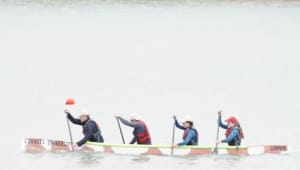
Cornell Concrete Canoe competes in the annual ASCE Upstate New York Conference with the goal to design, produce, and race a canoe made of concrete. Cornell Concrete Canoe Cornell Concrete Canoe encompasses a group of curious and innovative students from all disciplines and majors at Cornell. Our team’s vision is to collaboratively engineer a lightweight, sustainable, and innovative concrete canoe able to float in water. Each fall, our team bands together to develop a brand new canoe engineered from concrete mixtures to compete in the spring ASCE Regional Concrete Canoe Competition. Together, we aim to make the impossible possible.
9%
Funded
7
Donors
0
days
left
Cornell University Biomedical Device
By CUBMD
Our diverse team of undergraduates strives for biomedical device innovation and hopes to achieve the greatest good by sending our devices to market!
Our diverse team of undergraduates strives for biomedical device innovation and hopes to achieve the greatest good by sending our devices to market! CUBMD Who We Are Officially declared a project team by Cornell University in 2022, Cornell University Biomedical Device (CUBMD) is a team of multidisciplinary undergraduate students formed under a shared interest in biomedical device innovation to advance healthcare further. Numerous deficiencies exist in the cost-efficiency and efficacy of devices being used in surgery— often due to a lack of better technology and unregulated pricing that create excessive and needless financial burdens for those seeking medical aid. The collaborative nature of our approach enables us to conduct extensive gap-driven research and communicate with experts across a variety of fields. CUBMD engages in nationwide engineering competitions and develops its ideas with the vision of patenting and ultimately, bringing our devices to market to set a precedent for the future of biotechnology. The decisions and ideas we make now will be the foundation on which we will shape our future. Our mission is to identify contemporary problems in the field of biomedical devices, design and innovate solutions to said problems, and work to bring our solutions to the market where they can do the greatest good. Why Donate? Our mission is to do the best good in the world as possible. This involves delivering a product that is both efficient and effective. The biomedical design process is an intensive process requiring special materials, professional input, and modern technology. By donating to CUBMD, CUBMD can gain access to newer production materials such as 3D printers, and leverage healthcare connections by attending more conferences/events. With your help, CUBMD can reach new heights and continue to be one of the fastest-growing project teams at Cornell University! Our Team CUBMD is split into four collaborative subteams: Product Development, Outreach, Media, and Business. Product Development is responsible for the physical creation of the product, including the electrical, hardware, programming, and communication of the device. Outreach is responsible for contacting experts and/or professionals to help with clinical outreach, as well as plan competition travel for CUBMD. Media designs content for CUBMD social media and is responsible for taking photos of the team in social and professional content. Business is responsible for streamlining the processes said above, as well as spearheading finance operations and market analysis for future products. CUBMD consists of students across a variety of majors and colleges. These include, but are not limited to, Biological and Biomedical Engineering, Global and Public Health Studies, Computer Science, Biology, and more! These specialties allow for a wide, diverse set of perspectives and result in the formation of a unique product that possesses strength and novelty. The Process CUBMD has developed a thorough bio-design process founded on strong communication and detailed analysis. With this approach, we operate on an accelerated one-year timeline. In the fall, the team divides into smaller brainstorming groups to research the engineering, marketing, and policy implementation of potential biomedical device ideas. After heavily examining the novelty and impact of the top ideas, the team collectively decides on a device to pursue. In the spring semester, as our product development team sources parts and begins prototyping/product testing, the business subteam focuses on mapping the ideal path to market and raises funds for continued device development. The outreach subteam consults physicians, engineers, and other professionals for guidance throughout the prototyping process while also organizing competition submissions. After a final product is created, CUBMD can begin to attend regional competitions and conferences, and ultimately, file for a final patent!
6%
Funded
5
Donors
0
days
left
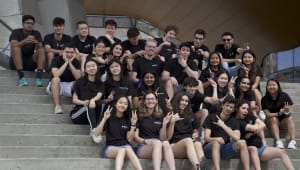
Team Nexus
By Cornell Nexus
Help us build our autonomous robot that will filter out microplastics from beach shores!
Help us build our autonomous robot that will filter out microplastics from beach shores! Cornell Nexus OUR MISSION Our beaches are polluted. There are plastic bottles and pieces of trash scattered everywhere. But we can only see large plastics. In reality, there are fifty trillion pieces of microplastics contaminating the sand, oceans, rivers, and even in our drinking water. Cornell Nexus is a team of passionate, eager individuals ready to make an impact and ensure that we have a tomorrow. We aim to clean up microplastics all the way from beach shores to the depths of the ocean. Currently, we are building an autonomous robot that will filter out microplastics from beach shores. As a team, we value ingenuity, collaboration, and persistence. We will redefine the impact that Cornell students can make to solve the water pollution crisis. OUR TEAM Software The software subteam is developing the autonomous algorithm for our robot, which determines the robot's traversal and environmental interaction. While the main traversal algorithms, visualizations, and graphical user interface have been established, the team is actively refining these features. Currently the members are also working on the obstacle avoidance and docking algorithm, building the backend routes for the GUI, and testing. Electrical The electrical subteam designs and implements the sensor and power systems of our autonomous robot. Some of their current projects include: designing, assembling, testing, and iterating upon custom PCBs for sensor operation and power distribution; designing the base station’s charging system to autonomously recharge the robot’s battery using solar power; integrating a GPS-RTK (real-time-kinematics) to obtain high-accuracy localization data for the robot as it traverses the beach; and writing motor controller code using motor encoder data for the updated swerve-steering drivetrain. Mechanical The mechanical subteam develops an autonomous vehicle framework capable of operating on a beach setting. The team has completed the first prototype of the drivetrain to filter microplastics from the sand. Members test to maximize the intake and the efficiency of our filtration mechanism. The team is currently working on an improved drivetrain which will feature four wheel drive technology with swerving mechanism for turning. Furthermore, they are also manufacturing a base station that will contain solar panels for charging, allowing our system to be fully autonomous and environmentally friendly. Business The business subteam manages the logistics behind making the projects possible and actualizes the intended impact. This includes getting funding, managing finances, assisting in internal operations, marketing the organization, and more. WHY DONATE? Support for our team will allow us to get one step closer to fulfilling our mission of innovating for environmental sustainability. We have amassed a talented group of engineers and project managers who are passionate about our mission. Your generous donation will be going towards necessary materials to build out our robot and other materials necessary for maintenance of a project team.
22%
Funded
17
Donors
0
days
left
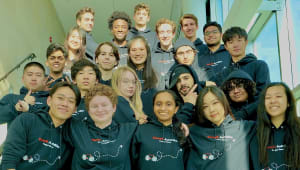
Cornell AutoBike: Building the Future of Autonomous Technology!
By Cornell AutoBike
Help us build a fully autonomous, self-navigating, self-balancing bicycle by the end of Spring 2024!
Help us build a fully autonomous, self-navigating, self-balancing bicycle by the end of Spring 2024! Cornell AutoBike Who We Are We are Cornell AutoBike, a student project team dedicated to creating the next advancement in autonomous technology. We aim to engineer a self-navigating, self-balancing autonomous bicycle that will be inexpensive, efficient, and environmentally friendly for commercial use in the future. And with a team of 30 engineers, physicists, and mathematicians, we're on track to create a fully functioning prototype by the end of Spring 2025. About the Bike So far, our team has been able to develop an autonomous bicycle that is capable of navigating and balancing by itself. The current bicycle comes equipped with a stereo camera that can detect, classify, and avoid objects in its surrounding environment. The bike also holds a GPS and IMU unit, and with our path-tracking, robot localization, and reinforcement learning algorithms that we pioneered, it is able to navigate and direct itself in any desired direction. Click to learn more about the AutoBike. Why Donate? We have made huge strides in automating and balancing the AutoBike, but we need your help! Since our founding in 2018, every milestone we've achieved and resource we've received have all been through small donations. By contributing to our team, we will be able to purchase a new CPU and LiDAR camera to traverse the rugged and twisty roads in Ithaca in time to finish our prototype next Spring 2024. Your donation will also allow us to continue publishing our research and work for free so that others may hopefully learn, build, and utilize our algorithms to create autonomous vehicles of their own in the future. We want to continue pushing the boundaries of autonomous technology and gain more experience in engineering, physics, and mechanical design. Thank you so much for your interest in our team: any amount truly counts!
5%
Funded
5
Donors
0
days
left
National Society of Black Engineers
By NSBE
NSBE Conferences are a key part of the NSBE member experience . Students are able to expand their networks and connect in meaningful ways!
NSBE Conferences are a key part of the NSBE member experience . Students are able to expand their networks and connect in meaningful ways! NSBE About the National Society of Black Engineers The National Society of Black Engineers (NSBE) is a 501(c)(3) nonprofit organization dedicated to the academic and professional success of African-American engineering and technical students and professionals. NSBE offers its members leadership training, professional and academic development, mentoring opportunities, community service outreach programs, and scholarships. Our Fundraising Goal NSBE Conferences are a key component of the NSBE member experience. Students are able to expand their networks, connect in meaningful ways with company representatives and other Black engineers, and interview for summer internships and full-time positions. We are fundraising to give more NSBE members this opportunity. It can change the trajectory of their careers during and after college. Please consider contributing to our goal! Our NSBE Chapter Founded in 1977, NSBE-CU is the premier organization for Black students in the science, technology, engineering, and mathematics (STEM) majors at Cornell University. NSBE-CU is a member of the national organization with affiliation to Region One, which serves the Northeastern United States and international chapters. Through the support of the national organization, the Cornell University College of Engineering Diversity Programs in Engineering, and corporate sponsorship, NSBE-CU upholds our mission statement as well as the national directives. Our Professional Development Initiative NSBE-CU focuses on recruiting members from all STEM backgrounds, with an emphasis on drawing members from the entering class. NSBE-CU’s community-building activities, sponsored development programs, and leadership opportunities help recruit and retain members who go on to earn degrees in engineering, science, and technology. In partnering with companies like PepsiCo, Jane Street, Illumina, Arcadis, etc., we are able to provide our members with tools to further their professional careers. Our Academic Excellence Initiative Our tutorial programs, or 'Study Jams', are held regularly throughout the school year, offering free tutoring and review sessions for general freshman and sophomore engineering courses, hosting post-exam celebrations, and providing students with a place to be comfortable while they study with their friends. NSBE-CU facilitates academic excellence by rewarding deserving members with scholarships and providing mentorship and assistance to struggling students to help them reach their full academic potential.
48%
Funded
45
Donors
0
days
left
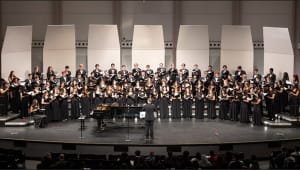
Cornell Chorus and Glee Club Joint Northeast Tour
By Cornell Chorus and Glee Club
Help support our first tour since 2020 with stops in Boston, New York City, Philadelphia, and Washington, D.C.!
Help support our first tour since 2020 with stops in Boston, New York City, Philadelphia, and Washington, D.C.! Cornell Chorus and Glee Club The Glee Club and Chorus are thrilled to be embarking on their first Joint tour since January of 2020! We are excited to engage with some of our most prominent alumni bases in Montreal (where we'll share the stage with the Yale Glee Club), Boston, New York City, Philadelphia, and Washington, D.C. and spread our music to our neighbors. You can find more information on the Glee Club and Chorus websites, or contact our tour managers: Erik Payton '25, Sebastián Young '26: tour@gleeclub.cornell.edu Priscilla Natawidjaja '24, Chloe Buffone '25: tour@chorus.cornell.edu With questions regarding crowdfunding logistics, please contact Eli Thoma '25 or Francesca Castellano '25 at gm@gleeclub.cornell.edu and gm@chorus.cornell.edu, respectively.
73%
Funded
59
Donors
0
days
left
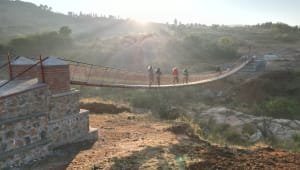
Engineers in Action
By Engineers in Action
The mission of the EIA Bridge Program is to help rurally isolated communities gain access to essential resources with sustainable infrastructure!
The mission of the EIA Bridge Program is to help rurally isolated communities gain access to essential resources with sustainable infrastructure! Engineers in Action DESIGN • TRAVEL • CONNECT • BUILD Who we are Rural isolation, or the inability to access essential resources such as hospitals, schools, and markets due to geographic barriers, directly contributes to global poverty. The mission of the Engineers in Action (EIA) Bridge Program and our University Chapter is to help these rurally isolated communities gain access to these essential resources with sustainable infrastructure by harnessing local expertise and global partnerships. In addition to the physical bridges, we hope to inspire members of the community to continue building connections with neighboring communities. The Cornell University Chapter of Engineers in Action is a student-run project team with the College of Engineering that works with the non-for-profit organization Engineers in Action to design and build pedestrian footbridges for rurally isolated communities. Our impact Imagine starting every morning with a trek to central campus. Now imagine that same walk without bridges connecting North and South Campus to Central. Your daily commute would either double or become incredibly dangerous. This is the reality for many members of rural communities worldwide. Our team strives to impact communities in need by bridging gaps in education, healthcare, and safety through physical bridges. Each bridge our team builds makes a tangible difference in a community and increases equity across the world. Summer 2019 Build Before the summer of 2019, the community of Mdlasomi in the Manzini region of the Kingdom of Eswatini had seen the deaths of 17 people attempting to cross the Ngwempisi river. Of these deaths, several were young children attempting to get to school. Impassioned by these events, the community sought out and committed to working with EIA and the government of the Kingdom of Eswatini to build a bridge that will mitigate the risk associated with performing these simple daily tasks. For 8 weeks, the Cornell Team successfully designed and built a 95-meter suspended cable bridge across the Ngwempisi River with the community of Mdlasomi. Summer 2022 Build After two years of not being able to travel due to the Covid-19 pandemic, our team finally completed another bridge in Summer 2022. Over the two years where we didn't travel, we continued learning and designing bridges, and in the summer of 2022, our team sent 5 students to the Kingdom of Eswatini, where they spent 6 weeks turning designs into reality. The team worked with the Boyane and Zombodze communities to build a 100 meter footbridge that crosses the Mtilane River, which will help over 2,000 people including 1,200 schoolchildren cross the river safely. Summer 2023 Build This past summer 2023, our team built the Mandlakhe bridge in the Kingdom of Eswatini. Our team sent seven Cornell students where they spent six weeks turning designs into reality. Collaborating closely with local masons and community members, our team successfully erected a 50-meter suspended cable bridge spanning the Mhlanga River. This remarkable structure now provides vital access for more than 2,800 residents from the Mahlalini and Skhotseni communities to essential resources and opportunities, including clinics, schools, bus stops, maize fields, and community events. Future Projects We plan to send another team abroad during Summer 2024 to Eswatini. We are working hard to learn the foundations of bridge building and gain cultural awareness. Not only that but we are piloting a WASH (Water, Sanitation, and Hygiene) program in Eswatini to allow access to clean water. This includes installing pumps and distribution systems to bring clean groundwater to schools that currently lack access to clean water. The team cannot wait to move forward with this year's project, and it would not be possible without donors like you.
75%
Funded
101
Donors
0
days
left
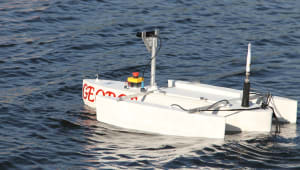
Cornell AutoBoat
By Cornell AutoBoat
Help us set sail and make a gift today!
Help us set sail and make a gift today! Cornell AutoBoat We are a hard-working, driven team of hardware and software engineers dedicated to building and innovating in the fields of naval architecture and maritime robotics. Our students challenge themselves in a fast-paced work environment while also making lifelong connections with incredible people. Our goal is to design, manufacture, test, and compete with an autonomous boat capable of decision-making and complex path planning using computer vision. We compete in the annual Roboboat competition, run by Robonation. Our Project Cycle: Research As soon as our travel team comes home from competition, we evaluate our performance and begin to do research on how we can improve in the following year. The research process concludes at the end of the spring semester. Design As soon as the fall semester starts, we begin our design process. For our hardware team, this involves a lot of CAD, ECAD, simulation, and hand calculations in order to come up with and prove out designs. On the software side, our engineers write new AI, CV, and control code stacks, making sure that they all interface well in our ROS framework. Designs are locked in by the end of the fall semester, after several reviews and iterations. Manufacturing At the beginning of the spring semester, our hardware team puts in long hours to get the new boat built and ready for competition. Our engineers get to use the composites workshop, the Emerson machine shop, and the ELL to fabricate and assemble their designs, gaining valuable hands-on experience along the way. Testing Testing occurs throughout the competition cycle, enabling the software team to develop, troubleshoot, and integrate AI, CV, and control code. This year, we intend to have testing sessions at least once a week using our old boat until the new one is ready in the spring. The goal is to have our mission planning and execution code stack working well via ROS by the end of the fall semester.
48%
Funded
25
Donors
0
days
left
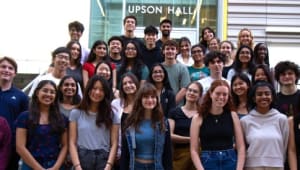
Engineers Without Borders
By Engineers Without Borders
We are striving to create a long-lasting solutions all over the world in different communities just as we did with our last project in Calcha, Bolivia!
We are striving to create a long-lasting solutions all over the world in different communities just as we did with our last project in Calcha, Bolivia! Engineers Without Borders Who We Are Engineers Without Borders - Cornell is a group of passionate and highly motivated students who aim to create long-lasting solutions to problems in international communities. Members are given the opportunity to nurture their creative and technical expertise by designing and implementing sustainable engineering projects. Through collaboration with communities in developing countries around the world, our members are exposed to diverse cultures while gaining academic experience outside of the classroom environment. Water Irrigation in Tanzania Easy access to water is a commodity most people living in the developed world take for granted. However, many people in the developing world do not have the same access to this necessity. The community of Sunuka, Tanzania depend on their fields for their food and income but are forced to rely on unpredictable rainfall to water their crops. During the dry season farmers are tasked with the burden of bringing water from wells miles away, costing them valuable time that could be spent tending to their families, crops, or livelihood. To enable the community with instant access to water, Engineers Without Borders Cornell is designing a gravity-fed irrigation system to transport water from the Rugufu river. Using a small pump, we will raise water from the Rugufu river to a higher elevation. From this point, irrigation canals will direct water to the fields. With the ability to transport river water to nearby fields, agriculture will have the opportunity to reach its maximum potential. We had our first assessment trip in June 2018, and in April 2019, four of our team members traveled to Tanzania for our second assessment. The primary goal of the assessment trip was to collect data that will be used in designing the final irrigation system. With the COVID19 Pandemic, we began a remote implementation of the system in 2022, and within 2023, our members have traveled to Tanzania twice to monitor and finish the implementation. Finally in the Fall 2023 semester, the final extensions of the system are being implemented, and our team will begin looking for new projects within South or Central America. SHUs (Sustainable Housing Units) in Tompkins County The SHU (Sustainable Housing Unit) concept came about when the Domestic subteam of Engineers Without Borders: Cornell Chapter was in search of an impactful project to help both our local communities and those across the globe. As homelessness is rampant within Tompkins county and the country, our talented and diverse group of engineers were motivated to begin designing a tiny home that can be transported by car. This independence allows for individuals to travel with their homes, find stable work, have basic utilities, and save money for a future home or apartment. As these homes are temporary for individuals, it will allow the homeless individual to jumpstart their lives for the better. Our team traveled to the community in Spring of 2022 to meet local elders and learn more about their needs. From there, the team has received approval for the work plan from CECorps, and they are now working hard to receive the final approvals for the mechanical, electrical, and plumbing construction sets from professional contacts within this next year. Software Development In the past, this subteam partnered with a local non-profit to build a sustainability-based app compatible with both iOS and Android. The app hopes to encourage the practice of carbon-offsetting, reducing emissions of CO2 in order to compensate for CO2 emissions made elsewhere. Our team hopes that our project will impact communities both locally and beyond the Ithaca area, ultimately having a lasting impact by making carbon-offsetting more accessible and encouraging sustainable practices. As of now, our team is working on finalizing aspects of the backend, and hopefully at the end of this semester, the app will be ready for deployment to the app store As they transition from this project, this subteam is now partnered with Cornell Wardrobe, a group on campus that provides free business professional clothing for those who cannot access this, and we are excited to see what they develop. Digital Agriculture Outbreaks of plant diseases, often left undetected, can be devastating for a local economy in Sub-Saharan Africa. To aid farmers, the subteam is building an airborne drone and a ground rover to assess large plots of crop fields in real time. The drone will provide a large aerial assessment of overall health which will then help the rover survey flagged parts for diseases underneath the canopy. Currently, our team is working hard to finish developing the algorithm for this solution alongside the mechanical aspects of the rover. As they begin to wrap up these designs, they are planning on an implementation trip in the near future to test this system. Business This subteam is responsible for raising funds for both the international and domestic projects through fundraising, sponsorship, and events. This subteam is currently focusing on two projects. First, we are developing a reimagined website for EWB - Cornell, which will propel us to continue spreading our mission, amplifying our voice in the community, and recruiting new members. The second project we are working on is growing our presence on social media to raise awareness of our activities to create a more sustainable world. Alongside this, our business team has also included an engineering curriculum that is being implemented among young students in the local Ithaca area to learn about engineering principles and get them excited about STEM! How You Can Help Your support will help our projects listed above become a reality, and we are so excited to see each of them to completion in the coming months. Any support given will greatly help our team cover the costs for future trips and materials needed. Members of EWB-Cornell have the opportunity to nurture their creative and technical expertise through projects like an irrigation system to better the community of Sunuka, an app pushing for sustainability, housing units for homeless individuals, and much more. We are striving to create a long-lasting solutions all over the world in different communities just as we did with our last project in Calcha, Bolivia. Your support will help our team cover the costs for educational experiences of our members through community outreach, global involvement, and fulfilling engineering projects. 100% of the funds from this crowdfunding campaign will go towards our future projects. Only with your help can we make this a reality.
58%
Funded
24
Donors
0
days
left
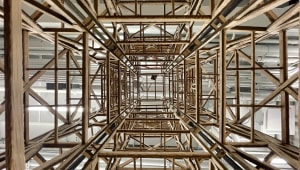
Cornell Seismic Design
By Cornell Seismic Design
Help us shake things up and make a gift today!
Help us shake things up and make a gift today! Cornell Seismic Design WHO WE ARE We are a student-led project team of 29 undergraduates under the Cornell University College of Engineering. Our team designs and constructs a 5-ft-tall balsa wood tower to compete in the annual Seismic Design Competition hosted by the Earthquake Engineering Research Institute. Thanks to our donors' support, last spring we placed 3rd overall and earned the Structural Innovation Award in San Francisco! Our team offers a unique opportunity for students interested in all engineering disciplines - especially those focused on construction, structural design, architecture, and seismology - to experience the process of bringing a project from an abstract thought to a tangible product. Through our work, we aim to create innovative structural solutions to challenging design problems and encourage team members to develop valuable leadership and communication skills! Check us out at cornellseismicdesign.com Follow us on Instagram @cornellseismicdesign OUR MISSION We are passionate about designing safer structures for regions impacted by seismic activity. During the school year, we explore creative ways to improve earthquake resilience, such as developing damping technology and new construction techniques. At the competition, the tower is scored on a number of categories including architecture, accuracy of predicted tower movement, building revenue and costs, presentation quality, and most importantly... if the structure survives the quake! WHY DONATE? The following are the team's primary expenses: Funding members to attend the Seismic Design Competition The number of members that can attend is limited to the amount of funding we receive Your support will help us reach our goal of bringing 15 team members to our competition in April 2024! Construction materials Balsa wood, wood glue, and plywood Construction tools Hand saws, glue applicators, 3D printing materials, sand paper, measuring tools, and acrylic sheets Advanced engineering and architectural software licenses Rhino, SAP2000, ETabs, SketchUp, SolidWorks and more Your support allows us to experiment with innovative damper designs and efficient construction techniques. With your help, our team is able to excel every year at the competition!
94%
Funded
85
Donors
0
days
left
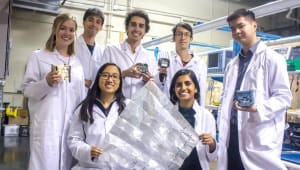
Alpha CubeSat: Sailing to the Stars
By Alpha CubeSat
Approved by NASA, your gift helps us launch the first holograms in space!
Approved by NASA, your gift helps us launch the first holograms in space! Alpha CubeSat Alpha: Our Story Alpha Cubesat is a light sail-carrying, cube-shaped satellite—and a stepping stone to our nearest star system. With the first-ever holograms in space, tiny ChipSat computers, and low-cost components, Alpha opens up new techniques for interstellar messages and affordable spacecraft. Alpha’s story brings together NASA scientists, holographic artists, Silicon Valley inventors (a real-life Iron Man), and, of course, Cornell students. Part science mission and part art exhibition in space, Alpha carries far-reaching implications for interstellar travel and our search for life in the universe. Our team has been working tirelessly since 2016 to create science fact from science fiction. Now with more team members than ever—over 40!—Alpha is closing in on a 2024 launch date. Alpha has been approved by NASA and is guaranteed to fly. Your donation helps launch a spacecraft six years in the making! Our holograms, embodiments of life on Earth, will be the first-ever launched into space, embossed on Alpha's solar panels Why Alpha? Our mission is pioneering multiple techniques that may fundamentally change deep space exploration. Innovations include a primarily 3D-printed spacecraft structure, the use of a RockBlock modem for decentralized communication, the placement of holograms on the spacecraft, and the release of a light sail that flies completely separately from its host satellite. 3D printing provides us with the versatility of rapid design and prototyping, while the usage of RockBlock Mk II, a modem that communicates with nearby Iridium satellites, enables us to send commands and receive data via website, rather than use a traditional ground station setup. Holograms are capable of storing vast amounts of information and could play a key role in stabilizing future light sails on their way to Alpha Centauri, our nearest star system. Alpha actively works to simplify and lower the costs of future scientific missions in Earth’s orbit and deep space. With software development nearly complete, all that’s left is the final stages of CubeSat assembly, finalizing our ChipSat design, and thoroughly testing our spacecraft. Project lead Josh Umansky-Castro, Alpha Member Allie Voltaggio, and Alpha alumni Andy Tan hard at work integrating electronics. In this image, the CubeSat on the right still needs some work, but as of 2023 we're much closer to finishing assembly! Impact Alpha Cubesat is largely undergraduate-led, and the first engineering experience many of our 40 members get to have. For all of us, Alpha is the first spacecraft we’ve ever had the chance to build. But contributing to Alpha CubeSat does more than launch a spacecraft—it’s also launched the careers of nearly 50 alumni. Students have secured internships and jobs in the space industry with the experience they developed on Alpha. Donating to Alpha helps fund these futures, as well as a future for all of us—where humans set sail to the stars. Let’s Get Technical! Alpha is a 1U CubeSat capable of deploying a free-flying 0.57x0.57m light sail in response to commands via the RockBlock Mk II and the Iridium satellite network. The sail has a palm-sized ChipSat computer attached to each of the 4 corners. These will transmit GPS data to Cornell University’s ground station, enabling tracking of the sail to an accuracy of about 10m. The concept of a solar sail has already been successfully utilized in missions such as JAXA’s IKAROS (polyimide) and the Planetary Society’s LightSail 2 (Mylar), but this will be the first time that a retroreflective sail is employed. Retroreflection—an effect seen in the “glowing” eyes of cats and signs shining against headlights—is an efficient form of reflection where light bounces back to its source rather than scattering. This provides a bigger force on the light sail, allowing it to move faster than it would otherwise. We are also the first spacecraft mission to incorporate the use of holograms, created from sculptures made by artist C. Bangs. These will be placed above five of the CubeSat’s solar panels. The payload: a polycarbonate light sail with four Monarchs (next-generation ChipSats) for tracking and orientation. Alpha will be launched onboard a commercial resupply cargo mission to the International Space Station (ISS), from Cape Canaveral, Florida in 2024. It will be released into orbit from the ISS via the NanoRacks CubeSat Deployer (NRCSD). Apogee and perigee will be approximately 400km, on an inclination of 51.6° from the equator. Weather balloon launch, October 2021—successful test of RockBlock modem to deploy light sail Ground communication via the Iridium network will begin two to three hours after deployment of the CubeSat from the ISS. Payload deployment will occur on command around twenty-four hours after the CubeSat is deployed; with the sail’s orbital lifespan on the order of a few days. Atmospheric drag will lower the CubeSat’s altitude until it de-orbits about three months after release from the deployer, having successfully completed its mission. Announcing our spin-off project: Sailing to the Stars! As Alpha reaches it's final stages, we are also excited to announce the commencement of our sister project, Sailing to the Stars! Another step towards our ultimate goal of sending ChipSat-sails to the moon, Mars, and beyond, Sailing to the Stars seeks to demonstrate light sail deployments inside the International Space Station! Taking advantage of the unique microgravity environment of the station and ability to downlink high resolution video footage (with the help of the astronauts executing our experiment!), we will collect great data on the sail and deployer dynamics to inform designs on future Cubesat missions. Any funds leftover from the Alpha mission will help this new project get off the ground! We sincerely appreciate any contributions you can make to bring our project to fruition! Your support takes humanity one step closer to the stars.
76%
Funded
26
Donors
0
days
left
B.O.S.S. Mental Health Summit
By B.O.S.S.
Our mission is to improve the wellbeing of women of color by teaching proactive mental health strategies, creating an inclusive space, and building community.
Our mission is to improve the wellbeing of women of color by teaching proactive mental health strategies, creating an inclusive space, and building community. B.O.S.S. Who We Are Building Ourselves through Sisterhood and Service (B.O.S.S.) is a student-run peer mentorship program for self-identified women of color at Cornell University. B.O.S.S. is dedicated to easing the transition to college for students by fostering genuine relationships between upperclassmen and underclassmen women of color. B.O.S.S. also encourages high academic and personal standards, inspires community service, and provides access to helpful campus resources. In this way, B.O.S.S. is instrumental in creating warmth, growth, and connection for Cornellian women of color. Mental Health Summit Each year, B.O.S.S. hosts our annual Mental Health Summit in order to address the unique challenges that women of color face. The Summit is a two-day event that begins with an evening of group bonding to allow attendees to unwind and build community before the conference. The next day, we invite student leaders, certified mental health professionals, and a keynote speaker to host workshops and seminars for the attendees. The Summit is open not only to Cornell students, but to the broader Ithaca community and neighboring universities. Our goal is to create an inclusive space for women of color to connect with one another and improve mental wellbeing. Our Goals The Mental Health Summit provides an opportunity for women of color to: learn evidence-based strategies for managing stress and regulating emotions reflect on the intersection of womanhood and racial identity address mental health challenges build a supportive community for women of color How You Can Help If you're interested in supporting the next generation of self-identified women of color, please consider donating to our page! Your generous gift will allow us to create a healing, restorative event while keeping registration FREE for all attendees. Donations will cover essential purchases such as workshop materials, speaker expenses, meals, and space rentals. To follow our journey in addressing mental health in our community, you're welcome to follow our Instagram @boss.mhs. We appreciate your contributions to support women of color!
37%
Funded
22
Donors
0
days
left
Cornell Mars Rover
By Cornell Mars Rover
We strive to cultivate an environment where we can develop innovative and leadership qualities that may one day aid in the exploration of the final frontier!
We strive to cultivate an environment where we can develop innovative and leadership qualities that may one day aid in the exploration of the final frontier! Cornell Mars Rover About Cornell Mars Rover, since its establishment in 2010, aims to design an innovative semi-autonomous rover to compete in the University Rover Challenge each year. Our student-run team fosters creativity and intellectual growth through the development of our rover. As engineers, we strive to cultivate a creative environment where brilliant young minds can develop innovative, intellectual, and leadership qualities through our vision of building a rover that may one day aid in the exploration of the final frontier. The team is divided into several sub-teams: Drives, Arm, AstroTech, Controls Software, Controls Electrical, and Business & Design. Students can best use their specific skill sets to contribute to the project and are given the opportunity to learn from others in other disciplines. University Rover Challenge The University Rover Challenge is held annually by The Mars Society at the Mars Desert Research Station, Utah. CMR will be competing in the University Rover Challenge in Summer 2024. We hope to follow the success we have established in the past years, as we came in 2nd place in Equipment Servicing in 2017, 5th in Autonomous Transversal in 2018, and 3rd in Autonomous Transversal in 2019. We aim to take what we learned in past years' campaigns and apply it to this year's competition. Several universities from across the globe will be competing against Cornell Mars Rover in four tasks: Science Mission, Extreme Delivery, Equipment Servicing, and Autonomous Navigation. The winner will receive the honor of presenting their rover at the International Mars Society's Conference. How you can help! Each year, Cornell Mars Rover aims to improve on the previous iterations of the rovers for a new rover. This includes reviewing the competition performance, discussing potential improvements, preparing new designs, fabricating the new rover, and finally testing the rover for different tasks. We require funds to acquire equipment for testing different alternatives for various components, manufacturing the rover, and traveling to the competition in Utah. Your donations would allow our members to experiment with state-of-the-art technologies during our design process, which will not only help us create a better rover, but will also help students emerge as better and more qualified engineers after they leave us. Furthermore, traveling to the competition would also unlock a vast network of like-minded students and professionals in the industry for our members. Your contribution would, therefore, contribute to our overall mission as an engineering project team and help us reach our goals. We sincerely hope that you will help us in our endeavors, and thank you for your contribution. See our website to learn more: marsrover.engineering.cornell.edu/
128%
Funded
82
Donors
0
days
left
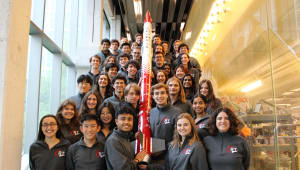
Cornell Rocketry Team
By Cornell Rocketry Team
Help us blast off and make a gift today!
Help us blast off and make a gift today! Cornell Rocketry Team The Mission: Cornell Rocketry Team designs, manufactures, and tests a high-powered rocket every year for competition in the Spaceport America Cup. We travel to Las Cruces, New Mexico to compete against 150 other collegiate teams from 22 different countries. The primary goal at the competition is to launch the rocket to exactly 10,000 feet using our Student Research and Developed (SRAD) solid rocket motor. Every year, our rocket carries with it a unique scientific payload that leverages the high altitude or high acceleration environment onboard the rocket. The team designs and manufactures almost every part of the rocket in-house, making use of a variety of lab spaces on campus. While competition is the major goal for the team, our primary focus is to provide all of our members with the opportunity to learn and grow as engineers with hands-on experiences. This June, we achieved 2nd place overall and 1st place in the SRAD category at the Spaceport America Cup. The Team: Our team is made up of 47 members, all with a passion for space and engineering. The team is organized into five different subteams, each of which plays a critical role in making the rocket fly. Propulsion: The propulsion subteam is responsible for designing and manufacturing the motor that lifts the rocket to our target altitude. Our biggest challenge is ensuring that the motor stays in one piece while accelerating the red-hot combustion gases out of the nozzle to over 5,000 miles per hour. We manufacture everything in-house, from the nozzle to the casing to the propellant itself. Static Fire Test of our Rocket Motor Structures: The Structures subteam focuses on the designing and manufacturing of structural components within the launch vehicle, integration of systems, and the overall body of the vehicle itself. We see all projects through from ideation to fabrication with machining with metals and working with composite materials such as fiberglass and carbon fiber. Our team also uses simulations to do analysis work on aspects such as drag, internal stresses of the launch vehicle, and stability calculations to ensure the best performance possible for the rocket. Recovery and Payload: The Recovery and Payload subteam designs parachute systems that autonomously navigate the rocket to the ground. Our autonomous recovery systems incorporate sensors, flight computers, steering mechanisms, and, of course, guided parachutes. We also design the rocket’s payload: an original engineering project that we choose each year. In essence, we think of something cool that we want to put on a rocket, and we do just that. Electrical and Software: The Electrical and Embedded Software subteams are jointly responsible for the electronics within the rocket that handle various operations including data storage, acquisition, communications (both internally and with ground control), and event triggering for other systems. The Electrical subteam primarily handles the overall design and implementation of the hardware within the rocket, whereas the Embedded Software subteam is responsible for the code on the chips located on the boards that control the functionality of the board. These subteams work very intimately, as well as often interface with other systems and subteams. This year, we are focused on implementing designs developed previously, and are very excited to be able to launch again! Business: The Business Subteam conducts all of the activities that allow the team to run smoothly and effectively. Some of the main focuses of this subteam are website development, advertisement, alumni and sponsorship outreach, merchandising, and social media. This year, the business subteam is focusing on organizing team social events and activities. Thank you for your support!
61%
Funded
46
Donors
0
days
left
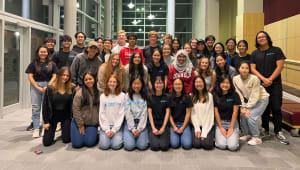
AguaClara
By AguaClara
Help us to continue to develop sustainable water treatment technology!
Help us to continue to develop sustainable water treatment technology! AguaClara AguaClara is a multidisciplinary engineering team based at Cornell University that develops sustainable water treatment technology. The AguaClara plant design is gravity-powered, electricity-free, and scalable to fit the needs and size of any community. Our governance model is based on community ownership, democratic governance, and technology that is specifically designed for ease of operation and to encourage pride in ownership. AguaClara facilities on the ground in Honduras are owned and operated by their respective communities and all facilities continue to provide safe drinking water. This is particularly noteworthy in Honduras where most conventional water treatment plants do not reliably meet drinking water standards. Several towns with AguaClara facilities are experiencing reverse migration from Tegucigalpa due to their superior water. Our Design Philosophy The AguaClara design philosophy is a set of principles developed to ensure the long-run sustainability of the facilities we engineer. It is based on the belief, as expressed by Nobel Laureate Elinor Ostrom, that "combining knowledge of local circumstances with modern science and technology is a crucial prerequisite for developing more efficient, sustainable infrastructure." Our design aims at optimizing the level at which water is treated while also minimizing cost and ensuring that our plants are operator-friendly. Despite functioning on the same basic process, there are major differences in design between what is effective in the developed world and what is feasible in the Global South. Almost all of the plants in the developed world rely on large amounts of electricity to monitor and operate. However, in the developing world, access to a reliable source of electricity is both doubtful and prohibitively expensive. AguaClara plants use gravity instead of pumps, and mechanical devices instead of electrical monitors, to run the plant. Since the plants are designed to be constructed using almost exclusively locally-available materials and labor, AguaClara communities also avoid the risks of failure or shut-down that plague other projects dependent upon overseas expertise and supplies. Our Education Philosophy The AguaClara program provides undergraduate & graduate students the opportunity to enhance their education with hands-on experience working on projects with real life applications. In 2012, the National Academy of Engineering recognized AguaClara as an exemplary program that "infuses real-world experience into engineering education." Our Fundraising Goal Throughout this campaign, we hope to raise money to continue to fund the groundbreaking research our members are conducting. By contributing to our cause, you are helping to fund not only the tools and materials we continually use in our lab, research, and fabrication teams but also are making sure that our labs are kept up-to-date with the most recent technology! We are reaching out to you to become partners in our vision for clean water access for all! As alumni, friends, and newcomers to the AguaClara program, we hope that you will champion our cause and help us expand our horizons. Thank you for your support! For more information on the AguaClara program, visit us online at aguaclara.cornell.edu.
97%
Funded
34
Donors
0
days
left
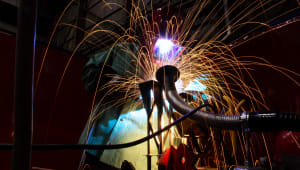
Cornell Steel Bridge Project Team
By Cornell Steel Bridge
The Cornell Steel Bridge Project Team designs and constructs a 23-foot-long model bridge to compete in the AISC Student Steel Bridge Competition each year.
The Cornell Steel Bridge Project Team designs and constructs a 23-foot-long model bridge to compete in the AISC Student Steel Bridge Competition each year. Cornell Steel Bridge CORNELL STEEL BRIDGE PROJECT TEAM The Cornell University Steel Bridge Project Team ("Cornell Steel Bridge") is an undergraduate project team that annually competes in the American Institute of Steel Construction (AISC) Student Steel Bridge Competition. The Fall semester is when students will spend time designing and analyzing a 23-foot-long model bridge and decide on the winning design. During the Spring semester, students will fabricate, weld, and construct to bring this bridge to life. Design Members spend one month designing a bridge using CAD software and developing a presentation, after which one bridge is selected as that year's competition design. Build Fabrication, Welding, and Construction subteams prepare for competition in the following months by converting our 3D-modeled ideas into a physical bridge. Compete In the spring, the team travels to a competition, where we compete with other universities to see who has the best bridge!
40%
Funded
32
Donors
0
days
left
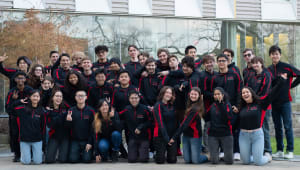
Combat Robotics
By Combat Robotics @ Cornell
This year, Combat Robotics @ Cornell is building a 12lb beater, a 12lb punching walker, and a 3lb autonomous bot, and we need your support to make it happen!
This year, Combat Robotics @ Cornell is building a 12lb beater, a 12lb punching walker, and a 3lb autonomous bot, and we need your support to make it happen! Combat Robotics @ Cornell Who We Are Founded in Fall 2019, our team aimed to create a fun and inclusive environment where our members could learn about the exciting field of combat robotics, enhance their skills in the domain(s) of their interest, and make long lasting friendships. Most of all, WE BUILD ROBOTS THAT FIGHT! As a start-up team, we had humble beginnings and built the foundation we have today with minimal resources, passionate members, and a ton of trial and error until we found processes that work best for us. Today, we are 50+ members strong. What We Do Combat Robotics @ Cornell (CRC) builds robots with the goal of competing in the National Havoc Robotics League’s March competition and winter championships. We have four subteams, each of which work on a different project: Kinetic The Kinetic Subteam specializes in the construction of 12lb high kinetic energy combat robots that feature vertical spinners, horizontal spinners, full-body spinners, and drums. Our mission is to design and build highly efficient robots that excel in competitions. We prioritize three key elements: damage-dealing capabilities, durability, and the ability to adapt to the ever-evolving meta of robotic combat. Kinetic is dedicated to maintaining a competitive edge in the world of robotic warfare. Sportsman The Sportsman Subteam specializes in the construction of 12lb low kinetic energy combat robots that feature flippers, hammers, crushers, punchers, and non-spinning innovations. Our mission is to design and build robots that epitomize creative originality, design ingenuity, and interdisciplinary collaboration. In the absence of raw power, Sportsman excels through unique strategies and battle control. Sportsman aims to win the crowd rather than the competition through their battle moves. Autonomous The Autonomous Subteam specializes in the construction of 3lb autonomous combat robots. Our mission is to code robots that can autonomously compete with conventional RC robots. While winning isn't our primary goal, Autonomous aims to push boundaries, challenging ourselves to see how well our algorithms can perform and continuously enhance them over time. Our work not only forms team members into effective problem solvers, but we set new standards that address increasingly important questions in the world of robotics and beyond. Marketing Within the Marketing Subteam, we specialize in various aspects of promoting and enhancing CRC's brand. Our mission is to create symbiotic relationships within our team and with our stakeholders, elevating CRC to be more than just another robotics team. The Marketing Subteam is broken into four critical subsystems: Business, Computer Science, Media, and Design. The Business subsystem covers corporate relations, the Computer Science subsystem maintains the website and our video games, the Media subsystem runs our social media accounts, and the Design subsystem creates art and merchandising for the team. How You Can Help Our goal is to extend our learning beyond our initiatives at Cornell through a holistic approach to learning. By having four subteams with different focuses, members can truly benefit from Cornell’s philosophy of any person, any study. Every student in CRC is able to take something that they have learned from their major and apply it here, using past lessons to solve current problems. If provided the funding and support, CRC plans to make an impact in the community surrounding Cornell. CRC has set its largest goals yet for this year, and we need your help to maintain our ever-growing team! We plan on bringing our previous four robots to competition while developing three new entries. To properly test them, we are also working on a robust test box that requires resilient materials. Most importantly, CRC hopes to send every member to the competition and offer our supporters a chance to join us! If we exceed the funds we need to build our bots, CRC plans to host even more engaging community outreach events. This can complement our annual showcase where we invite our friends, families, professors, and sponsors to experience the energy, learning, and craftsmanship of CRC. Help us build cool robots, go to more competitions, and spread our love for robotics! We hope you can join us on our path to victory!
91%
Funded
65
Donors
0
days
left
Cornell Hyperloop
By Cornell Hyperloop
Cornell Hyperloop is devoted to designing and building our own miniature Hyperloop pod. Donate today to join the next step in the evolution of transportation!
Cornell Hyperloop is devoted to designing and building our own miniature Hyperloop pod. Donate today to join the next step in the evolution of transportation! Cornell Hyperloop Back to Competition Cornell Hyperloop is an engineering student project team that designs and builds a hyperloop pod, a novel form of transportation in which pods are sent through vacuum-sealed tubes at hundreds of miles per hour. After being denied competitions over and over again due to the COVID-19 pandemic, we were finally able to travel to competition last summer. For the first time in team history, we competed in the Canadian Hyperloop Competition in June, gaining valuable insight into what we need to improve upon to be successful for next year’s competition. Unfortunately, the costs of pod improvements are expensive, not to mention the additional costs associated with attending the competition in the first place. How Much Your Donation Means to Our Team Your donation will help to fund the costs of hotels, pod transportation, and pod research that is needed to ensure our team’s success in competitions abroad. Without donations, our team would be unable to participate in competitions, a component of our design process that is crucial to our team's long-term objectives. Your contributions are greatly appreciated, and we would love to welcome you to the Cornell Hyperloop family and to update you on our success in these competitions! Our Amazing Team Cornell Hyperloop has over 60 undergraduate team members, organized into three teams. The Cornell Hyperloop team is dedicated to investigating new technology for the general implementation of Hyperloop in addition to building a subscale Hyperloop pod to compete in competitions. We aim to innovate, design, and build a sustainable transportation pod from conceptualization that travels at speeds beyond those of conventional transportation modes. Our goal is to participate in the premier Hyperloop conferences and compete in track demonstrations and subsystem competitions. Electrical Team The electrical team is responsible for constructing and maintaining the pod’s electrical system. The team is divided into 3 subteams. The power systems subteam is in charge of our pod’s electrical components and battery supply. The computing subteam manages all of the embedded software. The user interface subteam maintains our electrical system’s GUI and is responsible for the website. The majority of the electrical team is electrical engineers and computer scientists. Since the team works heavily with both software and hardware, they employ a variety of tools. On the software side, the team uses Python to develop our embedded systems and leverages the networking protocol called ZCM. On the hardware side, KiCAD and physical benches are used to develop the circuits. Currently, the electrical team is working on assembling a high voltage battery pack in its management system in conjecture with its voltage frequency drive and to implement sensors in the mechanical tests and the on-pod systems. Mechanical Team The mechanical team is responsible for developing all of the mechanical subsystems on the pod. This team is divided into 3 subteams. The magnetics subteam works on our propulsion, levitation, guidance, and stability systems. The structures subteam focuses on the chassis, aeroshell, systems integration, and cooling systems. The braking subteam specializes within frictional and magnetic braking systems. The overarching mechanical team is composed of a variety of engineering majors, but mostly mechanical and civil engineers. The mechanical team’s primary design tools are SOLIDWORKS, ANSYS, and MATLAB. They employ a variety of manufacturing techniques, including traditional machining, welding, CNC, 3D printing, and carbon fiber composite structures. Currently, the mechanical team is finding ways to successfully implement their electromagnetic projects, manufacture the carbon fiber aeroshell, and create our own magnets for levitation. Business Team The business team is responsible for supporting the team’s business-related initiatives. The business team is divided into 3 subteams. The operations subteam manages budgeting, bill of materials, procurement, and competition planning. The development subteam organizes sponsorship outreach and fundraising. The marketing subteam maintains our team’s social media presence, and merch. The business team is mostly made up of computer science and business students. The business team uses Adobe Creative Cloud to produce marketing materials for the website and our social media. We also use Excel and spreadsheets to manage the team’s finances. Currently, the business team is focused on procuring the necessary parts for the pod and raising money for the purchase of these parts and to cover the costs of competitions. Our Fundraising Goal Throughout this fundraising campaign, we hope to raise money to continue funding the groundbreaking research our members are conducting. By contributing to our cause, you are helping to fund not only the tools and materials we continually use in our lab, research, and engineering teams, but you are also ensuring our workspaces are kept up-to-date with the most recent technology. We are calling on you to become partners in our vision to revolutionize the transportation industry! As alumni, friends, and newcomers to the Hyperloop team, we hope that you will support our cause and help us expand our horizons. We thank you for your support! For more information about Cornell Hyperloop, visit us online at https://cornellhyperloop.com/.
25%
Funded
18
Donors
0
days
left
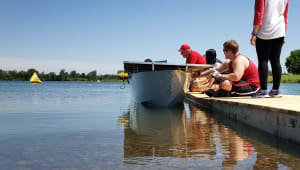
CU Solar Boat
By CU Solar Boat
Help us set sail today!
Help us set sail today! CU Solar Boat We are CU Solar Boat - an engineering project team comprised of undergraduates from all ages and majors that come together to design and build a 14-foot, single occupant, purely solar-powered speed boat for the intercollegiate Solar Splash competition. Founded in 2015, we are one of Cornell University's youngest project teams. In 2019, we competed for the first time at Solar Splash, placed 8th overall, and won Rookie of the Year as well as Outstanding Solar System Design. Despite being a newer team, we work to provide our members with practical engineering experience, a professional and cooperative team environment, and a unique educational experience on modern engineering problems. While we aim to build upon these accomplishments and improve as a competitive team, we also emphasize the importance of our work in a real-world context. With climate change being a prominent concern, CU Solar Boat aims to prove that renewable energy can be an efficient, affordable, and optimal replacement to non-renewable sources. We work to understand how to optimize our resources and build the best system possible. The problems and creative solutions that our teammates work on are problems that anybody in the professional industry may face as well. CU Solar Boat is a team that emphasizes learning and creativity over prior experience. We train students to become engineers outside of the classroom-setting and work on something tangible. Every year we learn from our previous designs and results, and aim to build a better boat and be an even better team.
2%
Funded
1
Donors
0
days
left
CU Design Build Fly
By Design Build Fly
Help us take flight and give today!
Help us take flight and give today! Design Build Fly The Team CU Design Build Fly (DBF) project team is a student-run organization in which members develop, build, test, and optimize a custom radio-controlled aircraft to compete in the international Design/Build/Fly competition. The competition, sponsored by Textron Aviation, Raytheon, and the American Institute of Aeronautics and Astronautics, enables students to engage in the design process and to produce an aircraft that meets the requirements of a specified mission profile. CU DBF provides interested students with a venue to apply theoretical coursework to formulate practical engineering solutions. By applying the same technology and manufacturing methods as industry professionals, our team provides graduating members with the knowledge and experience for success. Website | Facebook | Instagram The Competition The AIAA Design/Build/Fly competition challenges teams to create a high-performing aircraft within a specified mission profile. Held in Wichita, Kansas or Tucson, Arizona, the competition is comprised of both a technical report and a flight performance evaluation. The written component is determined by evaluating the team’s engineering process for thoroughness, justification, and presentation. The second component is the mission score which assesses a team’s aircraft performance according to competition rules. These rules vary significantly each year, encouraging fresh designs and new innovations. Your Impact Your contribution allows us to produce durable aircrafts capable of meeting the stringent requirements of each year’s specified mission profile. The support of our sponsors has allowed us to keep designing and testing meticulously. Beyond providing students with valuable technical skills through the fabrication process, the challenges we’ve seen throughout the years have motivated us to continuously improve our aircraft designs and performance. Again, thank you—your support is vital to the future success of the Design Build Fly project team and our efforts to cultivate a burgeoning class of engineers, and ultimately, place first in competition.
87%
Funded
38
Donors
0
days
left
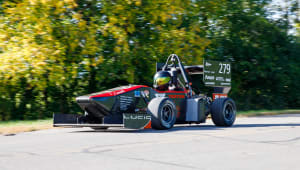
Cornell Racing FSAE
By Cornell Racing FSAE
Help us cross the finish line and make a gift today!
Help us cross the finish line and make a gift today! Cornell Racing FSAE What Fall 2023 Means to Us! We need your help to take our next electric race car ARG24 to Michigan SAE this Spring. Cornell Racing Cornell’s Formula SAE Team was established in 1986. For the past 37 years, we have been designing, manufacturing, and building a Formula One-style racecar. We started with one team and a dozen students, all majoring in mechanical engineering. Since then, we have grown the organization to be comprised of 50 members and run by students with 11 sub-teams who major in a variety of subjects from Engineering to Hospitality. As a 9 time World Champion, Cornell Racing has become synonymous with innovation and success. Our Teamwork and Experience The team is formed of 50 students from a variety of majors. Each student brings something unique to the team; the union between diverse skill sets and strong team work forms the core of our team. Members individually spend at least 20 hours per week designing, building, and testing the car to meet competition standards. During the month of January, team members forego their winter breaks and return to Ithaca, New York to manufacture the car and prepare for the upcoming competitions in the spring and summer. Additionally, over the summer months, up to a quarter of the team remains on campus to plan for the following season. Cornell Racing provides an unrivaled learning experience, that allows engineers to integrate classroom concepts with practical applications and compels students to overcome technical and collaborative challenges. The finished racecar is a testament to the team’s incredible work ethic and dedication. Sponsors With the competition mandated timeline of a brand new race car each year and the significant capital investment required, sponsorships are critical to our success. Cornell Racing reaches out to all of our alumni through regular newsletters that prominently feature our sponsors. Our active team resume stack is distributed to sponsors to facilitate long-term professional relationships with our talented members. Cornell Racing has been featured in magazines such as Road & Track, Winding Road, and Race Car, and has been highlighted in a Discovery Channel special. Therefore, the team and our sponsors, are actively being promoted across the United States and around the world. In addition, Cornell Racing proudly promotes all of our sponsors on our website, Instagram, and other social media platforms.
171%
Funded
163
Donors
0
days
left
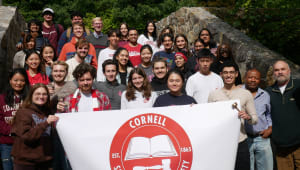
Speech and Debate: Big Teams, Big Dreams!
By Cornell Speech and Debate
Support the teams of Cornell Speech and Debate so that the members can compete in tournaments!
Support the teams of Cornell Speech and Debate so that the members can compete in tournaments! Cornell Speech and Debate Why Support the Cornell Speech & Debate Society? The need for your funding cannot be overstated. As one of the most deeply impacted societies from the Covid-19 pandemic, our membership and funding have taken a drastic hit, and our focused rebuilding requires your support more than ever. Three years of CSDS students have had little to no exposure to speech and debate as it always was: home to a cooperative team spirit built on global competition, to quick thinking that feeds off the energy of the room, and to advocacy that takes us beyond the boundaries of Cornell. This year, our teams have returned to a pre-pandemic size, and to enable our students to travel and compete, we need your support more than ever. Despite a global pandemic and significant budget cuts, the Speech and Debate students, staff, and leaders have ensured that we never faltered. We’ve created new partnerships in China, India, and Vietnam; Won the North American Championships in debate and have topped the AFA National Championship in speech; and continued our long-standing community service programs such as training through the national prison debate league, on-campus advocacy training, and in our many international programs. We require YOUR support to back or Big Teams, Big Dreams initiative, which aims to enable every Speech and Debate student to embark on their travel journeys. We can't achieve this without your help! Above: Cornell Speech and Debate Society members assembled in front of Uris Hall before the end-of-year banquet. Speech & Debate has been growing — we have resurgent policy debate and Spanish debate teams, as well as scores of new British parliamentary debaters and speech competitors — and counts more than 150 members in its ranks. To support all of them, seniors to freshmen, veteran debaters to brand new recruits, we rely on your generosity. Your gift to the Cornell Speech and Debate Society ensures the program remains accessible, and enables students to travel to the season's most important and educational competitions. Above: Program Director Sam Nelson welcomes new members with a lecture on argumentation. Above: Debate team victories in both English and Spanish: the University Club debates in NYC and CMUDE in Madrid. Above: Speech qualifiers who were invited to travel to the AFA National Championships. Your contribution, no matter the size, is ESSENTIAL to our continued success. Once again, our esteemed Cornell alumni Jeremy Rosen and Jodi Kruger have graciously pledged to match the first $5,000 in Speech and Debate crowdfunding donations! This means that your contribution during our Speech and Debate crowdfunding campaign will have double the impact. Please give what you can and empower the next generation of Speech & Debate! The following programs are made possible by your generosity: 1. Global Empowerment: Cornellians teach debate to students and adults in countries such as the United Arab Emirates, Uganda, South Africa, China, Vietnam, Kazakhstan, and India — and in the constitution state, Connecticut! 2. Local Service: We’ve worked with everyone from prisoners to high school students to senior citizens, including programs with Ithaca High School, Dryden High School, Spencer Van Etten High School, and the Roads Scholar program. 3. Informing the Campus: We’ve taught debate skills to ROTC cadets, hosted major intellectuals speaking on everything from the future of money to the midterm elections, and moderated campus political debates. 4. Speech & Debate Competition: During the past two years of the pandemic, Cornell Speech and Debate competitors have amassed hundreds of appearances in elimination rounds. Above, you can see the Cornell International Summer Debate Camp's most recent graduating class. Your support makes this camp possible! Our programs all have one thing in common: a learning experience impossible anywhere else. Whether it’s informing the campus, competing world-wide, or teaching speech and debate to others, the work of the Cornell Speech and Debate Society leaves its members with permanent community bonds that stretch across state and national boundaries, the ability to advocate for themselves, and a sense of fulfillment having taught that skill to others. When you give, that transformative work grows. And when you donate, you can see some of the students you’re supporting. Pictured below, Cornell Speech and Debate members over the last year: Above: Speech team celebrates great success at Lafayette College's Ocho IE tournament. Above: Policy succeeds at Binghamton Tournament, joined by club president and BP captain as judges. Above: BP team debaters celebrate successes after sequential victories at the North American Universities Debating Championships and the Finger Lakes cup. Above: Policy debaters pose with coach outside of Georgetown University to celebrate ADA success. Above: English BP team celebrates during the award ceremony of University of Toronto debate tournament. Above: Spanish BP team poses after successful Cornell hosting of the CHIDO tournament. Above: Speech team celebrates many victories at Seton Hall Invitational. Above: Shared travel and tournament victory between Spanish and English BP teams to novice nationals, where new debaters are supported and provided guidance by more experienced debaters who volunteer to support new members in the debate community. Above, Program Director Sam Nelson leads a class in South Africa. Above, student debaters lecture abroad in India and Vietnam. Donate now to support the Cornell Speech and Debate Society’s worldwide success and service! Hundreds of students are endlessly grateful for your generosity.
114%
Funded
203
Donors
0
days
left
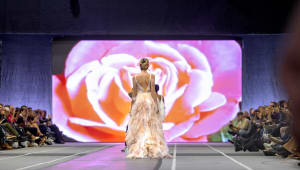
Cornell Fashion Collective - 40th annual (2023)
By Cornell Fashion Collective
Support our platform for students to collaborate, express creativity, and inspire our community through a professional annual runway show!
Support our platform for students to collaborate, express creativity, and inspire our community through a professional annual runway show! Cornell Fashion Collective ABOUT US The Cornell Fashion Collective is a student-run organization that provides members of the Cornell community with an outlet to express creativity in fashion and fashion management. Each spring, our organization presents a professional runway show featuring the talent of students who both design apparel and manage the operations of the show. Our organization gives students, both undergraduate and graduate, the opportunity to practice design, demonstrate their talents, and learn how to produce a large-scale fashion event. MISSION STATEMENT Our mission is to present an engaging and professional runway show, providing a platform for students to collaborate, express creativity, and inspire our community. WHAT CFC MEANS TO OUR MEMBERS "CFC has been an invaluable platform for my growth as a servant leader and collaborative team member. Witnessing the continuous expansion of our membership, outreach, and impact has been incredible these past 3 years. Interactions with members, faculty, and the broader Ithaca community have deepened my appreciation for fashion, with incredible appreciation to CFC. Despite challenges, my gratitude for this experience and organization knows no bounds. The lasting experiences from my CFC involvement are cherished, and I am so excited to see the culmination of our efforts this March at our 40th Annual Spring Runway Show!" - Sarah Kim, Co-President "The Cornell Fashion Collective holds a special place in my heart, especially as a senior about to graduate. Throughout my time at Cornell, CFC has always been a place I could go to surround myself with fellow creators, to collaborate driven by a shared passion. It's a vibrant tapestry of diverse experiences, where creativity knows no bounds. For me, it's about providing our talented members with the stage they deserve, where they can unveil their innovative designs and identities to the world. I can’t wait to see what our brilliant members come up with this year!" -Anna Paaske, Co-President "As a fashion design major, presenting a senior collection at the show will be a defining moment for me. CFC has allowed me the opportunity to take my designs beyond the classroom and see them on a runway with a live audience, an incredibly gratifying experience. Each year I have grown through collaborating with my peers and seeking feedback from the greater Cornell community. CFC truly excites me to create my best work and I am so proud to be a part of such a fun yet professional group who is passionate about advancing student talent." -Angela Lan, Level 4 Designer PAST SHOWS 39th CFC Fashion Show; 2023 38th CFC Fashion Show; 2022 37th CFC Fashion Show; 2019 36th CFC Fashion Show; 2018
109%
Funded
57
Donors
0
days
left

Cornell Center on the Death Penalty Worldwide FY23
By CCDPW
CCDPW is the only organization defending women on death row around the world. We need your help to get women the justice they deserve!
CCDPW is the only organization defending women on death row around the world. We need your help to get women the justice they deserve! CCDPW Defending Human Rights for Women and Gender Diverse People The Cornell Center on the Death Penalty Worldwide (CCDPW) is a nonprofit dedicated to exposing discrimination in the judicial system and defending women, trans folks, and gender diverse people facing extreme sentences. We know from our research that this population is regularly subjected to unfair practices inside courtrooms. The ubiquity of this discrimination makes it invisible and accepted, but we are here to change that. For years, CCDPW has engaged in advocacy, research, public education, and targeted litigation on behalf of the estimated 30,000 people worldwide facing execution. Our work focuses on women and gender diverse people, but the victories we win are beneficial to all incarcerated people as we work to bring equality and fairness into deeply flawed systems. We fight for total abolition of the death penalty in all circumstances, in every country on earth. At CCDPW we have crafted an internal feedback system where our work with clients informs the new research agendas we undertake. In turn, our research produces original data which we utilize within advocacy campaigns and storytelling, which then impact our litigation strategies and policy recommendations in ways that we hope will positively shape our clients’ experiences moving forward.When We Fight, We WinIn January of 2025, we celebrated a monumental victory. In its decision in Andrew v. White, the Supreme Court of the United States recognized for the first time in its history that irrelevant gender stereotypes involving women’s sex lives and mothering skills have no place in a criminal courtroom. In Ms. Andrew’s case, prosecutors presented evidence detailing her intimate relationships (including one that took place twenty years before trial), the outfits she wore, and even her style of underwear. In closing argument, they dangled multiple pairs of Ms. Andrew’s underwear before the jury, arguing that it was not the sort of underwear a grieving widow would wear. The federal court of appeals will now decide whether to grant Ms. Andrew a new trial. The decision, which garnered the support of conservative and liberal justices alike, was issued a day after the new president's inauguration. It felt like a miracle. But in fact, it was the culmination of years of advocacy by a team of lawyers The Cornell Center on the Death Penalty Worldwide (CCDPW) brought together and supported every step of the way. Four years ago, we drafted and filed a complaint with the Inter-American Commission on Human Rights, arguing that the prosecution’s sex-shaming tactics violated Ms. Andrew’s fair trial rights. We recruited the law firm King & Spaulding as a pro bono partner and referred them to an experienced, gender-sensitive mitigation specialist working with Phillips Black. One of our former colleagues and clinic students, Nathalie Greenfield JD '21–who began working on Ms. Andrew’s case as Professor Babcock’s law student–then joined the team with Cornell alum John Mills JD '08. We recruited gender justice organizations to sign on as amici in the Supreme Court while raising media awareness about the misogyny in Ms. Andrew’s case. The amici cited our research in their briefs to the Court. The Supreme Court victory sets an important precedent for exposing and addressing gender discrimination in the criminal legal system, something our team is deeply proud of. However, we still have a great deal more work to do if we wish to truly address intersectional discrimination in the trials of women facing capital punishment or death by incarceration. Capital Punishment is an Affront to Human Rights Women are sentenced to death for killing their abusers after lifetimes of gender-based violence in courts across the world. A study by CCDPW researchers found that at least 96% of the women on death row in the United States had survived at least one form of gender-based violence. In places like Tanzania, women are sentenced to death even when acting in self defense because the penal code makes the death penalty mandatory for murder. In Uganda, women, LGBTQIA+ folks, and trans individuals are given death sentences for consensual same sex relationship under the anti-homosexuality act. In Iran, women are being executed for standing up for basic human rights. While these contexts and judicial systems vary, the thread that unites them is the incompatibility of capital punishment to exist in societies that truly value freedom, the possibility of rehabilitation, and human rights. If we want to make global abolition a reality, its imperative we understand the stories, lives, and experiences of the most marginalized members of the global death row population, people who until now have been left out of the broader advocacy movements challenging capital punishment. To tackle this complex issue, we are training capital defense lawyers, conducting research to enlighten policy makers and courts, and working directly with women and gender diverse individuals to tell their stories. We need your help to get marginalized people at risk of execution the justice they deserve. Join us in this struggle and support our efforts to eradicate capital punishment forever. Together, we can uplift human dignity and make state execution a relic of the past. CCDPW was part of the legal team that helped save Melissa Lucioan innocent women on death row in Texas, from execution in April 2022. We continue to fight for her release, despite the fact that a court found her to be actually innocent and recommended her sentence be overturned.
69%
Funded
57
Donors
0
days
left
AguaClara
By AguaClara
Become partners in our vision for clean water access for all! We hope that you will champion our cause and help us expand our horizons!
Become partners in our vision for clean water access for all! We hope that you will champion our cause and help us expand our horizons! AguaClara AguaClara is a multidisciplinary engineering team based at Cornell University that develops sustainable water treatment technology. The AguaClara plant design is gravity-powered, electricity-free, and scalable to fit the needs and size of any community. Our governance model is based on community ownership, democratic governance, and technology that is specifically designed for ease of operation and to encourage pride in ownership. AguaClara facilities on the ground in Honduras are owned and operated by their respective communities and all facilities continue to provide safe drinking water. This is particularly noteworthy in Honduras where most conventional water treatment plants do not reliably meet drinking water standards. Several towns with AguaClara facilities are experiencing reverse migration from Tegucigalpa due to their superior water. Our Design Philosophy The AguaClara design philosophy is a set of principles developed to ensure the long-run sustainability of the facilities we engineer. It is based on the belief, as expressed by Nobel Laureate Elinor Ostrom, that "combining knowledge of local circumstances with modern science and technology is a crucial prerequisite for developing more efficient, sustainable infrastructure." Our design aims at optimizing the level at which water is treated while also minimizing cost and ensuring that our plants are operator-friendly. Despite functioning on the same basic process, there are major differences in design between what is effective in the developed world and what is feasible in the Global South. Almost all of the plants in the developed world rely on large amounts of electricity to monitor and operate. However, in the developing world, access to a reliable source of electricity is both doubtful and prohibitively expensive. AguaClara plants use gravity instead of pumps, and mechanical devices instead of electrical monitors, to run the plant. Since the plants are designed to be constructed using almost exclusively locally-available materials and labor, AguaClara communities also avoid the risks of failure or shut-down that plague other projects dependent upon overseas expertise and supplies. Our Education Philosophy The AguaClara program provides undergraduate & graduate students the opportunity to enhance their education with hands-on experience working on projects with real life applications. In 2012, the National Academy of Engineering recognized AguaClara as an exemplary program that "infuses real-world experience into engineering education." Our Fundraising Goal Throughout this campaign, we hope to raise money to continue to fund the groundbreaking research our members are conducting. By contributing to our cause, you are helping to fund not only the tools and materials we continually use in our lab, research, and fabrication teams but also are making sure that our labs are kept up-to-date with the most recent technology! We are reaching out to you to become partners in our vision for clean water access for all! As alumni, friends, and newcomers to the AguaClara program, we hope that you will champion our cause and help us expand our horizons. Thank you for your support! For more information on the AguaClara program, visit us online at aguaclara.cornell.edu.
109%
Funded
38
Donors
0
days
left
Akwekon Full Circle Healing & Honoring Garden FY23
By AIIS
Our garden will provide students an opportunity to develop a space dedicated to the Healing and Honoring of Indigenous Students, past and present!
Our garden will provide students an opportunity to develop a space dedicated to the Healing and Honoring of Indigenous Students, past and present! AIIS About AIISP The American Indian Indigenous Studies Program (AIISP) provides student support services, cultural programming, activities, events, an academic minor, and support for research, internships, external educational opportunities to indigenous Cornell students that lend themselves to student success. AIISP provides support and advisement to the Native American Indigenous student organizations, provides support to Akwe:kon, the Native-themed residence house for cultural programming, activities, and faculty engagement. Akwekon Garden Project The purpose of the Akwe:kon Garden project is to provide Indigenous students an opportunity to develop, nurture, and maintain a medicinal plants garden that will be dedicated to the Healing and Honoring of Indigenous Students, past and present. The project will include an agricultural medicinal plants educational and Gayogoh:no language component. The project will work with the Learning by Leading student team and faculty members affiliated with the Botanic Gardens, members of the Gayogoh:no Learning Project, as well as the leader of Sustainable Futures, a local non profit for expertise on sustainable gardening practices, Native culture, and Indigenous plants, Native knowledge and agri-practices. Full Circle Approach The Akwekon Healing and Honoring Garden utilizes the Full Circle approach to life, community, indigenous values, and indigenous people's relationship to the environment. This project seeks to serve as a space for honoring Indigenous student's lives, those who attended Cornell, and for those currently in need of healing. The Indigenous students at Cornell will work and nurture the medicinal plants and have an opportunity to learn about agricultural practices, medicinal plants, and expand their knowledge and practice of indigenous values. A QR code at the site of the garden will educate non-Native Cornell students and the public about medicinal plants, Indigenous values and the Full Circle approach. YOUR GIFT will give Native students an opportunity to realize the garden project, and help educate other students and the public about medicinal plants, their uses, and traditional Indigenous values.
14%
Funded
24
Donors
0
days
left
Touchdown Mobile Project
By Cornell University
Help us spread the love and cheer of Touchdown the Bear today!
Help us spread the love and cheer of Touchdown the Bear today! The History Touchdown arrived on campus in 1915 when the Cornell University Athletic Association bought him as a live black bear cub for $25. Touchdown was an instant good luck charm when Cornell's football team went undefeated that same year. After Harvard tried to steal Touchdown at a football game, Touchdown was retired to the wild where he lived out the rest of his days. Touchdown had many successors including Touchdown II, III & IV. In the early 2000s Touchdown made a full return to Cornell, all grown up! Now Touchdown's appearances are managed by the Big Red Bears, a student-run organization. We have approximately 15 members who trade off assisting Touchdown at events. We love continuing Touchdown's legacy and being the face of the University! Touchdown Mobile Project Touchdown Mobile is a project that will help Big Red Bears purchase a limited use vehicle (street legal golf cart) for the Touchdown the Bear mascot to be transported to events around campus. This project will affect the entire campus community as it will allow Touchdown to more effectively serve the many event requests across campus. This project have already been approved by Risk Management and Fleet Services. More than five drivers have gone through the required training, meaning that with YOUR GIFT we can soon purchase this vehicle and have it up and running in just a few weeks! This project will protect student safety. It will also have a positive impact on entire campus populous by making Touchdown more available in addition to this new addition to the iconography of Cornell. Learn more about Touchdown and the great work of Big Red Bears at http://www.bigredbears.org/.
54%
Funded
39
Donors
0
days
left
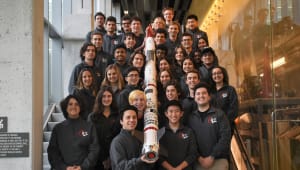
Cornell Rocketry Team
By Cornell Rocketry Team
Help us travel to Las Cruces, New Mexico to compete against 150 other collegiate teams from 22 different countries!
Help us travel to Las Cruces, New Mexico to compete against 150 other collegiate teams from 22 different countries! Cornell Rocketry Team The Mission: Cornell Rocketry Team designs, manufactures, and tests a high-powered rocket every year for competition in the Spaceport America Cup. We travel to Las Cruces, New Mexico to compete against 150 other collegiate teams from 22 different countries. The primary goal at the competition is to launch the rocket to exactly 10,000 feet using our Student Research and Developed (SRAD) solid rocket motor. Every year, our rocket carries with it a unique scientific payload that leverages the high altitude or high acceleration environment onboard the rocket. The team designs and manufactures almost every part of the rocket in-house, making use of a variety of lab spaces on campus. While competition is the major goal for the team, our primary focus is to provide all of our members with the opportunity to learn and grow as engineers with hands-on experiences. The Team: Our team is made up of 47 members, all with a passion for space and engineering. The team is organized into five different subteams, each of which plays a critical role in making the rocket fly. Propulsion: The propulsion subteam is responsible for designing and manufacturing the motor that lifts the rocket to our target altitude. Our biggest challenge is ensuring that the motor stays in one piece while accelerating the red-hot combustion gases out of the nozzle to over 5,000 miles per hour. We manufacture everything in-house, from the nozzle to the casing to the propellant itself. Static Fire Test of our Rocket Motor Structures: The Structures subteam focuses on the designing and manufacturing of structural components within the launch vehicle, integration of systems, and the overall body of the vehicle itself. We see all projects through from ideation to fabrication with machining with metals and working with composite materials such as fiberglass and carbon fiber. Our team also uses simulations to do analysis work on aspects such as drag, internal stresses of the launch vehicle, and stability calculations to ensure the best performance possible for the rocket. Recovery and Payload: The Recovery and Payload subteam designs parachute systems that autonomously navigate the rocket to the ground. Our autonomous recovery systems incorporate sensors, flight computers, steering mechanisms, and, of course, guided parachutes. We also design the rocket’s payload: an original engineering project that we choose each year. In essence, we think of something cool that we want to put on a rocket, and we do just that. Electrical and Software: The Electrical and Embedded Software subteams are jointly responsible for the electronics within the rocket that handle various operations including data storage, acquisition, communications (both internally and with ground control), and event triggering for other systems. The Electrical subteam primarily handles the overall design and implementation of the hardware within the rocket, whereas the Embedded Software subteam is responsible for the code on the chips located on the boards that control the functionality of the board. These subteams work very intimately, as well as often interface with other systems and subteams. This year, we are focused on implementing designs developed previously, and are very excited to be able to launch again! Business: The Business Subteam conducts all of the activities that allow the team to run smoothly and effectively. Some of the main focuses of this subteam are website development, advertisement, alumni and sponsorship outreach, merchandising, and social media. This year, the business subteam is focusing on organizing team social events and activities. Thank you for your support!
90%
Funded
59
Donors
0
days
left

Les Femmes de Substance
By Les Femmes de Substance
Please join us as we strive to create women of substance, who will make every effort to give back to and build up their surrounding communities!
Please join us as we strive to create women of substance, who will make every effort to give back to and build up their surrounding communities! Les Femmes de Substance Founded in 2003, Les Femmes de Substance is a student-run organization that provides professional development to women of color at Cornell University. In 2023, Les Femmes will celebrate 20 years of empowering women to pursue any and every aspiration by providing a foundation of sisterhood, educational experiences, and mentorship. Through our Annual Women of Substance Retreat and on-campus programming, we continue to remain committed to our values of Mentorship, Excellence, Sisterhood, and Diligence as we work to develop our best professional selves. Please join us as we strive to create women of substance, who will make every effort to give back to and build up their surrounding communities. Our annual Women of Substance Retreat is instrumental to fulfilling our mission of inspiring women to give back to their communities as women of substance. During the off-campus retreat each Spring, the Les Femmes executive board invites the women of Cornell to spend a weekend participating in workshops and social events that teach essential skills and foster success in all future endeavors. Les Femmes de Substance knows that representation of women of color in the professional world matters, and that access to these successful women and mentors who they can relate to is essential as they navigate their career paths. Our retreat and campus programming thus help to affirm and support the empowerment of women of color as we work to break through professional barriers and ignite our passions. We have been fortunate to hold this retreat since 2005 because of the donations from generous organizations and alumni. If you are interested in supporting our 16th Annual Women of Substance Retreat as we prepare to celebrate 20 Years of Substance in 2023, please support our fundraiser for $5,000. The total amount raised will directly support the costs of the retreat, especially as we aim to keep the price of attendance as low as possible so that our learning opportunities are accessible to all women of color at Cornell. We appreciate your support in uplifting and creating women of substance at Cornell University. Thank you!
93%
Funded
87
Donors
0
days
left
National Society for Black Engineers FY23
By NSBE
NSBE Conferences are a key component of the NSBE member experience. Students are able to expand their networks, connect in meaningful ways!
NSBE Conferences are a key component of the NSBE member experience. Students are able to expand their networks, connect in meaningful ways! NSBE About the National Society of Black Engineers The National Society of Black Engineers (NSBE) is a 501(c)(3) nonprofit organization dedicated to the academic and professional success of African-American engineering and technical students and professionals. NSBE offers its members leadership training, professional and academic development, mentoring opportunities, community service outreach programs, and scholarships. Our Fundraising Goal NSBE Conferences are a key component of the NSBE member experience. Students are able to expand their networks, connect in meaningful ways with company representatives and other Black engineers, and interview for summer internships and full-time positions. We are fundraising to give more NSBE members this opportunity. It can change the trajectory of their careers during and after college. Please consider contributing to our goal! Our NSBE Chapter Founded in 1977, NSBE-CU is the premier organization for Black students in the science, technology, engineering, and mathematics (STEM) majors at Cornell University. NSBE-CU is a member of the national organization with affiliation to Region One, which serves the Northeastern United States and international chapters. Through the support of the national organization, the Cornell University College of Engineering Diversity Programs in Engineering, and corporate sponsorship, NSBE-CU upholds our mission statement as well as the national directives. Our Professional Development Initiative NSBE-CU focuses on recruiting members from all STEM backgrounds, with an emphasis on drawing members from the entering class. NSBE-CU’s community-building activities, sponsored development programs, and leadership opportunities help recruit and retain members who go on to earn degrees in engineering, science, and technology. In partnering with companies like PepsiCo, Jane Street, Illumina, Arcadis, etc., we are able to provide our members with tools to further their professional careers. Our Academic Excellence Initiative Our tutorial programs, or 'Study Jams', are held regularly throughout the school year, offering free tutoring and review sessions for general freshman and sophomore engineering courses, hosting post-exam celebrations, and providing students with a place to be comfortable while they study with their friends. NSBE-CU facilitates academic excellence by rewarding deserving members with scholarships and providing mentorship and assistance to struggling students to help them reach their full academic potential.
48%
Funded
27
Donors
0
days
left
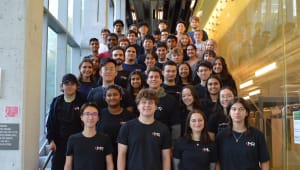
Cornell Mars Rover FY23
By Cornell Mars Rover
We strive to cultivate an environment where we can develop innovative and leadership qualities that may one day aid in the exploration of the final frontier!
We strive to cultivate an environment where we can develop innovative and leadership qualities that may one day aid in the exploration of the final frontier! Cornell Mars Rover About Cornell Mars Rover, since its establishment in 2010, aims to design an innovative semi-autonomous rover to compete in the University Rover Challenge each year. Our student-run team fosters creativity and intellectual growth through the development of our rover. As engineers, we strive to cultivate a creative environment where brilliant young minds can develop innovative, intellectual, and leadership qualities through our vision of building a rover that may one day aid in the exploration of the final frontier. The team is divided into several sub-teams: Drives, Arm, AstroTech, Controls Software, Controls Electrical, and Business & Design. Students can best use their specific skill sets to contribute to the project and are given the opportunity to learn from others in other disciplines. University Rover Challenge The University Rover Challenge is held annually by The Mars Society at the Mars Desert Research Station, Utah. CMR will be competing in the University Rover Challenge in Summer 2024. We hope to follow the success we have established in the past years, as we came in 2nd place in Equipment Servicing in 2017, 5th in Autonomous Transversal in 2018, and 3rd in Autonomous Transversal in 2019. We aim to take what we learned in past years' campaigns and apply it to this year's competition. Several universities from across the globe will be competing against Cornell Mars Rover in four tasks: Science Mission, Extreme Delivery, Equipment Servicing, and Autonomous Navigation. The winner will receive the honor of presenting their rover at the International Mars Society's Conference. How you can help! Each year, Cornell Mars Rover aims to improve on the previous iterations of the rovers for a new rover. This includes reviewing the competition's performance, discussing potential improvements, preparing new designs, fabricating the new rover, and finally testing the rover for different tasks. We require funds to acquire equipment for testing different alternatives for various components, manufacturing the rover, and traveling to the competition in Utah. Your donations would allow our members to experiment with state-of-the-art technologies during our design process, which will not only help us create a better rover, but will also help students emerge as better and more qualified engineers after they leave us. Furthermore, traveling to the competition would also unlock a vast network of like minded students and professionals in the industry for our members. Your contribution would, therefore, contribute to our overall mission as an engineering project team and help us reach our goals. We sincerely hope that you would help us in our endeavors, and thank you for your contribution. See our website to learn more: marsrover.engineering.cornell.edu/
164%
Funded
22
Donors
0
days
left
Asian American Studies Program Oral History Project
By Asian American Studies Program
This project aims to gather, preserve, and share the stories of Asian/Asian American students, faculty, and staff at Cornell!
This project aims to gather, preserve, and share the stories of Asian/Asian American students, faculty, and staff at Cornell! Asian American Studies Program In the classroom, in scholarship, and through campus and community advocacy, the Asian American Studies Program (AASP) is committed to examining the histories and experiences; social and community formations; politics; and contemporary concerns of people of Asian ancestry in the United States and other parts of the Americas. Project Purpose The Asian/Asian American Oral History Project aims to gather, preserve, and share the stories of Asian/Asian American students, faculty, and staff at Cornell in order to have a better understanding of the history and impact of Asian/Asian Americans throughout the university's history. We will track the various academic and social/political efforts of these groups while at Cornell, including the fight for and implementation of Asian American Studies on campus, to provide a more robust institutional and historical record of this community's activities. We also see this as an opportunity for current Cornell students to connect and collaborate with Asian American alumni -- to understand the groundwork these alumni laid for current students and for alumni to understand the changing demographics of Cornell students and the changing landscape of student life. Making an Impact The project complements course offerings in Asian American history, Asian American studies, and the Cornell Public History Initiative by drawing on interdisciplinary methodologies, including ethnography, literature, social theory, and memory studies.Your support will help fuel our effort to: facilitate collaborative research, civic engagement, and digital technologies to make history accessible, connecting classroom learning and academic study to the broader Cornell community, including alumni provide a lasting archive of oral histories and other forms of documentation about the experiences of Asian/Asian American students at Cornell. the research will gain a broader and deeper understanding of the role of diversity -- and diverse student bodies -- at Cornell and in higher education more generally. PLEASE JOIN US AND MAKE A GIFT TODAY! Symposium Join us on Saturday, Nov 12th as we celebrate the 35th anniversary of the Asian American Studies Program (AASP) featuring keynote speaker Prof. Gary Okihiro (founding director of AASP) and former alumni Prof. Mary Lui (History, Yale University), Prof. Thuy Linh Tu (American Studies, NYU), Pawan Dhingra (Associate Provost and Associate Dean of the Faculty, American Studies, Amherst College), and Prof. Dylan Rodriguez (Media & Cultural Studies, UC Riverside)
53%
Funded
40
Donors
0
days
left
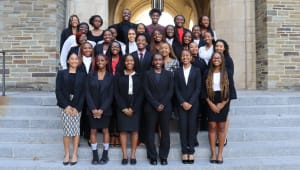
Black Ivy Pre-Law Society Advantage Tour
By The Black Ivy Pre-Law Society
Help send the Black Ivy Pre-Law Society on our annual Advantage Tour!
Help send the Black Ivy Pre-Law Society on our annual Advantage Tour! The Black Ivy Pre-Law Society The Black Ivy Pre-Law Society: Ethics Equality, Excellence, Economy. The Black Ivy Pre-Law Society was founded in May 2016 as a professional honor society for students of color and underrepresented minorities who are dedicated in their pursuit of a degree and career in law upon graduation. With this goal in mind, Black Ivy was founded on our values of Ethics, Equality, Excellence, and Economy. Our programming gives us the opportunity to expose our members to top law schools, firms, and the legal field—thus giving our members access to opportunities that would allow them to succeed. Our programming includes resume workshops, LSAT prep, BLSA Mixers, our Law School Chat Series, external events with other organizations on Cornell’s campus (such as our most recent Democratic Debate Watch Party), the #ADVANTAGETour, and our Pre-Law/Pre-Professional Summit. (The four classes in order: Unum Imperium, Semper Invictus, Fortis Mollitiam, and Magna Vis) The Advantage Tour Our largest expense is the #ADVANTAGETour. This is an annual trip to a city in the United States with the purpose of visiting law schools, law firms, nonprofits, and engaging in community service, if possible. Planning the #ADVANTAGETour involves setting up events such as tours, Q&A panels, receptions, and networking mixers. In the past we’ve worked with Boston University School of Law, Harvard Law School, Columbia Law School, Akin Gump Strauss Hauer & Feld LLP, Proskauer Rose LLP, Latham & Watkins LLP, Davis Wright & Tremaine LLP, the American Civil Liberties Union, and the New York Civil Liberties Union to organize these activities in New York City. (2022 Boston Advantage Tour) This year, we’d like to take our members to Washington D.C. to visit the Supreme Court, the Library of Congress, The United States Capitol, the African American History Museum, Howard University School of Law, Georgetown University Law Center, and George Washington University Law School. Washington D.C., being the center of the public sector, will offer our members a diverse and wider possibility of legal professions to pursue. A message from our President and Vice President First and foremost, we'd like to thank you for taking the initiative to invest in empowerment, diversity, and inclusion. The Black Ivy Pre-Law Society was founded as a resource for pre-law students of color and has grown tremendously thanks to support from friends, family, mentors, and colleagues such as yourself. While you consider your contribution to our D.C. Advantage Tour Campaign, please note that the point of diversity and inclusion isn’t to highlight differences and showcase token identities. It is to reject adherence to exclusive normativity, appreciate our ability to learn from one another, and collaborate more efficiently because we bring a variety of ideas to the table. We believe that cultivating and approaching issues with an intersectional perspective is necessary for legal practicality and efficiency. Hence, our mission is to uplift minorities, open up space for the underrepresented, and deepen our understanding of how the legal arena works and can improve. Join us as we embark on our next chapter of scholarship and impact. We appreciate your time and assistance. (Lelani Gorham and Aliyah Kilpatrick) THE BLACK IVY PRE-LAW SOCIETY Ethics. Equality. Excellence. Economy.
152%
Funded
100
Donors
0
days
left
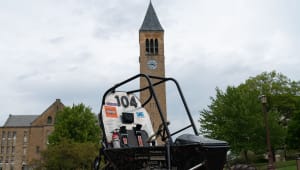
Baja Racing FY23
By Baja Racing
Our goal is to fund our Baja race car for the 2022-2023 season. We will be creating our 19th car from scratch this year!
Our goal is to fund our Baja race car for the 2022-2023 season. We will be creating our 19th car from scratch this year! Baja Racing Race to the Top! Cornell University’s Baja Racing Team is an undergraduate-led engineering project team dedicated to designing and building the best off-road vehicle to compete in the Society of Automotive Engineering (SAE) Collegiate Design Series. Since our founding in 2003, the collective innovation and work ethic of our members has grown into a winning culture, earning us top 5 finishes every year for the last 12 years. We elect to develop an entirely new model each year, both to hone our engineering skills and to remain competitive with a field of over 100 teams. Having made huge improvements over previous iterations, we are currently building our best car yet! Cornell Baja 2022-2023 Our team this year is made up of 59 students from 11 different majors. We pride ourselves on our diversity, with a 1:1 ratio of women to men. This year, we are primed to return to all three Baja SAE competition events: the first is California in March, then Williamsport in June, and finally Michigan in the fall of 2024. Perpetually in the pursuit of optimization, we have many exciting changes planned for our new car, TGXX. This year, in order to accommodate a new, more powerful engine, we are revamping our whole driveline, including optimizing our continuous variable transmission and implementing a custom-machined dog clutch. In addition, we have used CAD software and advanced modeling techniques to design our lightest frame yet, one that maintains the strength of previous models. This frame will be made possible through a highly advanced fabrication process, utilizing laser-cutting technology to reduce manufacturing time and tighten dimensional tolerances to nearly zero. We are also streamlining our drivetrain by implementing a belt-driven system. This blend of design improvements will make this the most technologically advanced car we've ever built. About the Competition Baja SAE challenges engineering students to design and build an off-road vehicle that will survive rough terrain and water, ensuring power and efficiency all the while. Baja teams compete triannually, and each competition requires collegiate engineers to balance design and cost with performance under a strict set of safety guidelines. The competition is comprised of dynamic and static events, testing not only acceleration, endurance, and traction, but also design, cost efficiency, and commercial viability. Each year, our research moves through three stages of review before our design is finalized: Preliminary Review, Critical Review, and Final Review. During this time, we’re also modifying our older cars, so we can test new designs on prior years’ vehicles. We move to the build phase following Final Review, and then it's all hands on deck; each Cornell Baja subteam, while working on their specialized projects, communicates with the rest of the team to ensure that integration is seamless. Each year, we continue to innovate and improve—rethinking and redesigning even the smallest components. Our unmatched work ethic and team culture create a passion for our car, and we think that passion really makes the difference. Why Your Support Matters A donation to our team will be a tremendous help to our lab space and manufacturing process, while simultaneously providing for our travel and housing costs during competitions. Your funds will also help us enhance the capabilities of our custom-built engine and transmission dynamometer and purchase sensors that are vital for testing and tuning. A donation will also allow us to bring purchase state-of-the-art manufacturing equipment, giving our team members the opportunity to gain familiarity with the tools that they will see in the industry. Through our support network, we are afforded the opportunity to compete, honing our engineering skills with experience that simply can't be replicated in a lecture hall. Winning competitions with Cornell Baja instills confidence in our members, instilling in them the creativity and adaptability to succeed in their next steps. Our active Cornell Baja alumni network is a testament to this, boasting recent former team members at Anduril, Rivian, SpaceX, Capital One, Blackstone, Ridgeline, Google, and Neuralink, to name a few. We continually improve and optimize our cars, but also ourselves, so that we may thrive after graduation. By donating to Cornell Baja Racing, you’ll help develop the engineers and leaders of the future. Thank you for your support! Visit our website to learn more: https://baja.mae.cornell.edu/ Facebook: facebook.com/CornellBajaRacing Twitter: twitter.com/cubaja Instagram: https://www.instagram.com/cornellbajaracing/
90%
Funded
66
Donors
0
days
left
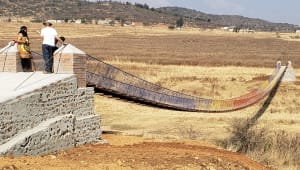
Engineers in Action FY23
By Engineers in Action
The mission of the EIA Bridge Program is to help rurally isolated communities gain access to essential resources with sustainable infrastructure!
The mission of the EIA Bridge Program is to help rurally isolated communities gain access to essential resources with sustainable infrastructure! Engineers in Action DESIGN • TRAVEL • CONNECT • BUILD Who we are Rural isolation, or the inability to access essential resources such as hospitals, schools, and markets due to geographic barriers, directly contributes to global poverty. The mission of the Engineers in Action (EIA) Bridge Program and our University Chapter is to help these rurally isolated communities gain access to these essential resources with sustainable infrastructure by harnessing local expertise and global partnerships. In addition to the physical bridges, we hope to inspire members of the community to continue building connections with neighboring communities. The Cornell University Chapter of Engineers in Action is a student-run project team with the College of Engineering that works with the non-for-profit organization Engineers in Action to design and build pedestrian footbridges for rurally isolated communities. Our impact Imagine starting every morning with a trek to central campus. Now imagine that same walk without bridges connecting North and South Campus to Central. Your daily commute would either double or become incredibly dangerous. This is the reality for many members of rural communities worldwide. Our team strives to impact communities in need by bridging gaps in education, healthcare, and safety through physical bridges. Each bridge our team builds makes a tangible difference in a community and increases equity across the world. Summer 2019 Build Before the summer of 2019, the community of Mdlasomi in the Manzini region of the Kingdom of Eswatini had seen the deaths of 17 people attempting to cross the Ngwempisi river. Of these deaths, several were young children attempting to get to school. Impassioned by these events, the community sought out and committed to working with EIA and the government of the Kingdom of Eswatini to build a bridge that will mitigate the risk associated with performing these simple daily tasks. For 8 weeks, the Cornell Team successfully designed and built a 95-meter suspended cable bridge across the Ngwempisi River with the community of Mdlasomi. Summer 2022 Build After two years of not being able to travel due to the Covid-19 pandemic, our team finally completed another bridge in Summer 2022. Over these two years, we continued learning and designing bridges, and this past summer, our team sent 5 students to the Kingdom of Eswatini, where they spent 6 weeks turning designs into reality. The team worked with the Boyanne and Zombodze communities to build a 100 meter footbridge that crosses the Mtilane River, which will help over 2,000 people including 1,200 schoolchildren cross the river safely. Future Projects We plan to send another team abroad during Summer 2023 to either Bolivia or Eswatini. While our site is not definitive yet, we are working hard to learn the foundations of bridge building and gain cultural awareness. The team cannot wait to move forward with this year's project, and it would not be possible without donors like you.
92%
Funded
100
Donors
0
days
left
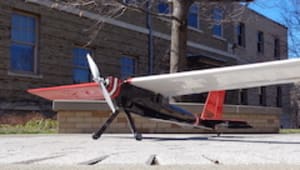
Design Build Fly
By Design Build Fly (DBF)
Design Build Fly (DBF) is a student project team that designs, builds, tests, and flies radio-controlled aircrafts for competition.
Design Build Fly (DBF) is a student project team that designs, builds, tests, and flies radio-controlled aircrafts for competition. Design Build Fly (DBF) The Team Cornell University's Design Build Fly (DBF) project team is a student-run organization in which members develop, build, test, and optimize a custom radio-controlled aircraft to compete in the international DBF competition. The competition, sponsored by Textron Aviation, Raytheon, and the American Institute of Aeronautics and Astronautics, enables students to engage in the design process and to produce an aircraft that meets the requirements of a specified mission profile. Cornell DBF provides interested students with a venue to apply theoretical coursework to formulate practical engineering solutions. By applying the same technology and manufacturing methods as industry professionals, our team provides graduating members with the knowledge and experience for success. Website| Facebook The Competition The AIAA Design/Build/Fly competition challenges teams to create a high-performing aircraft within a specified mission profile. Held in Wichita, Kansas, or Tucson, Arizona, the competition is comprised of both a technical report and a flight performance evaluation. The written component is determined by evaluating the team’s engineering process for thoroughness, justification, and presentation. The second component is the mission score which assesses a team’s aircraft performance according to competition rules. These rules vary significantly each year, encouraging fresh designs and new innovations. This year’s competition theme is electronic warfare, where teams will model military reconnaissance aircraft and perform similar missions. These include a staging flight, a surveillance flight with an electronics package, and a signal jamming flight with an antenna mounted on the wing. The competition is set to be held in Tucson, Arizona in the spring. Your Impact Your contribution allows us to produce durable aircrafts capable of meeting the stringent requirements of each year’s specified mission profile. The support of our sponsors has allowed us to keep designing and testing meticulously. Beyond providing students with valuable technical skills through the fabrication process, the challenges we’ve seen throughout the years have motivated us to continuously improve our aircraft designs and performance. One of our team leads, Adrian Lee recounts his experience thus far: "Being on Cornell DBF has been one of the best parts of my Cornell education. I've gotten to apply concepts taught in class while building a real aircraft, understand the aerospace industry while learning things not taught in the classroom and get to know a plethora of like-minded individuals passionate about future technologies in aviation. With your help, we'll be able to work with even more cutting-edge technology, continue to foster a hard-working team, and present our aircraft to the world at this years' competition in Tucson, Arizona. Please consider supporting our mission!" Your support is vital to the future success of the Design Build Fly project team and our efforts to cultivate a burgeoning class of engineers, and ultimately, place first in competition.
83%
Funded
52
Donors
0
days
left

Cornell Fashion Collective 2022
By Cornell Fashion Collective
Our mission is to present an engaging runway show, providing a platform for students to collaborate, express creativity, and inspire our community
Our mission is to present an engaging runway show, providing a platform for students to collaborate, express creativity, and inspire our community Cornell Fashion Collective ABOUT US The Cornell Fashion Collective is a student-run organization that provides members of the Cornell community with an outlet to express creativity in fashion and fashion management. Each spring, our organization presents a professional runway show featuring the talent of students who both design apparel and manage the operations of the show. Our organization gives students, both undergraduate and graduate, the opportunity to practice design, demonstrate their talents, and learn how to produce a large-scale fashion event. MISSION STATEMENT Our mission is to present an engaging and professional runway show, providing a platform for students to collaborate, express creativity, and inspire our community. WHAT CFC MEANS TO OUR MEMBERS "CFC has given me a space to learn and grow in a way I could have never imagined. Managing over 150 members, 200 models, and nearly 3000 show attendees seemed like a daunting task at first, but I cannot express enough gratitude and love for this experience and organization. I've been able to interact with so many amazing members of the Cornell and Ithaca community and have gained a deeper appreciation for these incredibly talented designers and for fashion as a whole. The experiences I've had throughout my involvement with CFC will last a lifetime, and I cannot wait to see the culmination of all our hard work this March!" - Devin Schneider, President "Being a senior in CFC is bittersweet. It has been an incredible club for me to showcase my leadership skills, explore my creativity, and also learn about business operations. Having been secretary and a designer my sophomore year, I feel CFC has allowed me to explore my full potential." - Ruth Beinhacker, Business Operations Team "The time I've spent in CFC has allowed me to have an outlet to share my designs, and the opportunity to connect with other like-minded individuals. This club brings together a diverse community of creatives that has helped me to view fashion from many different perspectives and grow as both a designer and an artist." - Katie Hogan, Senior Designer
101%
Funded
72
Donors
0
days
left
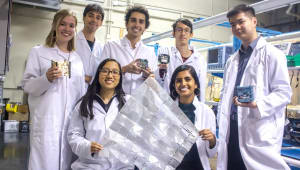
Alpha CubeSat – Reaching for the Stars FY23
By Alpha CubeSat
Alpha CubeSat will deploy a light sail equipped with the world’s smallest spacecraft, as well as the first holograms in space!
Alpha CubeSat will deploy a light sail equipped with the world’s smallest spacecraft, as well as the first holograms in space! Alpha CubeSat Alpha: Our Story Alpha Cubesat is a light sail-carrying, cube-shaped satellite—and a stepping stone to our nearest star system. With the first-ever holograms in space, tiny ChipSat computers, and low-cost components, Alpha opens up new techniques for interstellar messages and affordable spacecraft. Alpha’s story brings together NASA scientists, holographic artists, Silicon Valley inventors (a real-life Iron Man), and, of course, Cornell students. Part science mission and part art exhibition in space, Alpha carries far-reaching implications for interstellar travel and our search for life in the universe. Our team has been working tirelessly since 2016 to create science fact from science fiction. Now with more team members than ever—over 40!—Alpha is closing in on a late 2023 launch date. Alpha has been approved by NASA and is guaranteed to fly. Your donation helps launch a spacecraft six years in the making! Our holograms, embodiments of life on Earth, will be the first-ever launched into space, embossed on Alpha's solar panels Why Alpha? Our mission is pioneering multiple techniques that may fundamentally change deep space exploration. Innovations include a primarily 3D-printed spacecraft structure, the use of a RockBlock modem for decentralized communication, the placement of holograms on the spacecraft, and the release of a light sail that flies completely separately from its host satellite. 3D printing provides us with the versatility of rapid design and prototyping, while the usage of RockBlock Mk II, a modem that communicates with nearby Iridium satellites, enables us to send commands and receive data via website, rather than use a traditional ground station setup. Holograms are capable of storing vast amounts of information and could play a key role in stabilizing future light sails on their way to Alpha Centauri, our nearest star system. Alpha actively works to simplify and lower the costs of future scientific missions in Earth’s orbit and deep space. With software development nearly complete, all that’s left is the final stages of CubeSat assembly, finalizing our ChipSat design, and thoroughly testing our spacecraft. Project lead Josh Umansky-Castro, Alpha Member Allie Voltaggio, and Alpha alumni Andy Tan hard at work integrating electronics. In this image, the CubeSat on the right still needs some work, but as of November 2022 we're much closer to finishing assembly! Impact Alpha Cubesat is largely undergraduate-led, and the first engineering experience many of our 40 members get to have. For all of us, Alpha is the first spacecraft we’ve ever had the chance to build. But contributing to Alpha CubeSat does more than launch a spacecraft—it’s also launched the careers of nearly 50 alumni. Students have secured internships and jobs in the space industry with the experience they developed on Alpha. Donating to Alpha helps fund these futures, as well as a future for all of us—where humans set sail to the stars. Let’s Get Technical! Alpha is a 1U CubeSat capable of deploying a free-flying 0.57x0.57m light sail in response to commands via the RockBlock Mk II and the Iridium satellite network. The sail has a palm-sized ChipSat computer attached to each of the 4 corners. These will transmit GPS data to Cornell University’s ground station, enabling tracking of the sail to an accuracy of about 10m. The concept of a solar sail has already been successfully utilized in missions such as JAXA’s IKAROS (polyimide) and the Planetary Society’s LightSail 2 (Mylar), but this will be the first time that a retroreflective sail is employed. Retroreflection—an effect seen in the “glowing” eyes of cats and signs shining against headlights—is an efficient form of reflection where light bounces back to its source rather than scattering. This provides a bigger force on the light sail, allowing it to move faster than it would otherwise. We are also the first spacecraft mission to incorporate the use of holograms, created from sculptures made by artist C. Bangs. These will be placed above five of the CubeSat’s solar panels. The payload: a polycarbonate light sail with four Monarchs (next-generation ChipSats) for tracking and orientation. Alpha will be launched onboard a commercial resupply cargo mission to the International Space Station (ISS), from Cape Canaveral, Florida in the latter half of 2023. It will be released into orbit from the ISS via the NanoRacks CubeSat Deployer (NRCSD). Apogee and perigee will be approximately 400km, on an inclination of 51.6° from the equator. Weather balloon launch, October 2021—successful test of RockBlock modem to deploy light sail Ground communication via the Iridium network will begin two to three hours after deployment of the CubeSat from the ISS. Payload deployment will occur on command around twenty-four hours after the CubeSat is deployed; with the sail’s orbital lifespan on the order of a few days. Atmospheric drag will lower the CubeSat’s altitude until it de-orbits about three months after release from the deployer, having successfully completed its mission. We sincerely appreciate any contributions you can make to bring our project to fruition! Your support takes humanity one step closer to the stars.
100%
Funded
25
Donors
0
days
left
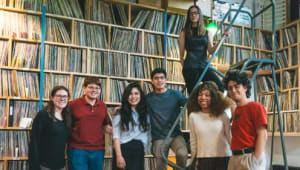
Cornell Media Guild / WVBR-FM
By Cornell Media Guild/WVBR-FM
Our goal is to provide students with hands-on training in media and running a multi-faceted business while serving the local and campus communities!
Our goal is to provide students with hands-on training in media and running a multi-faceted business while serving the local and campus communities! Cornell Media Guild/WVBR-FM WHO WE ARE Founded in 1935, the Cornell Media Guild has been giving students hands-on experience in media and business for over 85 years. CMG owns and operates 93.5 WVBR-FM, the only fully independent, non-profit, student-run, commercial radio station in the United States. CMG also operates a student-run record label, Electric Buffalo Records, to help launch emerging local artists, as well as a free-format online radio stream, Cornell Radio. Across CMG's platforms, students get experience working in media programming and production, news, and sports while honing valuable business and leadership skills. Students may not carry transistor radios anymore, but the core of the Cornell Media Guild remains as strong as ever, thanks to a committed team of hard-working students, a passionate cohort of community volunteers, and a generous group of alumni who have dedicated their time and support to guiding and mentoring each generation of leadership. Our goal from the start has been to provide students with hands-on training in media and running a multi-faceted business while serving the local and campus communities. WHY SUPPORT STUDENT-RUN MEDIA Over the last decade, dozens of college radio stations have gone off air or transferred their licenses, and most remaining stations, like WICB at Ithaca College, receive departmental funding from their affiliated universities. With radio advertising revenue steeply declining, the Cornell Media Guild and WVBR-FM depend on the generosity of listeners and supporters to stay on air. CMG's current FM broadcast facilities date back to 1962, when a 150-foot transmitter tower and shack were constructed at Hungerford Hill near East Hill Plaza. After 60 years, the transmitter shack needs critical repairs, including a new roof and updated ventilation to protect transmitter equipment. While equipment failures give our student engineers real-world troubleshooting experience as we make emergency repairs, they also interrupt broadcasts and distract from the day-to-day operations as we strive to serve the Cornell and local communities. Cornell Media Guild FM transmitter shack Inside the transmitter shack CREATIVITY, CONTENT, AND COMMUNITY The Cornell Media Guild is a unique town-gown bridge, where students work alongside local community members, developing content for an audience that includes Cornellians and Ithacans. CMG's programs help bring the Hill to the Tompkins County community while also giving students a broader perspective on the Ithaca area beyond campus. In recent years, students have launched innovative radio shows and podcasts to address critical issues and amplify underrepresented voices. With over 50+ episodes, CMG's Black Voices on the Hill podcast has given a platform to Cornell and community leaders, while Talk of the Town offers deep dives on local and national headlines with insight from experts. Big Red Banter discusses the world of sports, and hundreds of listeners tune in weekly for Bound for Glory, the longest-running live folk concert broadcast in the country. CMG offers a community that stretches back generations, with alumni generously sharing their time and mentorship with current students. An annual CMG Symposium brings alumni back to campus to network with students and give presentations about the current media landscape. Dozens of notable media personalities launched their careers with CMG, including TV psychologist Joyce Brothers '47, Miami meteorologist John Morales '84, iHeartMedia president Tom Poleman '86, voice of the NYC subway Jessica Ettinger Gottesman '87, and NBC's Kate Snow '91. Alumni back on air again on a visit to the station's Olbermann-Corneliess Studios in Collegetown
136%
Funded
117
Donors
0
days
left
Cornell Wardrobe FY23
By The Wardrobe
Any Student, Any Opportunity — Join us in our mission to provide equal opportunities to all students through our free professional clothing rental service.
Any Student, Any Opportunity — Join us in our mission to provide equal opportunities to all students through our free professional clothing rental service. The Wardrobe The Wardrobe aims to provide free professional attire to all members of the Cornell community. We believe the inability to acquire professional clothing should not be a barrier to an individual’s pursuit of professional opportunities. For students who have a need for professional attire in order to succeed in club recruitment processes, job interviews, and/or social events, The Wardrobe desires to level the playing field — we seek to embody our mission: “Any student, any opportunity.” The Problem In 2017, The Wardrobe surveyed 96 Cornell students, and the results were astonishing: 64% have felt underdressed at an interview or information session 34% didn't attend an interview or information session because of a lack of professional clothing 50% of those without proper attire were limited by cost constraints 50% of those without proper attire were limited by time and place The lack of professional clothing does not discriminate across gender and graduation year. These results have been verified to be statistically significant by Cornell University Statistician and Professor Cindy Van Es. The Solution We offer a free professional clothing rental service for students at Cornell. The rental service allows students to rent a diverse array of professional clothing, including but not limited to dress shirts, suit sets, blazers, blouses, ties, and dress shoes, in all sizes. We also host semesterly pop-up shop events, in which we distribute old inventory to the entire student body for free. With this two-fold approach, we serve all students at Cornell who are in need of professional clothing. Our Challenges The Wardrobe relies entirely on donations and sponsorships from partners to: Buy new inventory (e.g., various sizes, attires, styles) Clean existing inventory (e.g., dry cleaning, ironing) Cover administrative costs (e.g., rented spaces, outreach events) With your support, The Wardrobe can provide free professional attire to any student in need.
71%
Funded
44
Donors
0
days
left
CUAUV FY23
By CUAUV
Help us build and compete with a new, innovative submarine at next year's RoboSub competition!
Help us build and compete with a new, innovative submarine at next year's RoboSub competition! CUAUV The Team CUAUV is entirely undergraduate-run, consisting of over 40 students spanning numerous academic disciplines. The team offers a holistic engineering experience developing cutting-edge technology; students control the entire design, manufacturing, testing, and revision cycle. As a seven-time RoboSub champion, CUAUV embodies a tradition of excellence and continuously pushes the envelope of autonomous underwater vehicle technology. The Competition CUAUV designs, builds, programs, and tests two completely autonomous underwater vehicles every year to compete in AUVSI’s international RoboSub Competition. In late July, we travel with our AUVs to San Diego, drop them in a recommissioned Navy testing pool, press the green button, and cheer them on as they navigate a complicated underwater obstacle course with no human intervention whatsoever: ramming buoys, dropping weighted darts on targets, firing torpedoes through differently colored rings, picking up PVC structures, and more. The Vehicles The vehicles Aurora and Leviathan are the culmination of CUAUV’s over 20 years of experience in designing, manufacturing, and competing with AUVs. Our team has worked diligently during the 2021-2022 academic year to complete both vehicles and are proud to showcase them in their final form. For the internals of Aurora, we opted for a more spacious design this year. By spreading out the custom PCBs connected to the racks, we were able to gain valuable room to allow for easier integration and debugging. This has ultimately allowed us to experiment with new heating simulations and a proper channel for air flow as well as easier board access. Leviathan, completely manufactured from scratch, features a design that deviates from the traditionally compact vehicles CUAUV produced in past years. Leviathan has a new hydrophones enclosure with four elements as well as a transmit enclosure. Newly designed battery pod enclosures are mounted easily on this vehicle, and within these enclosures is a new in-pod battery management system. Leviathan also hosts a fully functioning pneumatic system with torpedoes and droppers. While Aurora and Leviathan are both designed to be able to complete a majority of the course on their own, we intend to have them both complete their own designated tasks so that they work as one cohesive unit.
23%
Funded
27
Donors
0
days
left
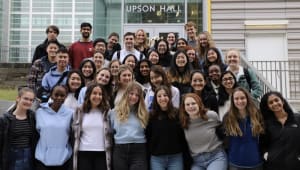
Engineers Without Borders FY23
By Engineers Without Borders
Any support given will greatly help our team cover the costs for our assessment trip in Tanzania this Winter!
Any support given will greatly help our team cover the costs for our assessment trip in Tanzania this Winter! Engineers Without Borders Who We Are Engineers Without Borders - Cornell is a group of passionate and highly motivated students who aim to create long-lasting solutions to problems in international communities. Members are given the opportunity to nurture their creative and technical expertise by designing and implementing sustainable engineering projects. Through collaboration with communities in developing countries around the world, our members are exposed to diverse cultures while gaining academic experience outside of the classroom environment. In summer 2019, four of our team members traveled to Sunuka, Tanzania to meet the community for the second time and collect the necessary data to design an irrigation water system that will alleviate some of the community’s concerns. In 2020, the team worked on a feasibility study for the irrigation system and conducted further research to determine how we can best meet the community’s needs. Due to the travel restrictions brought on by the COVID-19 global pandemic, we began a remote implementation in Summer 2022 and hope to send our team to Sunuka for an assessment trip of the irrigation system this Winter. Water Irrigation in Tanzania Easy access to water is a commodity most people living in the developed world take for granted. However, many people in the developing world do not have the same access to this necessity. The community of Sunuka, Tanzania depend on their fields for their food and income but are forced to rely on unpredictable rainfall to water their crops. During the dry season farmers are tasked with the burden of bringing water from wells miles away, costing them valuable time that could be spent tending to their families, crops, or livelihood. To enable the community with instant access to water, Engineers Without Borders Cornell is designing a gravity-fed irrigation system to transport water from the Rugufu river. Using a small pump, we will raise water from the Rugufu river to a higher elevation. From this point, irrigation canals will direct water to the fields. With the ability to transport river water to nearby fields, agriculture will have the opportunity to reach its maximum potential. We had our first assessment trip in June 2018, and in April 2019, four of our team members traveled to Tanzania for our second assessment. The primary goal of the assessment trip was to collect data that will be used in designing the final irrigation system. However, due to the pandemic, the team worked on a remote implementation this summer with the assistance of text-to-image software designed by the Business subteam. With your help, we hope to send our team to Sunuka this Winter to assess the progress of the system and potential extensions that can aid the community. Easier access to water for irrigation would partially relieve the burden many farmers have to go through to retrieve water. With an irrigation system, the community in Sunuka, Tanzania would benefit from higher crop yields which will stimulate economic growth within the community and its neighboring communities. How You Can Help Your support will help our project become a reality, and we are so excited to see this irrigation system to completion in the coming months. Any support given will greatly help our team cover the costs for our assessment trip in Tanzania this Winter. Members of EWB-Cornell have the opportunity to nurture their creative and technical expertise by designing and implementing an irrigation system to better the community of Sunuka. We are striving to create a long-lasting solution in Sunuka just as we did with our last project in Calcha, Bolivia. Your support will help our team cover the costs for educational experiences of our members through community outreach, global involvement, and fulfilling engineering projects. 100% of the funds from this crowdfunding campaign will go towards our projects. Only with your help can we make this a reality.
48%
Funded
55
Donors
0
days
left
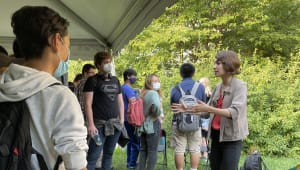
Empowering the Next Generation of Speech and Debate
By Speech and Debate
Help us compete, teach, and continue to make a global impact!
Help us compete, teach, and continue to make a global impact! Speech and Debate Why Support the Cornell Speech & Debate Society? For the past two years, the COVID-19 pandemic severely restricted the Cornell Speech and Debate Society’s ability to travel. As a result, two years worth of CSDS students have had little to no exposure to speech and debate as it always was: home to a cooperative team spirit built on global competition, to quick thinking that feeds off the energy of the room, and to advocacy that takes us beyond the boundaries of Cornell. Despite a global pandemic and significant budget cuts, Speech & Debate students and staff have ensured that we never faltered. We’ve created new partnerships in China and Vietnam; brought home (virtual) trophies from Lincoln, Nebraska to Belgrade, Serbia; and continued our long-standing community service programs such as teaching public speaking to homeschooled students in Ithaca. But we can't do it alone. We need YOU to help the next generation of Speech and Debate students get back on the road. Above: Cornell Speech and Debate Society members assembled in front of Uris Hall before the end-of-year banquet. Speech & Debate has been growing — we have resurgent policy debate and Spanish debate teams, as well as scores of new British parliamentary debaters and speech competitors — and counts more than 100 members in its ranks. To support all of them, seniors to freshmen, veteran debaters to brand new recruits, we rely on your generosity. Your gift to the Cornell Speech and Debate Society ensures the program remains accessible, and enables students to travel to the season's most important and educational competitions. Cornell alumni Jeremy Rosen '93 and Jodi Kruger '90, both former Cornell Speech & Debate students themselves, are generously matching up to $5,000 in gifts! Will you help us reach this goal and double your impact? Above: Cornell Speech and Debate Society President Eli Pallrand debates at the 2022 Vanderbilt BP Tournament. Your contribution, no matter the size, is ESSENTIAL to our continued success. Please give what you can and empower the next generation of Speech & Debate! The following programs are made possible by your generosity: 1. Global Empowerment: Cornellians teach debate to students and adults in countries such as the United Arab Emirates, Uganda, South Africa, China, Vietnam, Kazakhstan, and India — and in the constitution state, Connecticut! 2. Local Service: We’ve worked with everyone from prisoners to high school students to senior citizens, including programs with Ithaca High School, Dryden High School, Spencer Van Etten High School, and the Roads Scholar program. 3. Informing the Campus: We’ve taught debate skills to ROTC cadets, hosted major intellectuals speaking on everything from the future of money to the midterm elections, and moderated campus political debates. 4. Speech & Debate Competition: During the past two years of the pandemic, Cornell Speech and Debate competitors have amassed hundreds of appearances in elimination rounds. Below, you can see the Cornell International Summer Debate Camp's most recent graduation class. Your support makes this camp possible! Our programs all have one thing in common: a learning experience impossible anywhere else. Whether it’s informing the campus, competing world-wide, or teaching speech and debate to others, the work of the Cornell Speech and Debate Society leaves its members with permanent community bonds that stretch across state and national boundaries, the ability to advocate for themselves, and a sense of fulfillment having taught that skill to others. When you give, that transformative work grows. And when you donate, you can see some of the students you’re supporting. Pictured below, Cornell Speech and Debate members over the last year: Above: Spanish debate competes in the 2022 Spanish Debate World Championship in Madrid. Above: Speech competes at the Pi Kappa Delta tournament and American Forensics Association national championship. Above: British Parliamentary/Worlds debate competes at Vanderbilt and the University of Vermont. Above: Policy debate prepares for a tournament, and attends one at Wayne State University. Your donation also supports speech and debate education across more than 3 continents. Below, see pre-pandemic photos of our work: Above, Program Director Sam Nelson leads a class in South Africa. Donate now to support the Cornell Speech and Debate Society’s worldwide success and service! Hundreds of students are endlessly grateful for your generosity.
163%
Funded
153
Donors
0
days
left
CUAir
By Cornell University
CUAir is an undergraduate, student-run project team that develops an autonomous unmanned aircraft.
CUAir is an undergraduate, student-run project team that develops an autonomous unmanned aircraft. WHO WE ARE CUAir (Cornell University Unmanned Air Systems) is an interdisciplinary project team combining aspects of Computer Science, Information Science, Electrical Engineering, Mechanical and Aerospace Engineering, and Business Growth and Development. Our goal is to design, build, and test an unmanned autonomous aircraft capable of autonomous takeoff/landing, waypoint navigation, and surveillance/reconnaissance. Some research topics include airframe design, propulsion systems, wireless communications, image processing, and target recognition. HOW YOU CAN HELP As a team, we aim to build our largest, fastest, and most efficient system to date. This is great news for our team as we have our hopes set high for this year's competition, but it does require more resources than in past years. We are continuously iterating upon our designs and pushing ourselves to engineer new, innovative solutions to the design challenges we are presented with. As a result, we are heavily reliant on generous external support. Your donation would go towards new materials for our plane such as carbon fiber, fiberglass, motors, batteries, and help fly our members out to competition. We will be competing in the international AUVSI-SUAS competition in Maryland this summer, and hope to compete in other competitions in the future. Participating may require multiple versions of our system and additional travel expenses which can only be done with additional funds! OUR TEAM We are a team of eight sub-teams made up of undergraduate students majoring in a variety of fields such as Computer Science, Information Science, Atmospheric Sciences, Mechanical Engineering, Electrical and Computer Engineering, Material Sciences, Math, and many more! AIRFRAME Responsible for all the aerodynamic components of the plane, such as the wings, tail, and fuselage. Uses rapid prototyping technology and composite materials in order to create a robust and efficient airplane that excels at all required tasks. INTEGRATION AND TESTING OPERATIONS Creates support systems that are used for flight support and ground testing. Takes on projects such as the antenna tracker, testing trailer, and CG stand. The team uses many different manufacturing techniques to build their systems, and designs their subsystems with a focus on human-centered design. STRUCTURES & PAYLOADS Develops the internal mechatronic components of the aerial system. Iteratively develops the unmanned ground vehicle (UGV), camera gimbal, air delivery, landing gear, and aerial testing platform. Relies on Computer-Aided Design, Model-Based Design, human-centered thinking, and manufacturing to build these systems. AUTOPILOT Responsible for ensuring that the aircraft can perform all necessary maneuvers to fulfill the mission requirements. Implements the software for autonomous flight, autopilot ground station, and path planning algorithms. INTELLIGENT SYSTEMS Responsible for automatically detecting and identifying targets from images captured by the plane during flight and developing algorithms for path planning and obstacle avoidance. Implements algorithms to accurately detect and localize targets and tag attributes such as color, shape, and alphanumeric. IMAGING SYSTEMS Designs and implements the software infrastructure on the plane's onboard computer and the ground server. Works on non-flight critical systems such as the camera, gimbal, and airdrop as well as image transfer and the engineering of MDLC. ELECTRICAL Handles the electrical hardware both in the aircraft and on the ground. Works on the electronics firmware, avionics, power distribution board, camera gimbal, and airdrop controller, ground station antenna tracker, and communications system between the ground and the plan. DESIGN & OPERATIONS Work at the intersection of technology, design, and business. Major projects include the team's annual flight readiness review, technical journal paper, and website. Primarily focuses on graphic design and videography, front-end development, marketing and branding, sponsor relations, and outreach events.
57%
Funded
89
Donors
0
days
left
Combat Robotics @ Cornell 2022
By Combat Robotics
We need your help to bring Combat Robotics @ Cornell to their first championship competition on December 17, 2022!
We need your help to bring Combat Robotics @ Cornell to their first championship competition on December 17, 2022! Combat Robotics About Combat Robotics @ Cornell Who We Are Founded in Fall 2019, our team aimed to create a fun and inclusive environment where our members could learn about the exciting field of combat robotics, enhance their skills in the domain(s) of their interest, and make long lasting friendships. As a start-up team, we had humble beginnings and built the foundation we have today with minimal resources, passionate members, and a ton of trial and error until we found processes that work best for us. Today, we are 24 members strong and are excited to welcome a new class of members this fall. What We Do Combat Robotics @ Cornell builds robots with the goal of competing in the Norwalk Havoc Robotics League’s spring competition and winter championships. We have four subteams, each of which work on a different project: Kinetic The Kinetic subteam designs and manufactures a combat robot in a high-kinetic-energy robot class, emphasizing damage, durability, and a competitive edge. Kinetic has three subsystems that form once a general design is chosen: Chassis designs the shell, armor and internal structure of the robot; Weapon designs the damage-dealing components and selects electronics to power them; and Powertrain designs the locomotion system while integrating all powered elements into a reliable, compact system. Marketing Our Marketing subteam organizes team events, manages the budget, maintains alumni and corporate relationships, and secures funding for the team. Members manage the team's image by coding improvements for our website and developing creative designs for merchandise and promotional material. This subteam is also responsible for displaying CRC's progress and personality through social media. Sportsman The Sportsman subteam designs and manufactures a combat robot in the Sportsman class, a low-kinetic-energy combat robot class that emphasizes creativity, design ingenuity, and interdisciplinary collaboration. Sportsman consists of 3 subsystems: powertrain, chassis, and weapon. These subsystems combine their components during the fabrication stage to produce our finished robot. Firmware The Firmware subteam works on applying artificial intelligence techniques and autonomous capabilities in the context of combat robotics. Every year, Firmware takes a previous year's robot and revamps it through a new coding project. The Firmware subteam currently consists of 3 subsystems: Tracking and Movement designs algorithms to detect boundaries and attack other robots; Electrical designs circuits that enable sensing, decision making, and locomotion; and Testing ensures that all aspects of the code and hardware work in concert, as intended. Our goal is to extend our learning beyond our initiatives at Cornell. By having four subteams with different focuses, members have built interdisciplinary communication skills that will be used throughout their careers. Every student in CRC is able to take something that they have learned from their major and apply it here, using past lessons to solve current problems. If provided the funding and support, CRC plans to make an impact in the community surrounding Cornell. This past summer, Kinetic subteam alum Mohammad Ali Moghaddasi brought our competition robot to an elementary school in Binghamton to teach students about engineering and robotics, letting them safely test-drive it and view our recent competition footage. Mo was able to explain the basics of our robots to the kids and help them design their own. We hope to do this yearly in the future, bringing more of our members and educating students at more schools. How You Can Help We need your help to bring Combat Robotics @ Cornell to their first championship competition on December 17, 2022! Since this is our first time qualifying for championships, we want to bring the whole team to participate in this momentous achievement together. We’re asking for your support in funding the cost of transportation and lodging for every single member of the team, and making our championship dreams come true. If we exceed our goals for competition funding and support, CRC plans to hold larger and more engaging community outreach events at the end of the year. Last year, we held our first showcase in the Upson Lounge to show our friends, professors and peers all that CRC has to offer. We brought our robots, made a small photo booth, and handed out candy to teach people about our team and allow them to join in on the fun. We had many ideas of what we wanted to do at the showcase, and only accomplished some of them due to budget constraints. This upcoming spring, we hope to upgrade our event by renting out Duffield Hall for an afternoon, building a small scale arena so we can power our robots, and handing out promo materials, like stickers and mini 3d printed robots. If we succeed in the crowdfunding campaign, CRC will be able to bring these ideas to life.
114%
Funded
65
Donors
0
days
left
Cornell Seismic Design: Advancing Earthquake Resilience FY23
By Cornell Seismic Design
Your support will help us reach our goal of bringing 10 team members to our competition in March 2023!
Your support will help us reach our goal of bringing 10 team members to our competition in March 2023! Cornell Seismic Design WHO WE ARE We are a student-led project team of 26 undergraduates under the Cornell University College of Engineering. Our team designs and constructs a 5-ft-tall balsa wood structure to compete in the annual Seismic Design Competition hosted by the Earthquake Engineering Research Institute. Thanks to our donors' support, last summer we placed 2nd overall out of 37 teams in the Salt Lake City Seismic Design Competition! Our team offers a unique opportunity for students interested in all engineering disciplines - especially those focused on construction, structural design, architecture, and seismology - to experience the process of bringing a project from an abstract thought to a tangible product. Through our work, not only do we aim to create innovative structural solutions to challenging design problems, but we also encourage team members to develop strong leadership and communication skills! check us out at: cornellseismicdesign.com follow us on Instagram: @cornellseismicdesign OUR MISSION We are passionate about designing safer structures for regions impacted by seismic activity. During the school year, we explore creative ways to improve earthquake resilience, such as damping technology and new construction techniques. At the competition, the tower is scored on a number of categories including architecture, accuracy of predicted tower movement, building revenue and costs, presentation quality, and most importantly: if the structure survives the quake! WHY DONATE? We have a number of expenses, chiefly: Funding members to attend the Seismic Design Competition. The number of members that can attend is limited to the amount of funding we receive. Your support will help us reach our goal of bringing 10 team members to our competition in March 2023! Our construction materials: balsa wood and glue Construction tools: hand saws, glue applicators, 3D printing materials, and acrylic guides Advanced engineering and architectural software: Revit, Rhino, SAP2000 Additionally, your support will enable us to push the limits of our design allowing us to experiment and test small-scale damper designs as well as new and more efficient construction techniques.
110%
Funded
51
Donors
0
days
left
Cornell Racing FSAE
By Cornell Racing FSAE
As a 9 time World Champion, Cornell Racing has become synonymous with innovation and success!
As a 9 time World Champion, Cornell Racing has become synonymous with innovation and success! Cornell Racing FSAE What Fall 2022 Means to Us! We need your help to take our next electric race car ARG23 to New Hampshire and Michigan SAE this Spring. Cornell Racing Cornell’s Formula SAE Team was established in 1986. For the past 36 years, we have been designing, manufacturing, and building a Formula One-style racecar. We started with one team and a dozen students, all majoring in mechanical engineering, and have grown the organization to be a 50 student-run team with 11 sub-teams and students who major in a variety of subjects from Engineering to Hospitality. As a 9 time World Champion, Cornell Racing has become synonymous with innovation and success. Our Teamwork and Experience The team is formed of 60 students from a variety of majors. Each student brings something unique to the team; the union between diverse skill sets and strong team work forms the core of our team. Members individually spend at least 20 hours per week designing, building, and testing the car to meet competition standards. During the month of January, team members forego their winter breaks and return to Ithaca, New York to manufacture the car and prepare for the upcoming competitions in the spring and summer. Additionally, over the summer months, up to a quarter of the team remains on campus to plan for the following season. Cornell Racing provides an unrivaled learning experience, that allows engineers to integrate classroom concepts with practical applications and compels students to overcome technical and collaborative challenges. The finished racecar is a testament to the team’s incredible work ethic and dedication. Sponsors With the competition mandated timeline of a brand new race car each year and the significant capital investment required, sponsorships are critical to our success. Cornell Racing reaches out to all of our alumni through regular newsletters that prominently feature our sponsors. Our active team resume stack is distributed to sponsors to facilitate long-term professional relationships with our talented members. Cornell Racing has been featured in magazines such as Road & Track, Winding Road, and Race Car, and has been highlighted in a Discovery Channel special. Therefore, the team and our sponsors, are actively being promoted across the United States and around the world. In addition, Cornell Racing proudly promotes all of our sponsors on our website, Instagram, and other social media platforms. Sponsorship Tier List Please note, Sponsorship logos will be sized proportionately to their tier, and part donations will be categorized in the tier of equivalent value for the part gifted.
151%
Funded
130
Donors
0
days
left
Help Cornell Hyperloop Get Back to Competition
By Cornell University
Cornell Hyperloop needs your assistance in building our Hyperloop pod so we can participate in the leading industry competitions.
Cornell Hyperloop needs your assistance in building our Hyperloop pod so we can participate in the leading industry competitions. Covid-19 Ended Our SpaceX Competition Cornell Hyperloop is an engineering student project team that designs and builds a hyperloop pod, a novel form of transportation in which pods are sent through vacuum-sealed tubes at hundreds of miles per hour. Prior to 2020, Cornell Hyperloop competed in the SpaceX Hyperloop Competition. Unfortunately, one of the many side effects of the COVID-19 pandemic was the end of this competition. Within the past year, Cornell Hyperloop has gone through a major restructuring and is now ready to compete in new competitions. Hope for Competing Again We have identified potential alternate competitions for our team: The Canadian Hyperloop Competition at the University of Waterloo and European Hyperloop Week at University of Edinburgh in Scotland.Unfortunately for us, the costs of sending our team abroad are significantly higher than the domestic SpaceX competition How Much Your Donation Means to Our Team Your donation will help to fund the costs of flights, hotels, pod transportation, and pod research that is needed to send our pod to new competitions abroad. Without donations, our team would be unable to participate in competitions, a component of our design process that is crucial to our team's long-term objectives. Your contributions are greatly appreciated, and we would love to welcome you to the Cornell Hyperloop family and to update you on our success in these competitions! Our Amazing Team Cornell Hyperloop has over 60 undergraduate team members, organized into three teams. The Cornell Hyperloop team is dedicated to investigating new technology for the general implementation of Hyperloop in addition to building a subscale Hyperloop pod to compete in competitions. We aim to innovate, design, and build a sustainable transportation pod from conceptualization that travels at speeds beyond those of conventional transportation modes. Our goal is to participate in the premier Hyperloop conferences and compete in track demonstrations and subsystem competitions. Electrical Team The electrical team is responsible for constructing and maintaining the pod’s electrical system. The team is divided into 3 subteams. The power systems subteam is in charge of our pod’s electrical components. The computing subteam manages all of the embedded software. The user interface subteam maintains our electrical system’s GUI and is jointly-responsible for the website. The majority of the electrical team is electrical engineers and computer scientists. Since the team works heavily with both software and hardware, they employ a variety of tools. On the software side, the team uses Python to develop our embedded systems and leverages the networking protocol called ZCM. On the hardware side, KiCAD and physical benches are used to develop the circuits. Currently, the electrical team is building a battery pack, sensor sets, and the internal pod network. Mechanical Team The mechanical team is responsible for developing all of the mechanical subsystems on the pod. This team is also divided into 3 subteams. The magnetics subteam works on our propulsion and levitation systems. The structures subteam focuses on the chassis, systems integration, and machining. The braking subteam specializes within frictional and magnetic braking systems. The overarching mechanical team is comprised of a variety of engineering majors, but mostly mechanical and civil engineers. The mechanical team’s primary design tools are SOLIDWORKS, ANSYS, and MATLAB. They employ a variety of manufacturing techniques, including traditional machining, welding, CNC, 3D printing, and carbon fiber composite structures. Currently, the mechanical team is building and testing our new pod prototype. Business Team The business team is responsible for supporting the team’s business-related initiatives. The business team is divided into 2 subteams. The operations subteam manages budgeting, procurement, sponsorship outreach, and fundraising. The marketing subteam maintains our team’s social media presence and is also jointly responsible for the website. The business team is mostly made up of computer science and business students. The business team uses Adobe Creative Cloud to produce marketing materials for the website and our social media. We also use Excel and spreadsheets to manage the team’s finances. This semester, our business team is leading multiple initiatives to fund the development of our pod. Our Fundraising Goal Throughout this fundraising campaign, we hope to raise money to continue funding the groundbreaking research our members are conducting. By contributing to our cause, you are helping to fund not only the tools and materials we continually use in our lab, research, and engineering teams, but you are also ensuring our labs are kept up-to-date with the most recent technology. We are calling on you to become partners in our vision to revolutionize the transportation industry! As alumni, friends, and newcomers to the Hyperloop team, we hope that you will support our cause and help us expand our horizons. We thank you for your support! For more information about Cornell Hyperloop, visit us online at hyperloop.cornell.edu.
66%
Funded
27
Donors
0
days
left
Naval ROTC Top Side Project
By Navy ROTC
Help us renovate our facility and support us today!
Help us renovate our facility and support us today! Navy ROTC Cornell has a proud military history dating back to 1862 and the Morrill Land Grant Act requiring every land grant institution to include military training in its curriculum. As the land grant university of New York State, Cornell has offered instruction in military science from the university’s inception. We are proud of our students who have graduated from Cornell and gone on to serve in the military and we are proud of our veterans who have made the choice to attend Cornell after they have served our country. Today, Cornell is home to about 90 undergraduate student veterans/current servicemembers and over 400 veterans that work or study at Cornell. The Topside Project aims to significantly improve the Naval ROTC program's infrastructure. Atop the Barton Hall Block House, is what the Midshipman call the "Topside." It serves as a locker room, study area, social lounge, and rec area. The space is in dire need of improvement and does not appropriately convey the university's commitment to the experience of Cornell's NROTC students. The project will include the installation of new lockers, flooring, new furniture, and railings that meet code (and mimic what would be on a ship).
90%
Funded
21
Donors
0
days
left