$477
Amount Raised
9
Gifts Received
Support Cornell Crowdfunding
During this season of giving, you can change the future for Cornell students, faculty, our community, and the world. Your gifts make a difference for projects and people you care about and create new opportunities for the areas of Cornell you love.
Every dollar raised through crowdfunding goes directly to student and faculty projects, making a big difference for project teams.
Projects
36 Projects
Hack4Impact
By Hack4Impact
We connect student designers and developers to socially responsible organizations across the world, offering tech-based solutions for social change.
We connect student designers and developers to socially responsible organizations across the world, offering tech-based solutions for social change. Hack4Impact Hack4Impact? What's that? Hack4Impact exists for both nonprofits and students. Bridging technology and social impact, we connect student designers and developers to socially responsible organizations across the world, offering tech-based solutions for social change. At Hack4Impact, we believe in using tech for good. In today’s tech-based world, we can use our skillset to instill change in all parts of the world. With this larger reach, we are committed to increasing awareness of technology’s potential for nuanced and meaningful change. We are incredibly grateful for our nonprofit partners, and we strive to spread their missions along with ours to expand the scope of our projects. Through showcases, panels, and workshops, we hope to connect with more passionate individuals and offer our services to nonprofit partners for years to come. Our design process Each semester, we work with non-profits that have the opportunity to build a great product that solves a core need, generally in relation to their mission statements. We work in small groups led by a product manager and technical lead to scope and develop the application, taking into account our clients’ requirements and suggestions, and making the most of our technical, design, and business skills to create a product that can be used for social good. Our work This semester, we have six projects spanning four sectors of social impact: Zealgrit, ParkRx America, Mavuno, WANDA, Medic, and Internal Member Archive. Whether it be creating a platform for patients to track prescriptions to nature visits, or creating a platform for farmers and agricultural staff to communicate in Africa, all our projects work to address problem spaces and work alongside our users to ensure continued impact. As a registered student organization, we are committed to equal access to all of our programs and do not discriminate based on any protected identity status.
0%
Funded
0
Donors
4
days
to go

Farm-To-Table Initiative
By Community Elderly Partnership
CEP is a student organization committed to facilitating relationships, interaction, and mutual learning between students and elders in the Ithaca community.
CEP is a student organization committed to facilitating relationships, interaction, and mutual learning between students and elders in the Ithaca community. Community Elderly Partnership What is Community Elderly Partnership? Community Elderly Partnership (CEP) exists to bridge generations and support local elders in Ithaca. By connecting student volunteers with long-term care residents at Beechtree Center for Rehabilitation and Nursing, we foster meaningful intergenerational relationships, combat social isolation, and enrich the lives of both seniors and students. At CEP, our mission is to facilitate relationships, interaction, and mutual learning between students and elders in the Ithaca community with love and care. About Beechtree Center for Rehabilitation and Nursing Beechtree Center for Rehabilitation and Nursing is a long-term care facility for seniors in the heart of Ithaca. As an underfunded nursing home, Beechtree faces financial constraints that often limit extra amenities or specialized programming, and this is something CEP has historically focused on providing. Despite the importance of fresh produce as a natural source of nutrients, Beechtree has struggled to provide fresher foods and flavors to the residents. In speaking with residents, they shared their desire for fresh, non-canned fruits and vegetables, and for opportunities to be involved in the cooking process as a path to socialization and connection. Our partnership: The Generational Garden and the Farm-To-Table Initiative To address these needs, CEP is taking an exciting new step by partnering with Dilmun Hill Student Farm, a student-led farm on Cornell's campus dedicated to providing locally grown produce to the community. Through this collaboration, we are bringing fresh fruits, vegetables, herbs, and flowers directly from the farm to Beechtree residents. Our initiative addresses: Intergenerational community – preparing and sharing food fosters social interaction between residents, staff, and students. Nutritional health and well-being – fresh produce supports the holistic well-being of all residents. Dignity and quality of life – ensuring that all people, regardless of age or health status, have access to fresh, healthy food. Your impact We have already seen major success in this partnership, but we urgently need your support to continue serving the elders in our community through this spring and into the next growing season. 100% of the funds raised will go directly toward essential agricultural supplies, including seeds, harvesting tools, crates, storage equipment, delivery supplies, and transportation from the farm to Beechtree. With your support, we can build a lasting model of intergenerational care in our community. Please consider donating today to sustain our partnership and provide nutritious food to Ithaca's elders! Meet the team! Castine, Co-PresidentMy favorite thing about CEP is meeting others who are as passionate as I am about fighting elder social injustices!John, Co-PresidentMy favorite memory is the Halloween visit where everyone dressed up in costumes and spent time with residents. I enjoyed seeing the smiles and conversations that started from residents asking about our outfits!Natalie, Vice PresidentMy favorite part of CEP is hearing about residents' life stories. I love learning about their children, pets, and favorite foods - and I also really appreciate their valuable life lessons on believing in myself and taking time for self-care. Eileen, Education ChairMy favorite CEP memory has been being able to take our 'International Day of Older Persons' tabling trifold to the elderly residents at Beechtree!Ben, TreasurerMy favorite CEP memory is my first-ever visit to Beechtree and seeing how happy all the residents were to see us!Anna, SecretaryMy favorite thing about CEP is how welcoming it is to anyone who wants to join. At college, even clubs can be competitive, so CEP is a great place where anyone who wants to give back to the community has the opportunity to do so!Gloria, Care CoordinatorMy favorite CEP memory is going apple picking together and donated those apples to Beechtree!Emily, Publicity ChairMy favorite memory from being part of CEP is getting to spend time directly with the elderly, listening to their stories, and learning about them. I love being able to keep them company, making them feel heard and valued, and find little ways to bring a smile to their faces!Peggy, Activities ChairMy favorite thing about CEP is being able to bring the monthly art activities from the art museum to Beechtree - and learning from our community partners! As a registered student organization, we are committed to equal access to all of our programs and do not discriminate based on any protected identity status.
0%
Funded
0
Donors
4
days
to go

Cornell Votes
By Cornell Votes
Cornell Votes is a university-sponsored nonpartisan, student-led organization that aims to increase voter registration, turnout, and civic engagement on campus.
Cornell Votes is a university-sponsored nonpartisan, student-led organization that aims to increase voter registration, turnout, and civic engagement on campus. Cornell Votes What is Cornell Votes? Cornell Votes is a university-sponsored nonpartisan, student-led organization that aims to increase voter registration, election turnout, and civic engagement on campus. We strive to create a campus where every person exercises their right to have a voice in their representation. We connect with students through year-round tabling events, connecting with other student organizations, and creating educational materials that are shared around campus and on our socials. Learn more at cornellvotes.org! Your impact Your contribution allows us to expand our efforts and continue organizing larger, more interactive events that draw student participation. Each year, we brainstorm how to increase engagement and best connect with students, and your support would help bring these ideas to life. Your support enables us to increase printing and distribution of essential voter education materials, extending resources to students and increasing awareness of upcoming elections, even during off-seasons.
0%
Funded
0
Donors
4
days
to go

Compass: The Cornell & George Junior Republic Partnership
By Compass
Compass at Cornell is a student-led organization committed to building bridges between Cornell University and the George Junior Republic High School (GJR).
Compass at Cornell is a student-led organization committed to building bridges between Cornell University and the George Junior Republic High School (GJR). Compass What is Compass? Compass is a student organization within Cornell University's Einhorn Center for Community Engagement that partners with students at George Junior Republic (GJR) to create meaningful opportunities for learning, connection, and personal growth. We believe community engagement is most impactful when it is built on collaboration, mutual respect, and shared experiences. Over the past two semesters, Compass has expanded its programming more than ever before, creating additional opportunities for Cornell students to engage with the local community while increasing opportunities for GJR students to explore new interests, develop life skills, and build positive relationships. What is George Junior Republic? George Junior Republic (GJR) is a residential treatment and educational community that serves young people who need additional support beyond what a traditional school setting can provide. In addition to academic instruction, students receive therapeutic services, behavioral support, and opportunities to develop important life skills. New York’s Raise the Age law, passed in 2018, helps keep 16- and 17-year-olds out of adult prisons by providing alternatives to adult prosecution. Residential programs like GJR are vital to providing young people with a safe place to live, learn, and receive the support they need to succeed. Compass is proud to partner with GJR because we believe every young person deserves opportunities to learn, grow, and discover their potential. Through our programming, we help create experiences that foster confidence, creativity, leadership, and connection. Programming that makes an impact Every week, Compass volunteers travel to George Junior Republic to lead hands-on programming that encourages creativity, teamwork, confidence, and personal growth. These programs create spaces where students can learn new skills, strengthen relationships, and simply enjoy new experiences. Cooking & Baking Our most popular program is Cooking & Baking. Each week, Cornell students work alongside GJR students to prepare recipes and learn new culinary skills together. Whether making sushi, personal pizzas, brookies, or trying entirely new dishes, students collaborate, problem-solve, and build practical life skills in a fun, supportive environment. One of our favorite parts of the program is incorporating the students' ideas and recipe requests into our weekly plans. Arts & Crafts Arts & Crafts gives students opportunities to express their creativity while building confidence in their unique ideas. From painting snowflakes and making bracelets to designing clay magnets, students explore new artistic skills while creating projects they can be proud of. Debate Through a partnership with Cornell Debate, students learn the fundamentals of public speaking, critical thinking, and respectful discussion. Weekly lessons introduce debate concepts, which students then apply to engaging topics they enjoy, such as which superhero is the best. Throughout the semester, students develop confidence in sharing and defending their ideas while learning valuable communication skills. Movement & Wellness Movement programming encourages students to build teamwork, confidence, and healthy habits through activities such as basketball, dodgeball, duck-duck-goose, and Zumba. We have also partnered with PulseGuard to introduce CPR training, giving students the opportunity to learn life-saving skills while understanding the legal protections provided through Good Samaritan laws. These experiences equip students with valuable knowledge they can carry with them long after the program ends. LEGO Coding This semester, Compass launched a LEGO Coding club during the school day. Through hands-on activities, students learn the basics of coding and problem-solving while building with LEGO kits. The program has quickly become a favorite among participants, combining creativity, technology, and teamwork in an engaging learning environment. Hear from our community "The Compass Program provides our youth with meaningful opportunities to learn, engage, and build positive relationships with Cornell students in a fun and supportive environment. It exposes them to new experiences, encourages positive peer interaction, and gives them the opportunity to connect with college students who can serve as relatable role models and mentors. One youth from the Cooking and Baking Club shared that it was especially meaningful to build a relationship with someone just a little older who was attending college and could provide calm, nonjudgmental guidance. Seeing these relationships develop and the positive impact they have on our youth has been incredibly heartwarming." —Danielle Chase, Director of Operations at the William George Agency "I had a fantastic time working with our chess club at George Junior last semester. I learned a lot from the kids I worked with and had a lot of fun, and I like to think that I made an impact on them as well." —Former Compass member "As a mentor to the kids at George Junior Republic, I witnessed firsthand the transformative power of empathy and patience. It was through this experience that I rediscovered the value of simple joys, reigniting my appreciation for them once more." —Former Compass member "Working with Compass has helped me connect with youth in Tompkins County and share my love of cooking and baking with the students. I love planning the menu for each week with them, and I look forward to program every week. The students are incredibly kind and resilient, and I'm thankful for the opportunity that Compass provides." —Former Compass member Why your support matters Every program, activity, and relationship Compass makes possible begins with showing up. Because George Junior Republic is about 20 minutes from Cornell's campus, transportation remains one of our biggest barriers to serving students. Your support helps cover transportation costs, program supplies, and new opportunities that allow Cornell and GJR students to learn and grow together. More importantly, your donation helps create meaningful experiences that build confidence, foster belonging, develop life skills, and remind young people that others believe in their potential. Together, we can continue creating opportunities for connection, growth, and learning that leave a lasting impact on everyone involved.As a registered student organization, we are committed to equal access to all of our programs and do not discriminate based on any protected identity status.
0%
Funded
0
Donors
4
days
to go

Support K–12 Tutoring and Mentoring Through REACH
By REACH
Our mission is to support K–12 students across Ithaca through tutoring, mentorship, and individualized academic support.
Our mission is to support K–12 students across Ithaca through tutoring, mentorship, and individualized academic support. REACH Connecting Cornell students with Ithaca's young learners, one ride at a time. Our mission Raising Educational Attainment Challenge (REACH) is a Cornell University service-learning organization operating through the David M. Einhorn Center for Community Engagement. Our mission is to support K–12 students throughout Ithaca by providing tutoring, mentorship, and individualized academic assistance while fostering meaningful connections between Cornell students and the local community. Through partnerships with local schools and after-school programs, REACH volunteers work alongside teachers and educators to help students strengthen their academic skills, build confidence, and reach their full potential. Whether assisting elementary school students with reading and math or helping high school students navigate challenging coursework, our volunteers are committed to making education more accessible and supporting students at every stage of their learning journey. At REACH, we believe that meaningful change begins with showing up, building relationships, and investing in the success of our community's students. "It’s truly a rewarding and uplifting experience to tutor the students at IHS. I’m able to build connections with specific students, seeing them week after week, and it’s a wonderful feeling to help them reach that ‘aha!’ moment."—REACH tutor What we do REACH connects Cornell student volunteers with schools and community programs throughout Ithaca, providing academic support to students from elementary school through high school. Our current community partnerships include: Beverly J. Martin After School Program: Supporting elementary school students through homework assistance and educational activities. Greater Ithaca Activities Center (GIAC): Helping students with math and reading and leading engaging after-school activities. Fall Creek Elementary School: Assisting teachers with classroom activities and providing individualized academic support. Ithaca High School Math Support Room: Helping high school students strengthen their understanding of algebra, geometry, precalculus, and other mathematical concepts. Through these partnerships, our volunteers provide additional attention and encouragement to students while supporting the educators who work with them every day. Beyond academic assistance, REACH emphasizes consistency, mentorship, and community engagement. By returning to their tutoring sites each week, our volunteers can build meaningful relationships with students and contribute to a supportive learning environment. "REACH has been such a rewarding experience, watching young students understand concepts and feel positive towards education and their learning process." —REACH tutor Why transportation matters Every week, REACH volunteers travel to local schools and after-school programs throughout Ithaca to provide academic support, mentorship, and encouragement to K-12 students. These relationships help students build confidence, strengthen academic skills, and see new possibilities for their futures. For many Cornell students, however, getting to these sites can be a challenge. Without access to personal vehicles, transportation can become a barrier to volunteering and limit how many students we can serve. To ensure local students receive consistent support, REACH provides transportation for volunteers traveling to partner sites across the community, including elementary, middle, and high schools. Reliable transportation helps mentors show up week after week, build meaningful relationships, and provide the dependable support students, teachers, and families count on. By funding transportation, you do more than cover the cost of a ride. You are helping connect young people with positive role models, expanding access to academic support, and strengthening the partnerships that make our work possible. By supporting transportation, you help ensure the distance between Cornell's campus and local classrooms does not become a barrier to educational support. “Having the support of the REACH students has been a game-changer. Bringing down the adult to student ratio ensures that kids get more individualized attention. Their arrival at Fall Creek Elementary is something I look forward to every fall.” —Elementary School Teacher Why your support tters Your donation helps ensure that Cornell student mentors can reliably reach REACH tutoring sites throughout Ithaca, providing local students with the consistent academic support and encouragement they need to succeed. Transportation may seem like a small detail, but it is what makes these life-changing connections possible week after week. With your support, we can: Expand access to academic support: Ensure local K-12 students have regular access to mentors who help build confidence, strengthen skills, and foster a love of learning. Provide consistent, meaningful mentorship: Enable volunteers to maintain a dependable presence in students’ lives, creating relationships that inspire growth both inside and outside the classroom. Remove barriers to service: Allow more Cornell students to participate in tutoring and mentoring, regardless of whether they have access to personal transportation. Strengthen our impact in the community: Support ongoing partnerships with local schools and youth-serving organizations that rely on REACH volunteers to provide academic enrichment and encouragement. Invest in the next generation: Help create opportunities for young people to thrive academically while connecting them with positive role models who believe in their potential.Every gift helps connect a student with the support, encouragement, and opportunities they need to reach their full potential. Join us in making a difference At REACH, we believe education has the power to create lasting change, and that every student deserves access to encouragement, mentorship, and opportunities to succeed. When you donate to REACH, you're doing more than helping a Cornell student get to a tutoring site. You're helping local students build confidence, receive academic support, and form meaningful relationships with dedicated mentors. You're also supporting educators and strengthening the connection between Cornell University and the Ithaca community. Your generosity ensures that volunteers can consistently show up for the students who count on them, creating opportunities for learning, growth, and lasting impact. Together, we can continue empowering the next generation of learners and leaders, one relationship at a time. Donate today to help REACH go the extra mile for Ithaca's students. As a registered student organization, REACH is committed to equal access to its programs and does not discriminate on the basis of any protected identity status.
0%
Funded
0
Donors
4
days
to go
Cornell University Parole Initiative, Re-entry Division
By CU Parole Initiative
Our organization enlists Cornell students to provide critical advocacy for individuals serving indeterminate life sentences within New York State prisons.
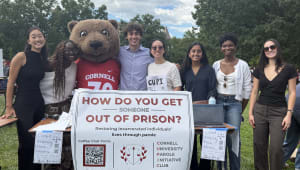
Our organization enlists Cornell students to provide critical advocacy for individuals serving indeterminate life sentences within New York State prisons. CU Parole Initiative In American society, it is customary to assign incarcerated people to a lifetime of blame and condemnation for mistakes made in their past. Underneath the label of criminal, however, lies a person who society has all but forgotten and labeled a pariah, with the incorrect notion that those who spend time in prison are inherently bad people. The Cornell University Parole Initiative (CUPI) seeks to rectify these notions by partnering incarcerated individuals in prisons with trained Cornell students who guide clients through the arduous and emotional parole preparation process. CUPI launched in 2021, where a team of 20 undergraduate students worked with seven individuals sentenced to life in prison. As of October 2026, CUPI has grown to 70 undergraduate students who currently support over 20 applicants. In the past six years, CUPI has helped secure the release of 42 individuals. Cornell undergraduates are paired with currently incarcerated individuals serving life or lengthy sentences in New York State prisons. The undergraduates work on teams of three with the incarcerated individual to help them prepare for a parole hearing in the coming 8–10 months. The project focuses on relationship building first and critical advocacy and support second. The team ultimately prepares a parole packet that contains an advocacy letter, a personal statement, certificates, letters of support, a release plan, and much more. They also work extensively through visitation and phone communication on interview preparation for the applicant. CUPI's work is guided by the expertise and desires of the incarcerated applicant and their families. CUPI's work doesn't end with a parole decision. In 2026, CUPI launched the Reentry Division to support our growing number of released applicants. The Reentry Division is a team of 12 students dedicated to supporting all of our released applicants. They conduct regular check-ins, and support with securing housing, interstate compact transfers (ICAOS), jobs and resume building, and anything else our applicants need during their reentry experience. Now, after a CUPI applicant is granted release, they immediately get in contact with the Reentry Division, who works to execute the release plan that is outlined in the parole packet. As CUPI continues to expand, more and more incarcerated individuals have requested our help. The growth of this organization is instrumental in helping as many clients as we can, whether it be through parole preparation or reentry support. Both of these processes are costly. Among other things, expenses include emails, printing and mailing of supplies, visitations, reentry support, and care packages. Each packet costs hundreds of dollars to print and mail to the parole commissioners. As a registered student organization, we are committed to equal access to all of our programs and do not discriminate based on any protected identity status.
0%
Funded
0
Donors
4
days
to go

Revival of the Cornell Powwow
By Indigenous Grad Student Assoc
The Indigenous Graduate Student Association (IGSA) fosters community building among Indigenous graduate & professional students and allies across campus.
The Indigenous Graduate Student Association (IGSA) fosters community building among Indigenous graduate & professional students and allies across campus. Indigenous Grad Student Assoc THE CORNELL POWWOW: REVIVING THE TRADITION The Cornell Powwow has long served as a vibrant gathering place where Indigenous students, local community members, and visitors come together to celebrate through dance, song, art, food, and cultural exchange. After almost 15 years without a Powwow on campus, its revival represents a meaningful moment of Indigenous resilience, connection, and community building. Powwows bring together dancers, singers, artists, Elders, youth, families, and supporters from many places to celebrate culture and build community. More than that, they are spaces where relationships are strengthened, and people find a sense of connection and belonging. For Indigenous students, the Powwow affirms that Indigenous peoples are not simply part of the past, but vital members of the present and future. For everyone who attends, it offers an opportunity to learn, connect, and celebrate together in a spirit of respect and mutual understanding. Reviving the Cornell Powwow is especially meaningful because it creates a space to recognize and honor the Gayogo̱hó:nǫʼ people and the broader Haudenosaunee Confederacy, whose stewardship of these lands continues today. It also gives the Cornell and Ithaca communities opportunities to learn about and engage respectfully with Indigenous cultures in a welcoming, educational environment. Ultimately, the Cornell Powwow will create a welcoming space where people of all backgrounds can come together, feel included, and build lasting connections. The Cornell Powwow will take place on May 1, 2027, and is free and open to everyone. Whether you are attending your first Powwow or continuing a tradition that has long been part of your life, the Cornell Powwow offers a space of cultural education and connection. STUDENTS LEADING THE REVIVAL: ABOUT US The Cornell Powwow is a student-led initiative, ultimately led by the Indigenous Graduate Student Association (IGSA), whose graduate student leaders have taken on the responsibility of organizing the Cornell Powwow. To make this possible, IGSA is invested in fostering collaborations with affiliated undergraduate student organizations, including the Native American and Indigenous Students at Cornell (NAISAC) and the Advancing Indigenous Science and Engineering Society (AISES) at Cornell. This work is supported by a broader planning committee and community partners who are contributing their time, knowledge, relationships, and experience to make this gathering possible. We believe that a powwow is built by people. It takes a community to bring a gathering like this to life: students, community members, volunteers, advisors, artists, Elders, and partners all play a meaningful role. By working together, we are creating the relationships and foundation needed for this tradition to continue for years to come. WHY YOUR SUPPORT MATTERS By donating to the Cornell Powwow, you are investing in cultural education, student leadership, community partnerships, and meaningful opportunities for people of all backgrounds to learn from and celebrate Indigenous cultures. Your generosity helps make this gathering accessible to everyone, ensuring that the Powwow remains free and open to the public. Every contribution, no matter the size, helps revive this important tradition and build the resources, relationships, and community support needed to sustain it for years to come. Your donation is an investment not only in the return of the Cornell Powwow, but also in its long-term sustainability, helping future generations of Indigenous students and community members continue to gather, share their cultures, and celebrate together. Together, we can help restore an important Cornell tradition, strengthen a lasting sense of community and belonging, and create opportunities for future generations to connect through culture, learning, and celebration. Every gift brings us one step closer to making the Cornell Powwow a lasting part of campus and community life. Together, we can honor the past, celebrate the present, and support future generations of Indigenous students and communities. Nya:wëh (thank you) for helping bring the Cornell Powwow back to life. LEARN MORE To learn more about the Cornell Powwow, you can visit the Cornell Powwow website. You can also stay up-to-date by following us on social media: Follow IGSA on Instagram | Follow IGSA on Facebook CONTACT US For questions about Crowdfunding or other ways to get involved, please contact the Indigenous Graduate Student Association at indigenous.gsa@cornell.edu or powwow@cornell.edu. Stay connected with the Cornell Powwow by joining our listserv to receive updates and announcements. We look forward to welcoming you on May 1, 2027, for a day of cultural learning, celebration, and community! As a registered student organization, we are committed to equal access to all of our programs and do not discriminate based on any protected identity status.
0%
Funded
0
Donors
4
days
to go

Cornell Center on the Death Penalty Worldwide
By CCDPW
CCDPW engages in advocacy, research, public education, and targeted litigation on behalf of the estimated 30,000 people worldwide facing execution.
CCDPW engages in advocacy, research, public education, and targeted litigation on behalf of the estimated 30,000 people worldwide facing execution. CCDPW Defending Human Rights The Cornell Center on the Death Penalty Worldwide (CCDPW) is a nonprofit dedicated to abolishing the death penalty and exposing discrimination in the criminal legal system. Since our seminal 2018 report Judged for More than Her Crime, we have also become the foremost anti-death penalty organization focused on gender discrimination in the application of the death penalty. We know that intersectional gender bias is real and weaponized inside courtrooms. The ubiquity of this discrimination makes it invisible and accepted, but we are here to change that. Our approach to initiating that change is multifaceted. CCDPW engages in advocacy, research, public education, and targeted litigation and client representation on behalf of the estimated 30,000 people worldwide facing execution. We then apply the lessons learned from both research and practice and synthesize it into training curricula that we offer advocates, lawyers, and human rights defenders around the world. Your support will help us conduct the research and devote the staff time necessary towards publishing a follow up to our 2018 report, which remains the only global report on women facing executionOur work focuses on women and gender-diverse clients, but the victories we win are beneficial to all incarcerated people as we work to bring equality and fairness into deeply flawed systems. We fight for universal global abolition of the death penalty. With your support, all this work can continue. There is a dire need for our work and in the coming months, we hope to secure enough support to produce an updated global report on women facing the death penalty. This updated report builds on our work in Judged for More than Her Crime, which remains the only study on women facing capital punishment globally. Our Work in 2026 2026 has been a busy and challenging year for CCDPW. We fought against capital punishment both on the individual case level and on the international stage. Our small but mighty team contributed to UN reports, lodged complaints with international actors like the Inter-American Court of Human Rights and continued our efforts to publish practical guidance for advocates in the field. Our work intensified this year as we advocated for a client of ours facing imminent execution. In September of 2025, Christa Pike was given an execution date of September 30, 2026. As part of her legal team, this meant that much of this year was spent crafting legal arguments and communications strategies as we worked to humanize Christa to both the public and the criminal legal system.Ultimately, Christa was denied clemency by Tennessee Governor Bill Lee. Whathappened next has become international news and has spurred importantconversations around capital punishment. Christa suffered hours of torture after beinggiven two fatal doses of pentobarbital that failed to kill her in what has come to beknown as one of the worst botched executions in US history. Her case has helpedexpose the barbaric reality that there is no humane way to carry out a state-sponsoredexecution. We do not know what is next for Christa and the legal battle ahead. What we do know isthat her story is emblematic of so many women facing capital punishment. It’s a story ofthe failure of governments to protect women from harm, and the failure of the criminallegal system to take into account the ways in which that harm is critical to understandingwomen’s pathways to prison. Capital Punishment is an Affront to Human Rights Women are sentenced to death for killing their abusers after lifetimes of gender-based violence in courts across the world. A study by CCDPW researchers found that at least 96% of the women on death row in the United States had survived at least one form of gender-based violence. In places like Tanzania, women are sentenced to death even when acting in self defense because the penal code makes the death penalty mandatory for murder. In Uganda, women, LGBTQIA+ folks, and trans individuals are given death sentences for consensual same sex relationships under the anti-homosexuality act. In Iran, women are being executed for standing up for basic human rights. While these contexts and judicial systems vary, the thread that unites them is the incompatibility of capital punishment to exist in societies that truly value freedom, the possibility of rehabilitation, and human rights. If we want to make global abolition a reality, it’s imperative we understand the stories, lives, and experiences of the most marginalized members of the global death row population, people who until now have been left out of the broader advocacy movements challenging capital punishment. To tackle this complex issue, we are training capital defense lawyers, conducting research to enlighten policy makers and courts, and working directly with women and gender diverse individuals to tell their stories. We need your help to get marginalized people at risk of execution the justice they deserve. Join us in this struggle and support our efforts to eradicate capital punishment forever. Together, we can uplift human dignity and make state execution a relic of the past. CCDPW was part of the legal team that helped save Melissa Lucio an innocent woman on death row in Texas, from execution in April 2022. We continue to fight for her release. Despite the fact that a court found her to be actually innocent and recommended her sentence be overturned, in September 2026 the Texas Court of Criminal Appeals denied her relief. We refuse to give up fighting for Melissa, and we hope you will join us in fighting for her freedom. As a registered student organization, we are committed to equal access to all of our programs and do not discriminate based on any protected identity status.
0%
Funded
0
Donors
4
days
to go
Cornell University Biomedical Device Project Team
By CUBMD
We're a team of multidisciplinary undergraduate students formed under a shared interest in biomedical device innovation to advance healthcare.
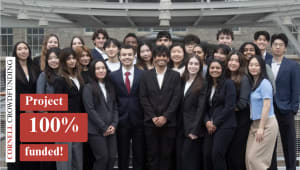
We're a team of multidisciplinary undergraduate students formed under a shared interest in biomedical device innovation to advance healthcare. CUBMD Who we are Officially declared a project team by Cornell University in 2022, Cornell University Biomedical Device (CUBMD) is a team of multidisciplinary undergraduate students formed under a shared interest in biomedical device innovation to advance healthcare further. Numerous deficiencies exist in the cost-efficiency and efficacy of devices being used in surgery—often due to a lack of better technology and unregulated pricing that create excessive and needless financial burdens for those seeking medical aid. The collaborative nature of our approach enables us to conduct extensive gap-driven research and communicate with experts across a variety of fields. CUBMD engages in nationwide competitions and develops its ideas with the vision of patenting and ultimately bringing our devices to market to set a precedent for the future of biotechnology. The decisions and ideas we make now will be the foundation on which we will shape our future. Why donate? Our mission is to identify contemporary problems in the field of biomedical devices, design and innovate solutions to said problems, and work to bring our solutions to the market where they can do the greatest good. This involves delivering a product that is both efficient and effective. The biomedical design process is an intensive process requiring special materials, professional input, and modern technology. With your gift to CUBMD, the team can access newer production materials such as 3D printers and leverage connections in the healthcare industry by attending more conferences/events. With your help, CUBMD can reach new heights and continue to be one of the fastest-growing project teams at Cornell University! Our team CUBMD is split into two teams: Product Development and Business. Product Development is responsible for the physical creation of the product, including the electrical, hardware, programming, and communication of the device. During the brainstorming and device development process, Business is responsible for contacting experts and/or professionals to help with clinical outreach, conducting market research, and applying to competitions and grants. Business members also spearhead finance operations, fundraising, and community outreach. Media designs content for CUBMD social media and is responsible for taking photos of the team in social and professional content. As a team, CUBMD consists of students across a variety of majors and colleges. These include, but are not limited to, Biological and Biomedical Engineering, Global and Public Health Studies, Computer Science, Healthcare Policy, and more! These specialties allow for a wide, diverse set of perspectives to create unique, innovative products. Process CUBMD has developed a thorough bio-design process founded on strong communication and detailed analysis. With this approach, we operate on a timeline that is unique to each device. In the fall, the team divides into smaller brainstorming groups to research the engineering, marketing, and policy implementation of potential biomedical device ideas. After heavily examining the novelty and impact of the top ideas, the team collectively decides on multiple devices to pursue. In the spring semester, as our product development team sources parts and begins prototyping/product testing, the Business subteam focuses on mapping the ideal path to market and raises funds for continued device development. The entire team consults physicians, engineers, and other professionals for guidance throughout the prototyping process. After a final product is created, CUBMD attends regional competitions and conferences, and ultimately, files for a final patent! As a registered student organization, we are committed to equal access to all of our programs and do not discriminate based on any protected identity status.
0%
Funded
0
Donors
4
days
to go
Cornell AutoBoat
By Cornell Autoboat
Cornell AutoBoat is a student-led engineering team focused on advancing naval architecture and marine robotics through hands-on innovation.
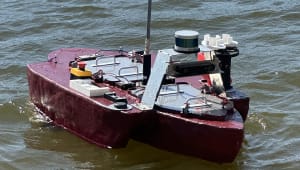
Cornell AutoBoat is a student-led engineering team focused on advancing naval architecture and marine robotics through hands-on innovation. Cornell Autoboat The team Cornell AutoBoat is a student-led engineering team focused on advancing naval architecture and marine robotics through hands-on innovation. Composed of undergraduate students from diverse majors and colleges, the team dedicates each year to researching, designing, and building an autonomous boat capable of motion planning, object detection, sensor fusion, and performing robotic tasks. Competing annually in RoboNation’s international RoboBoat competition in Sarasota, FL, Cornell AutoBoat gives students the opportunity to apply classroom knowledge to real-world engineering challenges. Our students work in a fast-paced environment while building technical skills, leadership experience, and lifelong connections with an incredible community of engineers. Support We compete in the international RoboBoat competition organized by RoboNation. In February 2026, Cornell AutoBoat competed in its fourth in-person RoboBoat competition and placed first among U.S. teams and fifth internationally! This achievement would not have been possible without the support of our donors, whose contributions allow us to design, build, test, and compete at the highest level. RoboBoat brings together university teams from around the world to showcase advancements in autonomous maritime systems. Each year, teams are challenged to develop autonomous vessels capable of navigating complex courses, detecting and interacting with objects, and completing a variety of maritime tasks. As we continue developing our next generation of autonomous boats and preparing for future international competition, your support helps us push the boundaries of maritime autonomy while giving Cornell students invaluable hands-on engineering experience. Will you support our mission as we continue advancing autonomous maritime systems on the global stage? As a registered student organization, we are committed to equal access to all of our programs and do not discriminate based on any protected identity status.
0%
Funded
0
Donors
4
days
to go

Cornell Autonomous Sailboat Project Team
By CU Sailboat
Our long-term vision is to build a fleet of autonomous sailboats capable of independently navigating the world's oceans to collect critical oceanic research.
Our long-term vision is to build a fleet of autonomous sailboats capable of independently navigating the world's oceans to collect critical oceanic research. CU Sailboat Who are we? CUSail is a registered student organization at Cornell University dedicated to designing and manufacturing an autonomous sailboat that competes in the SailBot International Robotic Sailboat Regatta. Our long-term vision is to build a fleet of autonomous sailboats capable of independently navigating the world's oceans to collect critical oceanic research. With over 40 passionate members from diverse disciplines, we combine cutting-edge technology, advanced mechanical design, and real-world problem-solving to engineer a smarter, faster, and more capable boat each year. CUSail offers students the unique opportunity to apply their classroom knowledge to innovative, hands-on engineering challenges. Why should you donate to CUSail? This past year, our team excitingly won first place at the International SailBot Competition, competing against teams from around the world. As we continue to innovate and push the boundaries of autonomous marine technology, your support is essential. This semester, we are hosting the SailBot competition here at Cornell, which is a huge milestone for our team and community. Your generosity will directly contribute to: Hosting and organizing the competition Enhancing our technology and improving our boats Maintaining our fleet and testing new designs Inspiring the next generation of engineers and innovators Building an autonomous sailboat is a challenging yet deeply rewarding endeavor. With your help, we can continue to explore the possibilities of ocean robotics and move closer to our vision of collecting data across the globe to help research endeavors that could have positive impacts on the world. Together, we can sail toward a smarter, more sustainable future. As a registered student organization, we are committed to equal access to all of our programs and do not discriminate based on any protected identity status.
0%
Funded
0
Donors
4
days
to go
DeSCENT: 100 Palm-Sized Spacecraft
By Space Systems Design Studio
Our mission is pioneering multiple techniques that may fundamentally change deep space exploration.
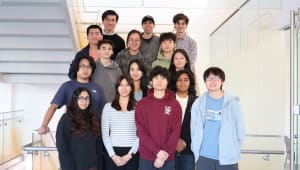
Our mission is pioneering multiple techniques that may fundamentally change deep space exploration. Space Systems Design Studio Our story Students at Cornell's Space Systems Design Studio are building spacecraft, rockets, and other technologies to make space exploration more accessible! From tiny ChipSats to experimental light sails, our team gives students the opportunity to design, build, test, and fly real space hardware. Our lab has over two decades of experience designing and developing small spacecraft, with projects spanning autonomous rendezvous and docking (PAN), water-based propulsion (Cislunar Explorers), high-agility attitude control (Violet), and precision spacecraft navigation (CUSat). More recently, our Alpha CubeSat mission successfully deployed a free-flying light sail, demonstrating technology that could one day pave the way for interstellar exploration. Alongside another light-sail experiment aboard the International Space Station, these projects marked two successful launches in 2025! Building on these successes, we're already looking ahead to the next chapter of the Alpha program. Our team brings together NASA scientists, industry mentors, and, of course, Cornell students! We work across disciplines to turn ideas into working hardware, giving students hands-on experience with every stage of a mission, from early design to launch and operations. Your donation helps us purchase components, build prototypes, conduct tests, and launch student-designed hardware. With your support, we can continue developing new technologies, training the next generation of engineers, and working toward future missions to the Moon, Mars, and beyond! The DeSCENT ChipSat mission! DeSCENT is our next major step in demonstrating what ChipSats can do! This mission plans to release 100 palm-sized spacecraft from approximately 100 kilometers above Earth. Working with the Johns Hopkins Applied Physics Laboratory, our student team is preparing to deploy these tiny spacecraft near the edge of space, where they will independently collect and transmit data as they fall through the atmosphere. The goal is to demonstrate how large groups of inexpensive spacecraft can be used to study Earth's atmosphere, with future applications in planetary exploration!DeSCENT concept of operations and logo Each ChipSat is a fully independent spacecraft built onto a circuit board measuring just five by six centimeters! Despite their small size, they carry GPS receivers, motion and environmental sensors, radios, batteries, and solar cells. By tracking all 100 spacecraft simultaneously, we hope to better understand how small objects tumble and disperse through the atmosphere, while demonstrating a new approach to distributed atmospheric sensing. ChipSat artistic impressions DeSCENT also features several technology demonstrations. Our updated ChipSats combine rechargeable batteries with solar power, allowing them to continue operating while tumbling and after landing. We've already demonstrated long-range radio communications over approximately 200 kilometers during high-altitude balloon testing! We're also developing a mechanical deployment system that can release all 100 ChipSats, along with a network of ground stations to receive their transmissions. Our students are now working toward flight readiness, assembling and testing the ChipSats, refining the deployment system, and preparing for mission operations. Your donations will help us manufacture flight hardware, purchase electronic components, expand our ground station capabilities, and conduct the testing needed to bring DeSCENT to flight! ASCENT: Launching our ChipSats to new heights! Before we can study how ChipSats behave during descent, we need a way to get them into the sky. ASCENT is a student-built rocket designed to carry ChipSats to high altitudes and release them during flight. This lets us study how they descend and test their communication and sensing systems in real-world conditions. To accomplish this, our team has developed the rocket's propulsion system, lightweight structure, and parachute recovery system, and has completed cold-flow and hot-fire tests. Our first rocket reached 4,280 feet, and our next rocket is designed to reach over 6,000 feet. With your support, we can continue building and testing ASCENT and move closer to future ChipSat drop tests. ASCENT field test CreSCENT: Taking ChipSat recovery to new heights! One of our biggest challenges is finding ChipSats after they land. These small spacecraft can end up in hard-to-reach areas, where trees and terrain block their radio signals from reaching our ground station. CreSCENT is our new drone designed to solve this problem. Equipped with radio receivers and transmitters, the drone will fly above obstacles to get a clear signal from landed ChipSats, receive their GPS coordinates, and relay that information back to our ground station. This will help our team locate and recover ChipSats for analysis and future experiments. We are currently developing and testing CreSCENT's communication system. Your donations will help us buy electronic components, install communication hardware on the drone, and run flight tests. CreSCENT field test Impact These missions are largely undergraduate-led and provide many of our members with their first engineering experience. For all of us, this is the first spacecraft we’ve ever had the chance to build. Contributing to SSDS flight projects does more than launch a spacecraft—it’s also launched the careers of nearly 100 alumni. Students have secured internships and jobs in the space industry with the experience they developed here at SSDS. By supporting our projects, you're investing in the next generation of engineers and the technologies that will shape the future of space exploration.SSDS Flight Projects - Fall 2026 team photo! We sincerely appreciate any contributions you can make to bring our project to fruition! Help us build the future of space exploration, one spacecraft at a time. As a registered student organization, we are committed to equal access to all of our programs and do not discriminate based on any protected identity status.
0%
Funded
0
Donors
4
days
to go

Cornell DEBUT
By Cornell DEBUT
We bring together students from multiple majors to design real solutions to real healthcare problems.
We bring together students from multiple majors to design real solutions to real healthcare problems. Cornell DEBUT We are an undergraduate engineering project team at Cornell that brings together students from multiple majors to design real solutions to real healthcare problems. Over two years, each subteam researches a specific unmet clinical need, develops and prototypes a device or system, and prepares it for translation. At the end of this cycle, our work is submitted to VentureWell’s national Design by Biomedical Undergraduate Teams (DEBUT) competition, where projects are judged on innovation, technical feasibility, marketability, and patentability. This past October, our Phase 1A and Phase 1B teams traveled to the 2025 BMES Annual Meeting in San Diego and placed first in two separate national competitions. MeyeAttention (Phase 1A) won first place in the Medtronic BMES Student Design Competition in the category “AI/ML Related to Patient Disease Diagnostics.” HemBrace (Phase 1B) won first place in the DEBUT Competition in the category “Healthcare Technologies for Low-Resource Settings.” Your support helps us keep building. Funding directly covers prototyping supplies, clinical testing materials, travel to present at national conferences, and manufacturing costs. It’s what allows undergraduates to deliver devices aimed at improving diagnosis, accessibility, and patient outcomes. Thank you for investing in student-led biomedical innovation. We can’t wait to show what we accomplish this coming year. As a registered student organization, we are committed to equal access to all of our programs and do not discriminate based on any protected identity status.
0%
Funded
0
Donors
4
days
to go

Cornell XR Project
By Cornell XR
We're exploring and creating software, hardware, games for Virtual, Augmented, Mixed Reality, and Human-Computer Interaction.
We're exploring and creating software, hardware, games for Virtual, Augmented, Mixed Reality, and Human-Computer Interaction. Cornell XR Who are we? Cornell Extended Reality (XR) is a student-run project team at Cornell University, founded in spring 2024, that builds software, hardware, and games for virtual, augmented, and mixed reality and human-computer interaction (HCI). We take work that has mostly lived in academic labs and turn it into projects with real-world applications. Along the way, our members gain the hands-on skills the XR industry is looking for. Our team is collaborative and ambitious, and it gives undergraduates a place to build ambitious projects in a field that creates experiences that blend the digital and physical worlds. How can you help? We’re raising $5000 to expand what our projects can do. Better equipment means we can train models faster, build higher-quality demos, and produce stronger results. Your support would go toward: EEG (electroencephalogram) Brain-Computer Interface Equipment that allows work within an open-source ecosystem and grants high-resolution signal acquisition Game development assets that allow for higher-quality demos. Paying for compute access to train LLMs and vision models. Motors, sensors, and fabrication materials that allow for more reliable, refined hardware for our exoskeleton. Custom Printed Circuit Boards (PCBs) for our projects! And much more! <span class="fr-mk" style="display: none;"> </span><span class="fr-mk" style="display: none;"> </span><span class="fr-mk" style="display: none;"> </span> Level design of an early demo created by our Game Development Subteam. <span class="fr-mk" style="display: none;"> </span><span class="fr-mk" style="display: none;"> </span> EEG-based control system for VR navigation using the Muse 2 Headband. <span class="fr-mk" style="display: none;"> </span><span class="fr-mk" style="display: none;"> </span> Physical prototype of our Exoskeleton's arm. <span class="fr-mk" style="display: none;"> </span> Development of a haptic glove and its force feedback mechanism. Why support us? Our goal is to push the XR and Haptics space forward with experiences and devices we design and build ourselves. With your support, we can bring these projects to research conferences and professional events. We design and build most of our hardware devices that interface with our software from scratch. Every upgrade lets us take on bigger problems and gives our members experience they can’t get from coursework alone. Whatever you can give, thank you for helping us build what’s next. As a registered student organization, we are committed to equal access to all of our programs and do not discriminate based on any protected identity status.
0%
Funded
0
Donors
4
days
to go

GeoData
By GeoData
With the combined interdisciplinary knowledge and skills of our team members, CU GeoData is uniquely positioned to address complex environmental issues.
With the combined interdisciplinary knowledge and skills of our team members, CU GeoData is uniquely positioned to address complex environmental issues. GeoData Who we are GeoData is the only Cornell project team affiliated with both the College of Engineering and the Department of Earth and Atmospheric Sciences. Members design the instruments, deploy them in the field, and run their own projects. We turn ideas into research and then projects that can make a tangible difference in our community. Why your support matters Meaningful environmental research requires equipment, sensors, and resources. Your contribution helps us purchase the supplies needed to build and maintain our instruments, expand our sensor networks, and collect the data that drives our projects forward. Every donation helps our students take research beyond the campus and into the field. By supporting CU GeoData, you are investing in student innovation, environmental research, and a healthier, more informed local community. Meet our teams: CU GeoData brings together students with different technical backgrounds and interests, united by a shared goal: using data, engineering, and environmental science to better understand the world around us. Air Team Tethersonde — Measuring Atmospheric Conditions The Air Team studies atmospheric chemistry, air quality, and local weather patterns. Members build their own weather instruments, deploy sensors, and use tools such as our student-built tethersonde to measure how temperature, humidity, and wind change with altitude. The team also works to improve weather stations and collect data that can help us better understand Finger Lakes weather. Rock Team Soil Moisture Sensors — Monitoring Soil Health The Rock Team investigates soil conditions, moisture, and environmental changes across our region. Projects involve soil moisture sensors, satellite imagery, and environmental sampling. The team studies how soil conditions relate to agriculture, erosion, and broader environmental patterns. The team is also helping establish a network of soil moisture and air quality sensors around Cayuga Lake. Water Team Cayuga Lake Buoys — Studying Local Lake Conditions The Water Team uses sensors, hydrology, and geospatial technology to study water quality and water-related challenges. Current projects include developing a network of buoy weather stations on Cayuga Lake to investigate lake-effect snow, exploring sap sensors to study tree health, and improving how data from instruments reaches online servers. Past projects have also explored harmful algal blooms and water quality monitoring. Data Team Weather Modeling — Turning Data Into Predictions The Data Team helps transform raw environmental measurements into meaningful insights. By collaborating with other subteams, members apply data science, machine learning, and analytical tools to environmental research. Their work supports projects that need better ways to process, analyze, and interpret data, including efforts related to predicting harmful algal blooms. Tech Team LiDAR Hexapod — Autonomous Data Collection The Tech Team builds, codes, and communicates systems and computing platforms such as Arduino and Raspberry Pi. Members have developed a model to predict lake-effect snow events on Cayuga Lake and are using drone-based infrared imaging and synthetic aperture radar to investigate vegetation health, topography, and soil moisture. Currently working with CUPI to build a self-navigating data collection hexapod for the earth sciences, starting with LiDAR collection. What your donation supports Sensors and monitoring equipment for collecting atmospheric, soil, and water measurements. Electronic components and hardware for building and maintaining custom instruments. Field supplies and deployment materials for conducting environmental research throughout the Finger Lakes region. Computing and data analysis resources for processing measurements and developing predictive models. Competition expenses and fees associated with registering and traveling to research expositions and hackathons. Join us in making a difference Any contribution, whether financial donations, material supplies such as sensors or computers, or simply general support and being a connection, can help advance our work. Together, we can empower the next generation of environmental innovators and create a lasting impact on the Cornell and Ithaca communities. Thank you for supporting CU GeoData and helping our students design, deploy, and discover. Every contribution brings us one step closer to making these projects a reality! As a registered student organization, we are committed to equal access to all of our programs and do not discriminate based on any protected identity status.
0%
Funded
0
Donors
4
days
to go

Big Red Buddies
By Big Red Buddies
Big Red Buddies is a Cornell University volunteering organization. Each semester, nearly 200 student volunteers serve in local Head Start classrooms.
Big Red Buddies is a Cornell University volunteering organization. Each semester, nearly 200 student volunteers serve in local Head Start classrooms. Big Red Buddies Support Cornell’s Big Red Buddies Empowering Cornell students. Supporting Ithaca’s youngest learners. Big Red Buddies is a Cornell University volunteering organization within the Einhorn Center for Community Engagement. Each semester, we coordinate nearly 200 student volunteers who serve in local Head Start classrooms across Ithaca, Dryden, and Groton, helping young children learn, grow, and thrive. Our volunteers act as classroom aides: assisting teachers with daily activities, facilitating play and learning, and forming meaningful connections with children who benefit from extra attention and encouragement. "It is the most fulfilling thing I have done at Cornell." —Big Red Buddies Student Volunteer What is Head Start? Head Start is a federal program that provides early childhood education, health, and nutrition services to children from low-income families. By supporting kids from birth to age five, Head Start prepares them for success in school and life, while also working closely with families to strengthen community well-being. Big Red Buddies is proud to partner with local Head Start sites to ensure these children receive the care, support, and learning opportunities they deserve. "The children and staff both look forward to having [volunteers] join the classroom each week and be a wonderful help throughout the program day."—Former Head Start Center Manager Why your support matters Your donation helps us: Fund transportation and training for volunteers traveling to local sites. Host community events that celebrate and strengthen our partnerships. Expand our capacity so more Cornell students can volunteer and make an impact. Even a small contribution can make a big difference. Every dollar supports meaningful connections between Cornell students and the children they serve. Join us in making a difference When you give to Big Red Buddies, you’re helping Cornell students engage directly with the Ithaca community, supporting early educators and inspiring local kids. Together, we’re creating a stronger, more compassionate future—one classroom, one child, and one Cornell volunteer at a time. Donate today to help Big Red Buddies continue our mission of learning, service, and connection. "It is so rewarding, and simply showing up consistently is enough to make a real difference."—Big Red Buddies Student Volunteer As a registered student organization, we are committed to equal access to all of our programs and do not discriminate based on any protected identity status.
0%
Funded
0
Donors
4
days
to go
Concrete Canoe at Cornell
By Concrete Canoe
Our team’s mission is to collaboratively develop the most innovative concrete canoe possible.
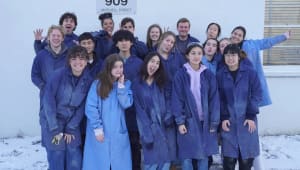
Our team’s mission is to collaboratively develop the most innovative concrete canoe possible. Concrete Canoe Making the impossible possible Every fall, CCC designs, builds, and tests a completely new canoe engineered from concrete mixtures to compete in the American Society of Civil Engineers (ASCE) national Concrete Canoe competition. Our team’s mission is to collaboratively develop the most innovative canoe possible. Vision Our team’s vision is to create an improved lightweight concrete canoe able to float in water, while also focusing on a sustainable and environmentally friendly design. Team structure Our team consists of four sub-teams, each with an integral purpose and role in our canoe design. Aesthetics The Aesthetics Subteam is responsible for bringing the visual identity of Concrete Canoe to life. Each year, we select a unique theme and design all related graphics and artwork, including the canoe’s exterior design, display board, competition shirts, and other relevant visuals. Our work ensures the team’s presentation is cohesive, creative, and impactful both on and off the water. Mold & Analysis The Mold & Analysis Subteam spearheads the innovative research and design of our boat’s hull and structure using advanced software tools like CAD and Ansys, along with compression and tensile testing. In addition, we oversee all construction initiatives, from implementing advanced fabrication techniques for the boat to building essential infrastructure needed to transport and showcase the boat. Mix The Mix Subteam researches and implements new materials to develop a unique, lightweight, and robust concrete mix with a heavy emphasis on sustainability and strength. We employ iterative design techniques to determine ideal material ratios for the structural, patch, and aesthetic concrete mixes. Business & Logistics The Business Subteam manages the financial and logistical backbone of the team. We oversee budgeting and inventory to ensure every subteam has the resources they need, coordinate travel and accommodations for competitions and events, and lead outreach efforts with sponsors, alumni, and the broader Cornell community. We also design and maintain the team’s website to showcase our work and connect with supporters. Our efforts keep the team organized, funded, and ready to compete at the highest level. How can you help us achieve the impossible Your support will help our sub-teams listed above operate to their greatest potential, and create the best and most innovative canoe to bring to completion in the coming spring. Any support given will greatly help our team cover the costs for future software, paddling practices, and materials needed. Members of Concrete Canoe have the opportunity to nurture their creative and technical expertise throughout their tenure on the team. Each year, each boat presents its own unique sets of challenges as we constantly adapt to higher expectations and new technologies. 100% of the funds from this crowdfunding campaign will go towards improving our team's operations and building our boat for this year's Concrete Canoe Competition. Only with your help can we make our goals a reality. As a registered student organization, we are committed to equal access to all of our programs and do not discriminate based on any protected identity status.
0%
Funded
0
Donors
4
days
to go
CUAUV
By CU AUV Robotics Team
For over 25 years, CUAUV has been one of the world’s top student-run engineering teams, designing, building, and competing with fully autonomous submarines.
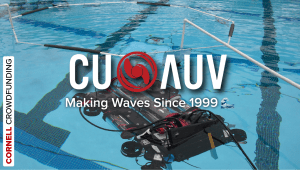
For over 25 years, CUAUV has been one of the world’s top student-run engineering teams, designing, building, and competing with fully autonomous submarines. CU AUV Robotics Team For over 25 years, CUAUV has been one of the world’s top student-run engineering teams, designing, building, and competing with fully autonomous submarines. We are seven-time RoboSub champions—more than any other team in the world. Each year, over 50 Cornell undergraduate students come together to design our AUVs from the ground up. Our work is hands-on, student-driven, and fueled entirely by sponsors and donors like you. Meet Scylla and Charybdis Our two newest vehicles, Scylla and Charybdis, represent the next leap forward in CUAUV’s mission to push the limits of what underwater robotics can do. Scylla, completed during the 2025-2026 season, focuses on modularity, serviceability, and next-generation autonomy. With a new cylindrical UHPV, improved accessibility, and a streamlined frame, Scylla is engineered for faster iteration and more ambitious missions! Charybdis, our new submarine for the 2026-2027 season, will feature a redesigned rectangular mechanical frame, more powerful thrusters, batteries, and upgraded electronics communication to improve our navigation skills in missions. Charybdis is still in the early stages of development, but with your support, we can bring our exciting submarine to life! Our impact goes beyond competition We believe engineering should inspire, and we work every year to pay our knowledge forward. CUAUV members volunteer with Boy Scouts of America, Splash! at Cornell, Code Red Robotics, and other outreach programs to inspire young students to explore STEM. Your donation doesn’t just build submarines. It helps the next generation fall in love with engineering and problem-solving. Why your support matters Every dollar directly funds: Specialized sensors, cameras, and machining for our new AUV Scylla Electronics and manufacturing materials for student-built systems Competition travel so our team can represent Cornell on the world stage Unlike other engineering programs, everything we build is designed and manufactured by students. This means your support has an immediate, tangible impact on student learning. By donating, you are empowering students to innovate, inspire, and compete at the highest level of collegiate robotics. Thank you for helping us build the future and for making CUAUV the champion it is today! As a registered student organization, we are committed to equal access to all of our programs and do not discriminate based on any protected identity status.
0%
Funded
0
Donors
4
days
to go

Cornell Steel Bridge Project Team
By Cornell Steel Bridge
We’re a team of passionate Cornell students designing, fabricating, welding, and constructing a 20+ foot steel bridge from scratch.
We’re a team of passionate Cornell students designing, fabricating, welding, and constructing a 20+ foot steel bridge from scratch. Cornell Steel Bridge What we do: We’re a team of passionate Cornell students designing, fabricating, welding, and constructing a 20+ foot steel bridge from scratch to compete in the national AISC Steel Bridge Competition. Every weld, bolt, and beam is student-built, combining technical skills learned in the classroom with real-world experiences. Your donation helps us purchase materials, construct the bridge, and enables the entire team to travel to the competition where we proudly represent Cornell. With your support, we can continue to push the limits of engineering applications while strengthening our teamwork, leadership, and problem-solving skills one bridge at a time. Our team is composed of five subteams: design, fabrication, welding, construction, and business. In the fall, we focus on designing the bridge, then transition to construction during the winter and spring. Meet our subteams: Design: Selects safe section sizes, efficient connections, and optimal member sizes Performs structural analysis using MASTAN2 and Autodesk Fusion 360 Ensures the bridge can withstand all specified load cases without failure Fabrication: Machines all bridge pieces for welding using tools like mills, bandsaws, and lathes Trains new members on fabrication techniques during the fall semester Produces and prepares bridge pieces for assembly in the spring semester Welding: Welds fabricated bridge pieces together using MIG welding Uses tools like calipers, clamps, and magnets to ensure precise welds Focuses on creating the strongest, most durable bridge Construction: Practices assembling the bridge according to competition guidelines Optimizes methods, team roles, and tools to minimize build time Focuses on speed and efficiency, which are critical for competition scoring Business: Manages corporate sponsorships and fundraising efforts, including Giving Day Creates newsletters, website content, and competition presentations Supports the team financially to purchase materials and resources Meet our team! As a registered student organization, we are committed to equal access to all of our programs and do not discriminate based on any protected identity status.
0%
Funded
0
Donors
4
days
to go

CUAD: Advancing Autonomous Aerial Systems
By CUAD, Autonomous Drone
Our team is building a fully autonomous tracking glider drone with midair deployment capabilities. We are pushing the boundaries of drone technology!
Our team is building a fully autonomous tracking glider drone with midair deployment capabilities. We are pushing the boundaries of drone technology! CUAD, Autonomous Drone This semester, our team is focused on competing in the International Aerial Robotics Competition (IARC), where we are developing a swarm of four lightweight, fully autonomous drones controlled through hand gestures. These drones will scout an area for landmines, avoid obstacles, and return to land before generating a map of detected hazards and a safe path through the area. This project pushes the boundaries of autonomous drone technology while exploring real-world applications in aerial robotics. Alongside IARC, we are pursuing several research and development projects, including an agricultural spraying hexacopter, an ultralight long-endurance surveillance octocopter, and an ultra-high-speed drone. These projects explore advancements in drone efficiency, endurance, and performance, with applications ranging from agriculture to aerial monitoring. We are also continuing our efforts toward the ambitious goal of breaking the Guinness World Record for drone speed, with a record-breaking attempt planned for next semester. Through collaboration across our subteams, extensive testing, and innovative engineering, we are determined to push the limits of high-speed flight and bring this vision to life. Our team is divided into Mechanical, Electrical, Computer Science, and Business subteams. Each unit brings unique expertise, making us not just a team of skilled engineers and strategists, but also a close-knit community of friends who share a passion for innovation in aerial robotics. Our goal is to excel in aerial robotics by designing, building, and flying advanced drones that tackle complex engineering challenges. We are passionate about pushing the boundaries of what is possible through ambitious, student-led projects and collaboration. Our rigorous schedule includes weekly meetings and work sessions where subteams focus on specialized tasks, while full-team gatherings ensure unity and coordination. Beyond technical work, we host regular social events that foster strong team spirit and a supportive environment crucial to our collective success. With a commitment to innovation, collaboration, and excellence, we encourage creativity and provide our members the freedom to explore ambitious, cutting-edge projects. As a registered student organization, we are committed to equal access to all of our programs and do not discriminate based on any protected identity status.
0%
Funded
0
Donors
4
days
to go

CUAir
By CUAir
CUAir is an undergraduate, student-run project team that develops an autonomous unmanned aircraft.
CUAir is an undergraduate, student-run project team that develops an autonomous unmanned aircraft. CUAir WHO WE ARE CUAir (Cornell University Unmanned Air Systems) is an interdisciplinary project team combining aspects of Computer Science, Information Science, Electrical Engineering, Mechanical and Aerospace Engineering, and Business Growth and Development. Our goal is to design, build, and test an unmanned autonomous aircraft capable of autonomous takeoff/landing, waypoint navigation, and surveillance/reconnaissance. Some research topics include airframe design, propulsion systems, wireless communications, image processing, and target recognition. HOW YOU CAN HELP As a team, we aim to build our largest, fastest, and most efficient system to date. This is great news for our team as we have our hopes set high for this year's competition, but it does require more resources than in past years. We are continuously iterating upon our designs and pushing ourselves to engineer new, innovative solutions to the design challenges we are presented with. As a result, we are heavily reliant on generous external support. Your donation would go towards new materials for our plane such as carbon fiber, fiberglass, motors, batteries, and help fly our members out to competition. We will be competing in the international AUVSI-SUAS competition in Tulsa next fall, and hope to compete in other competitions in the future. Participating may require multiple versions of our system and additional travel expenses which can only be done with additional funds! OUR TEAM We are a team of seven sub-teams made up of undergraduate and graduate students majoring in a variety of fields such as Computer Science, Information Science, Atmospheric Sciences, Mechanical Engineering, Electrical and Computer Engineering, Material Sciences, Math, and many more! AIRFRAME Responsible for all the aerodynamic components of the plane, such as the wings, tail, and fuselage. Uses rapid prototyping technology and composite materials in order to create a robust and efficient airplane that excels at all required tasks. INTEGRATION AND TESTING OPERATIONS Creates support systems that are used for flight support and ground testing. Takes on projects such as the antenna tracker, testing trailer, and CG stand. The team uses many different manufacturing techniques to build their systems, and designs their subsystems with a focus on human-centered design. STRUCTURES & PAYLOADS Develops the internal mechatronic components of the aerial system. Iteratively develops the unmanned ground vehicle (UGV), camera gimbal, air delivery, landing gear, and aerial testing platform. Relies on Computer-Aided Design, Model-Based Design, human-centered thinking, and manufacturing to build these systems. AUTOPILOT Responsible for ensuring that the aircraft can perform all necessary maneuvers to fulfill the mission requirements. Implements the software for autonomous flight, autopilot ground station, and path planning algorithms. INTELLIGENCE Responsible for automatically detecting and identifying targets from images captured by the plane during flight and developing algorithms for path planning and obstacle avoidance. Implements algorithms to accurately detect and localize targets and tag attributes such as color, shape, and alphanumeric. ELECTRICAL Handles the electrical hardware both in the aircraft and on the ground. Works on the electronics firmware, avionics, power distribution board, camera gimbal, and airdrop controller, ground station antenna tracker, and communications system between the ground and the plan. DESIGN & OPERATIONS Work at the intersection of technology, design, and business. Major projects include the team's annual flight readiness review, technical journal paper, and website. Primarily focuses on graphic design and videography, front-end development, marketing and branding, sponsor relations, and outreach events.
0%
Funded
0
Donors
4
days
to go

Cornell AppDev
By Cornell AppDev
Building apps to improve the lives of our community.
Building apps to improve the lives of our community. Cornell AppDev The mission Cornell AppDev designs, develops, and maintains open-source mobile applications that make life at Cornell simpler, smarter, and more connected. Each semester, we build and launch products that directly serve thousands of students across campus, including well-known apps like Eatery, which helps students explore campus dining options, Uplift, Cornell’s all-in-one fitness and wellness app, and Resell, a Cornell specific secondhand marketplace. Our goal goes beyond development; we strive to provide every member with hands-on, real-world experience in product creation from ideation and design to implementation and launch. AppDev gives members the opportunity to experience what it’s like to work on a real product team, helping them develop as engineers, designers, and marketers. The team Our team is made up of over 60 members who share a passion for building meaningful apps. AppDev is organized into five subteams, each responsible for a key part of our development process. iOS The iOS subteam designs and develops mobile applications for Apple platforms using Swift and SwiftUI. Our developers focus on creating polished and high-performance apps with smooth user interfaces and thoughtful functionality. From debugging complex animations to integrating APIs, iOS members gain hands-on experience with mobile app architecture, Apple’s design frameworks, and the full development lifecycle. Android The Android subteam brings AppDev’s products to life on the Android platform. Using Kotlin and Jetpack Compose, Android developers work on crafting intuitive, reliable, and well-structured applications for users across devices. The team handles everything from UI development to API integration and ensures feature parity with iOS counterparts, giving members real experience in large-scale, cross-platform collaboration. Backend The Backend subteam powers the infrastructure behind all of AppDev’s apps. Using tools like Node.js, Docker, Flask, and PostgreSQL, backend engineers build APIs, manage databases, and ensure that each app runs securely and efficiently. They also collaborate closely with iOS and Android teams to design scalable architectures and maintain the server systems that keep AppDev’s ecosystem connected. Design The Design subteam leads the creative direction behind AppDev’s products. Designers focus on user experience, visual design, and interaction flow, transforming ideas into wireframes, prototypes, and final interfaces using tools like Figma and Cursor. They work hand-in-hand with developers to ensure that each product is functional, consistent, and aligned with AppDev’s design identity to make every app enjoyable to use. Strategy The Strategy subteam manages everything that keeps the organization running behind the scenes. This includes sponsorship outreach, alumni relations, marketing, branding, GTM, and data analytics. The team also oversees social media and external partnerships, ensuring AppDev maintains strong connections with sponsors, alumni, and the broader Cornell community. Courses AppDev believes that education should be hands-on and accessible to everyone. To support this belief, we offer four Cornell-accredited courses that are open to the entire campus community. Each course is designed, taught, and managed by AppDev members who are passionate about teaching practical development and design skills. Introduction to iOS Development teaches students how to create iPhone applications using Swift and Xcode, starting from the basics and progressing to complete app builds. Introduction to Android Development introduces students to mobile development using Kotlin and Jetpack Compose. By the end of the course, students can design and build their own Android apps ready for the Google Play Store. Introduction to Backend Development focuses on the server side of applications, including database design, APIs, authentication, and deployment. Students use Python and Flask to build and launch their own backend systems, along with AI tools like Cursor and Claude Code. Introduction to Digital Product Design explores UI and UX design principles through tools like Figma and Cursor. Students learn how to think like designers, analyze existing products, and create interfaces that balance form and function. These courses bring together students from a wide range of majors and experience levels, creating a space where anyone can learn to build, design, and collaborate on real products. Each semester concludes with the AppDev Hack Challenge, where students from all four courses team up to design and develop their own apps to apply what they’ve learned in these courses. Winners from the spring 2026 Hack Challenge! Why donate? Every contribution directly supports our mission to teach, build, and share technology that benefits the Cornell community. Donations help us maintain our existing apps, fund development resources, and host events that bring together students from across campus. Your support makes it possible for our members to learn real-world software development, design, and teamwork skills while creating products that reach thousands of users. It also allows us to expand opportunities for students through workshops, our semesterly Hack Challenge, and collaborations with other organizations. When you donate to AppDev, you are helping students turn their ideas into meaningful projects and giving them the tools to make a lasting impact through technology. Thank you for your support! For more information on Cornell AppDev, feel free to visit us online at cornellappdev.com! As a registered student organization, we are committed to equal access to all of our programs and do not discriminate based on any protected identity status.
0%
Funded
0
Donors
4
days
to go

Cornell Hyperloop
By Cornell Hyperloop
We're investigating new technology for the general implementation of Hyperloop, in addition to building a subscale Hyperloop pod to compete in competitions.
We're investigating new technology for the general implementation of Hyperloop, in addition to building a subscale Hyperloop pod to compete in competitions. Cornell Hyperloop Thank you for your support! We want to extend a heartfelt thank you to all our supporters! Your contributions have allowed us to not only attend the Hyperloop Global Competition but also develop technology that sets us apart from other teams. Thanks to you, we have made significant strides in pushing the boundaries of Hyperloop innovation. Last year, we proudly won an award for our Electromagnetic Levitation Research at Hyperloop Global. This came from our research and implementation of our Linear Induction Motor (LIM) at the competition. This key technology generates strong moving magnetic fields, enabling contactless propulsion—a major step toward the future of Hyperloop transit. We also achieved another milestone by bringing a fully operational pod to the competition for the first time in our team's history. Why we need your support this year This year, we’re taking our innovation to the next level. After gaining sponsorships from both Maxon and Ansys, we’re excited to announce our new ability to push Hyperloop levitation further than ever before. However, we still need help! This year, we want to focus on improving our maglev system through the development of our mini-pod. Our focus is on creating our own electromagnets, pushing the boundary of what is possible for a college team. Upon this new expansion to maglev, we are also improving our control system to keep the pod ideally positioned on the beam for maximum stability and support. Finally, to partner with the improved maglev system on the mini-pod, we are improving the chassis and aero shell on the main pod to prepare for future implementation of a full maglev system. Join us in leading the future of transportation With these advancements, we’re not just keeping up with the competition—we’re leading the charge. Your continued support will help us bring these innovative ideas to life and move one step closer to revolutionizing transportation. Help Hyperloop lift off by donating today! Our amazing team Cornell Hyperloop has over 40 undergraduate team members, organized into three teams. The Cornell Hyperloop team is dedicated to investigating new technology for the general implementation of Hyperloop in addition to building a subscale Hyperloop pod to compete in competitions. We aim to innovate, design, and build a sustainable transportation pod from conceptualization that travels at speeds beyond those of conventional transportation modes. Our goal is to participate in the premier Hyperloop conferences and compete in track demonstrations and subsystem competitions. Electrical Team The Electrical Team is responsible for constructing and maintaining the pod’s electrical system. The team is divided into two subteams. The Power Systems subteam is in charge of our pod’s electrical components. The Electronics, Controls, and Communications (ECC) subteam manages all of the embedded software and maintains our electrical system’s GUI. The Electronics, Controls, and Communication team is running a LIM simulation to validate control strategies, shipping major GUI improvements, and implementing a new state machine to reach full end-to-end functionality. Hardware efforts include finalizing the sensor layout, drafting a new schematic for a LIM-less pod, and designing a custom PCB for the central motherboard while reviewing and documenting the codebase for better scalability and maintainability. Meanwhile, the Power Systems team is running LIM thrust and braking tests, advancing LIM research, bringing up a new off-pod high-voltage bench, and deploying a new on-pod power-supply setup. Mechanical Team The Mechanical Team is responsible for developing all of the mechanical subsystems on the pod. This team is divided into three subteams. The Magnetics subteam works on our propulsion and levitation systems. The Structures subteam focuses on the chassis, systems integration, and machining. The Braking subteam specializes in frictional and magnetic braking systems. The Mechanical Team is focused on designing our own Linear Induction Motor (LIM), while also developing a prototype for a DC electromagnetic levitation system. The Braking team is streamlining the friction-brake design to cut weight and size, increase actuations per tank fill, and boost competition robustness, while in parallel optimizing last year’s magnetic brakes into a more compact, precise assembly, adding a dead-man’s switch, and exploring regenerative/electromagnetic braking. The Magnetics team is designing a custom mini-LIM optimized for target thrust and, through iterative simulation and testing, aims to manufacture a fully functioning unit for integration on the minipod this year. Additionally, we will be building our own electromagnets and refining our implementation of a closed-loop control system. We are also focusing on improving our battery pack to include intake and outtake fans, allowing for the reduction of air vents in the shell, creating a more efficient design. To pair with the planned future maglev system, mechanical is also focusing on redesigning the chassis and improving the aeroshell for a more efficient design. Business Team The Business Team is responsible for supporting the team’s business-related initiatives. It is split into two subteams. The Development Operations (Dev. Ops.) subteam manages budgeting, event planning, procurement, sponsorship outreach, and fundraising. The Marketing subteam maintains our team’s social media, internet presence, recruitment, website, and outreach events This year, the Business Team is focusing on creating a larger following on social media and a greater internet presence. They are also proud to announce that this fall was one of our most successful recruitment cycles, getting almost 100 applications. Finally, they are continuing their efforts to gain sponsorship and reach out to companies to gain support for this year’s Hyperloop global competition. As a registered student organization, we are committed to equal access to all of our programs and do not discriminate based on any protected identity status.
0%
Funded
0
Donors
4
days
to go

AguaClara Cornell Project Team
By Agua Clara Project
We are dedicated to designing sustainable water treatment technologies that bring safe drinking water to communities in need around the world.
We are dedicated to designing sustainable water treatment technologies that bring safe drinking water to communities in need around the world. Agua Clara Project AguaClara Cornell is a student-led engineering team at Cornell University dedicated to designing sustainable water treatment technologies that bring safe drinking water to communities in need around the world. Working in partnership with AguaClara Reach and local NGOs, we develop open-source, locally sourced systems that are gravity-powered and can be built and maintained by the communities they serve. Our designs have already provided clean water to 117,000 people across Honduras and beyond. Through hands-on research, international collaboration, and community engagement, AguaClara Cornell empowers the next generation of engineers to create lasting solutions to the global water crisis. Your support directly enables our students to continue innovating, traveling to partner communities, and advancing technologies that make clean water accessible for all. As a registered student organization, we are committed to equal access to all of our programs and do not discriminate based on any protected identity status.
0%
Funded
0
Donors
4
days
to go

Cornell University Cheerleading Team
By Cornell Cheerleading
Our mission is to promote school spirit and encourage participation in athletics by raising school pride at Cornell athletic and community events.
Our mission is to promote school spirit and encourage participation in athletics by raising school pride at Cornell athletic and community events. Cornell Cheerleading Our mission Our mission is to promote school spirit and encourage participation in athletics by raising school pride at Cornell athletic and community events. Our cheerleading team plays a vital role in promoting athletics and creating an exciting atmosphere at Cornell sporting events at home and on the road. Your impact This campaign aims to raise funds for our team's uniforms, training, travel, and gear. Your contributions will directly impact our team's success and help us achieve our goals. By supporting Cornell University Cheerleading, you help us grow as athletes while strengthening the bond within the Cornell athletic community. Every donation brings us one step closer to achieving our vision and fostering school pride and spirit. We are incredibly grateful for your support! Together, we can elevate Cornell University Cheerleading and continue to boost school spirit. Go Big Red! As a registered student organization, we are committed to equal access to all of our programs and do not discriminate based on any protected identity status.
0%
Funded
0
Donors
4
days
to go

Cornell Design Build Fly
By CU Design Build Fly
We develop, build, test, and optimize a custom radio-controlled aircraft to compete in the international DBF competition.
We develop, build, test, and optimize a custom radio-controlled aircraft to compete in the international DBF competition. CU Design Build Fly The team Cornell University's Design Build Fly (DBF) project team is a student-run organization in which members develop, build, test, and optimize a custom radio-controlled aircraft to compete in the international DBF competition. The competition, sponsored by Textron Aviation, Raytheon, and the American Institute of Aeronautics and Astronautics, enables students to engage in the design process and to produce an aircraft that meets the requirements of a specified mission profile. Cornell DBF provides interested students with a venue to apply theoretical coursework to formulate practical engineering solutions. By applying the same technology and manufacturing methods as industry professionals, our team provides graduating members with the knowledge and experience for success. Website: https://dbf.engineering.cornell.edu/ || Instagram: @cornelldesignbuildfly The competition The AIAA Design/Build/Fly competition challenges teams to create a high-performing aircraft within a specified mission profile. Held in Wichita, Kansas, or Tucson, Arizona, the competition is comprised of both a technical report and a flight performance evaluation. The written component is determined by evaluating the team’s engineering process for thoroughness, justification, and presentation. The second component is the mission score which assesses a team’s aircraft performance according to competition rules. These rules vary significantly each year, encouraging fresh designs and new innovations. For the 2027 AIAA Design/Build/Fly (DBF) competition, teams are tasked with designing, building, and testing an unmanned aerial vehicle (UAV) equipped with a towed sensor. The mission emphasizes aircraft performance, payload transportation, and operational reliability, challenging students to develop innovative solutions within real-world design constraints. Teams must complete missions involving UAV delivery, transporting sensors in shipping containers, and conducting surveillance by deploying, operating, and recovering a towed sensor. The competition will be held in Tucson, Arizona, from April 15–18, 2027. Your impact Your contribution enables us to produce durable aircraft capable of meeting the rigorous requirements of each year’s mission profile. Thanks to the support of our sponsors, we have been able to design and test our aircraft with precision and care. Beyond providing students with invaluable hands-on technical experience, the challenges we’ve encountered over the years have driven us to continuously enhance our designs and performance. Your support is essential to the ongoing success of the Design Build Fly team. It helps us cultivate the next generation of engineers and brings us closer to achieving our ultimate goal: placing first in competition. As a registered student organization, we are committed to equal access to all of our programs and do not discriminate based on any protected identity status.
0%
Funded
0
Donors
4
days
to go
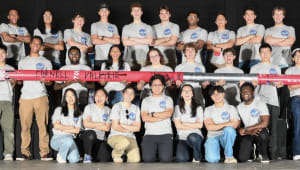
Cornell Rocketry Team
By Cornell Rocketry Team
Cornell Rocketry Team designs, manufactures, and tests a high-powered rocket every year for competition at the International Rocket Engineering Competition.
Cornell Rocketry Team designs, manufactures, and tests a high-powered rocket every year for competition at the International Rocket Engineering Competition. Cornell Rocketry Team The Mission: Cornell Rocketry Team designs, manufactures, and tests a high-powered rocket every year for competition at the International Rocket Engineering Competition. Each June, we travel to Midland, Texas, to compete against 150 collegiate teams from 22 different countries. The primary goal is to launch the rocket to exactly 10,000 feet using our Student Research and Developed (SRAD) rocket motors. The past two seasons, we launched our first and second ever hybrid motor and secured third place in the 10k Hybrid SRAD category. Every rocket carries with it a unique scientific payload that leverages the high altitude or high acceleration environment onboard the rocket. The team designs and manufactures almost every part of the rocket in-house, making use of a variety of lab spaces on campus. While competition is the major goal for the team, our primary focus is to provide all of our members with the opportunity to learn and grow as engineers with hands-on experiences. This year, Cornell Rocketry will be launching our third Hybrid SRAD Rocket! We are tackling several exciting new initiatives: including air brakes, embedded software, autonomous systems, carbon fiber airframes, and advanced guidance computers. We’re also conducting research and design for our first liquid propulsion motor, planned for 2027. As we wrap up the design phase in the coming weeks, we need your support to help us build our most advanced rocket yet and propel Cornell Rocketry to first place at IREC this summer! Beyond the Launch Pad: Beyond the technical side, Cornell Rocketry is a community and family. We’re a team of passionate students who push each other to build something bigger than any one of us could alone. We support each other endlessly, prioritize mentorship, and celebrate every milestone together. From late nights in the ELL to early-morning test launches, we’ve built friendships that will last well beyond the Slope. The Team: Our team is made up of 55 members, all with a passion for space and engineering. The team is organized into six different subteams, each of which plays a critical role in making the rocket fly. Propulsion: The propulsion subteam is responsible for designing and manufacturing the motor that lifts the rocket to our target altitude. We recently switched to a hybrid propulsion system, utilizing a solid fuel grain and a liquid oxidizer, which flew for the first time last April. Our biggest challenge is ensuring that the motor stays in one piece while accelerating the red-hot combustion gases out of the nozzle to over 5,000 miles per hour. We manufacture everything in-house, from the nozzle to the casing to the propellant itself. Recovery and Payload: The Recovery and Payload subteam designs parachute systems that autonomously navigate the rocket to the ground. Our autonomous recovery systems incorporate sensors, flight computers, steering mechanisms, and, of course, guided parachutes. We also design the rocket’s payload: an original engineering project that we choose each year. In essence, we think of something cool that we want to put on a rocket, and we do just that. Electrical: The Electrical subteam designs, manufactures, integrates and tests specialized printed circuit boards (PCBs). These boards perform numerous functions, including data acquisition, signal amplification, communication, and mechanical system actuation. We are one of the few teams at our competition that uses custom Student-Research-and-Designed (SRAD) electronics to trigger flight-critical events, including firing our motor and triggering our separation systems. The electrical subteam also provides electronics support to cross-subteam testing, helping develop a test stand for our hybrid motor and a Brake Line Manipulation System (BLiMS) for recovery. Since the electrical subteam is a key integration point for many subsystems on the rocket, electrical members get a great interdisciplinary team experience, and can use this to go above and beyond with our system architecture for years to come. Structures: The Structures subteam focuses on the designing and manufacturing of structural components within the launch vehicle, integration of systems, and the overall body of the vehicle itself. We see all projects through from ideation to fabrication with machining with metals and working with composite materials such as fiberglass and carbon fiber. Our team also uses simulations to do analysis work on aspects such as drag, internal stresses of the launch vehicle, and stability calculations to ensure the best performance possible for the rocket. Software: The Software subteam handles our rocket’s flight software, ground support software, and the communication between them. We are one of the few teams at our competition to use student-written software to control parachute deployment. Our work spans a wide range of fields, including embedded software, systems programming, simulation and modeling, and user interface design. The software team is a great (and fun!) opportunity to experience real, large-scale software development as part of a team! Business: The Business Subteam conducts all of the activities that allow the team to run smoothly and effectively. Some of the main focuses of this subteam are website development, advertisement, alumni and sponsorship outreach, merchandising, and social media. This year, the business subteam is focusing on organizing team social events and activities. Help us Blast Off:Designing and building a brand new rocket from the ground up each year takes extensive planning, dedication, and resources. Your donation directly supports the next generation of engineers, empowering us to innovate, experiment with new systems, and launch stronger, more advanced rockets. Our sponsors play a vital role in our success. In appreciation of their support, sponsors receive monthly newsletter updates on the team’s progress, exclusive access to our design process, guided tours of our workspace, and connections to our talented team members through resume access. Sponsors are also proudly recognized on our website, social media, rocket, and competition apparel. Thank you for your support! As a registered student organization, we are committed to equal access to all of our programs and do not discriminate based on any protected identity status.
0%
Funded
0
Donors
4
days
to go
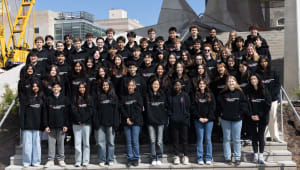
Cornell Electric Vehicles
By Cornell Electric Vehicles
Cornell Electric Vehicles is Cornell University’s foremost project team dedicated to building autonomous, hyper-efficient electric cars.
Cornell Electric Vehicles is Cornell University’s foremost project team dedicated to building autonomous, hyper-efficient electric cars. Cornell Electric Vehicles Cornell Electric Vehicles is Cornell University’s foremost project team dedicated to building autonomous, hyper-efficient electric cars. Our interdisciplinary team operates with the agility of a startup and the rigor of an engineering lab, creating industry-grade vehicles that have placed highly at the Shell Eco-Marathon Americas. We’re proud to be at the forefront of clean, data-driven innovation in the next generation of transportation. This year, our team is pushing toward an SAE Level 3 autonomy demo at Shell Eco-Marathon, the first of its kind in the Americas competition, as well as participation in the autonomy-focused Intelligent Ground Vehicle Competition, developing smarter, safer, and more efficient vehicles through collaboration across subteams: Electrical: Enhancing sensor systems, designing smarter wire harnesses for new system nodes, and building our own custom battery. Autonomy: Developing a machine-learning-based perception stack that identifies stop signs, pedestrians, and potholes to enable advanced driver response. Telemetry: Strengthening wireless data acquisition, building low-level communication systems, and streamlining real-time data storage and analysis. Mechanical: Refining designs to double 2026 Shell Eco-Marathon performance, guided by real-world data and feedback from autonomous testing. Your support makes this possible. Every donation to Cornell Electric Vehicles fuels student innovation, empowers hands-on learning, and drives the future of efficient, autonomous transportation. Follow our journey on @cornellelectricvehicles and join our crowdfunding campaign—together, we’re engineering the future. As a registered student organization, we are committed to equal access to all of our programs and do not discriminate based on any protected identity status.
0%
Funded
0
Donors
4
days
to go

Engineers in Action
By Engineers in Action
We help rurally isolated communities gain access to essential resources with sustainable infrastructure, by harnessing local expertise and global partnerships.
We help rurally isolated communities gain access to essential resources with sustainable infrastructure, by harnessing local expertise and global partnerships. Engineers in Action For more updates, follow us on Instagram @cornell_eia, visit our website eia.engineering.cornell.edu, join our newsletter, or email us at eiacornelluniversity@gmail.com! WHO WE ARERural isolation, or the inability to access essential resources such as hospitals, schools, and markets due to geographic barriers, directly contributes to global poverty. Lack of access to consistent and clean water directly contributes to global health disparities, and in the school setting, decreases attendance and performance. The mission of Engineers in Action (EIA) and our University Chapter is to help rurally isolated communities gain access to these essential resources with sustainable infrastructure, by harnessing local expertise and global partnerships. In addition to the physical bridges, we hope to inspire meaningful intercultural and intergenerational exchange. By living with a host family inside the towns we are working with and for, our team gets a truly immersive experience in global development and makes lifelong friendships with people across the globe. The Cornell University Chapter of Engineers in Action is a student-run project team with the College of Engineering that works with the non-for-profit organization Engineers in Action to design and build pedestrian footbridges, WASH systems, and suspension bridges for rurally isolated communities. We operate with four subteams; Bridge Engineering, WASH Engineering, Business, and Cultural; and each one is critical to the success of our organization in building critical infrastructure, engaging with mentors and community members, and educating the next generation of changemakers. SUMMER 2026 PROJECTS This past summer of 2026, our team took on two projects: a WASH system at Manyovu and a suspension bridge at Manzimbongolo. The WASH team sent 6 students, in collaboration with 2 students from Western University, to Eswatini for 8 weeks to turn our design into reality. The system will provide clean, consistently available water to ~225 students, teachers, and staff, improving public health outcomes through a solar-powered well with a 20,000-liter storage and distribution capacity. The Bridge team sent 7 students to Eswatini for 8 weeks to construct a suspension bridge over the Meleti River connecting the KuboNgwenya and Eplasteni communities. The Manzimbongolo Suspension Bridge provides access to nearby primary schools and the Ngowane high school, markets, health clinics, and public transportation, safely linking residents who previously had no safe crossing. Before the Manzimbongolo Bridge, there wasn't a bridge in place and community members would cross on rocks, with the floods during the wet season making it impossible to cross for days. The bridge spans 56.3 meters and serves an estimated 1,800 people, including 700 children, in the surrounding area. SUMMER 2025 PROJECTS This past summer of 2025, our team took on two projects: a WASH system at Herefords Primary School and a suspension bridge at Hlanganani. The WASH team sent six students, in collaboration with six students from Duke University, to Eswatini for eight weeks to turn our design into reality. The system will provide clean, consistently available water to 300 students, teachers, and staff, improving public health outcomes through a solar-powered well with a 10,000 liter storage and distribution capacity. The bridge team sent eight students, in partnership with students from University College London and the University of Southern Indiana, to Eswatini, also for eight weeks. This was EIA's pilot student-led suspension bridge project, and it will help thousands of community members gain access to towns, schools, and neighboring communities, especially during the rainy season when crossing the river is dangerous. Compared to the suspended bridges we had built in the past, these bridges provide greater clearance over the water level, and will allow us to meet the needs of a wider range of sites. Suspension bridges are more technically challenging to design and construct, and have given our team an opportunity to learn new skills. Your impact Your contribution enables us to design and build durable bridges and water systems that meet the rigorous demands of the communities we serve. With our sponsors' support, we have been able to design, test, and construct our projects with precision and care. Beyond giving students invaluable hands-on technical experience, the challenges we’ve encountered in the field have driven us to continuously improve our designs and approach. Your support is essential to Cornell Engineers in Action's ongoing success. It helps us cultivate the next generation of engineers and brings us closer to achieving our ultimate goal: reaching even more communities across Eswatini with the clean water and safe passage they need. As a registered student organization, we are committed to equal access to all of our programs and do not discriminate based on any protected identity status.
0%
Funded
0
Donors
4
days
to go

Engineers Without Borders: Building in Bolivia
By EWB, Cornell Chapter
Engineers Without Borders–Cornell is a multidisciplinary team of students committed to advancing global equity through engineering.
Engineers Without Borders–Cornell is a multidisciplinary team of students committed to advancing global equity through engineering. EWB, Cornell Chapter About us Engineers Without Borders–Cornell is a multidisciplinary team of students committed to advancing global equity through engineering. We collaborate with underserved communities to design and implement sustainable infrastructure solutions that improve quality of life. Our work integrates technical excellence, cultural sensitivity, and long-term impact—preparing future engineers to lead with purpose. Our mission We aim to: Co-design with communities: Partner directly with local stakeholders to identify needs and develop context-appropriate solutions. Advance sustainable development: Deliver environmentally responsible and economically viable engineering systems. Build capacity: Empower communities through education and training to maintain and expand upon our work independently. Why partner with us Your sponsorship enables the execution of high-impact engineering projects while supporting experiential learning for the next generation of socially conscious engineers. Contributions directly fund materials, travel, and implementation costs. Our team operates with transparency, accountability, and a commitment to measurable outcomes. Current initiatives International: San Cristobal, Bolivia We are designing and implementing a sanitary sewer system for Barrio San Cristobal, a rural village of 500 residents in southern Bolivia. The system will mitigate wastewater contamination and ensure safe, reliable water access year-round. Our scope includes: Pump and piping infrastructure from a local well Community-led maintenance training Long-term monitoring and evaluation strategy This initiative will reduce waterborne illness, improve hygiene, and support economic and educational advancement. It exemplifies our commitment to sustainable infrastructure and community empowerment. Domestic: Austin, Texas In collaboration with the Festival Beach Community Garden, our domestic team is conducting a drainage and irrigation study to support sustainable agriculture and combat food insecurity. Using HydroCAD modeling and site analysis, we are developing a stormwater management plan that restores natural runoff and reduces water costs—enhancing the garden’s capacity to serve its community. Software development We are developing two mobile applications: A carbon offsetting app to promote environmental stewardship through accessible sustainability tools. A platform for Cornell Wardrobe, streamlining access to professional attire for students in need. Both apps are built with scalability and user experience in mind, leveraging full-stack development and community partnerships. Digital agriculture To address crop loss from Northern Leaf Blight, our team is building open-source UAV and UGV systems integrated with deep learning for early disease detection in maize. This project democratizes access to rapid phenotyping tools, enabling farmers—especially in developing regions—to increase yields and strengthen food security. Business & outreach Our Business Team drives strategic growth through: A redesigned website to enhance visibility and engagement Expanded social media outreach to amplify our mission A local STEM curriculum that introduces engineering principles to young students in Ithaca Join us Your support helps us turn ideas into action. Whether it’s a water system in Bolivia or a solar-powered project in Texas, your donation makes it possible. Learn more about our projects | Follow us on Instagram | LinkedIn As a registered student organization, we are committed to equal access to all of our programs and do not discriminate based on any protected identity status.
0%
Funded
0
Donors
4
days
to go

Cornell Fashion Collective - 43rd Annual Runway Show
By Cornell Fashion Collective
We're a student-run organization that provides members of the Cornell community with an outlet to express their creativity in fashion and fashion management.
We're a student-run organization that provides members of the Cornell community with an outlet to express their creativity in fashion and fashion management. Cornell Fashion Collective ABOUT US The Cornell Fashion Collective is a student-run organization that provides members of the Cornell community with an outlet to express their creativity in fashion and fashion management. Each spring, our organization presents a professional runway show with over 2,000 attendees, showcasing the talent of students who design apparel and manage the show's operations. We offer both undergraduate and graduate students the opportunity to practice design, demonstrate their talents, and learn how to produce a large-scale fashion event. MISSION STATEMENT Our mission is to present an engaging, professional runway show that provides a platform for students to collaborate, express their creativity, and inspire our community. WHAT CFC MEANS TO OUR MEMBERS “The Cornell Fashion Collective has been one of the most meaningful parts of our experience at Cornell. Having started as new members, eventually taking on the roles of Runway Director and VP of Management, and now serving as co-presidents, we have loved every moment of growing and challenging ourselves within CFC. This organization is shaped by individuals who are passionate not only about the fashion industry, but also about coming together as a community to bring each show to life. Whether in the fall or spring, each runway is the culmination of our members' hard work, showcasing their diverse talents across design, planning, production, photography, and more. We cannot fully express the pride we feel in representing such a talented and dedicated group of members, who continue to inspire us every day. We have cherished our years with CFC and are excited to see how the organization continues to grow and evolve long after our time at Cornell.” — Harry Bard '27 and Susanna Burr '27 | Co-Presidents “The Cornell Fashion Collective has become an integral part of my experience at Cornell University. From being a model coordination member to taking over as Runway Director, this club has built my leadership skills and confidence in myself but more importantly, shown me the important work that goes behind running a fashion event of this scale. Most importantly, it has revealed to me the creativity that lies in every student at this school. From designers to creatives to models the club creates an inclusive environment that thrives on the success and celebration of one another." — Mayanka Karunagaran '28 | Runway Director “When I was researching colleges, I was always fascinated by Cornell Fashion Collective’s runway show and the creativity and talent it brought together. I never would have imagined that I would one day become Creative Director and have the opportunity to bring my own senior collection to life. CFC has been a place where I can truly express my vision and, through collaboration and the support of those around me, turn my ideas into reality. From starting as a freshman mentee to a senior to participating in every runway show since, I have learned so much from the people around me and grown both creatively and technically. One of the things I value most about CFC is the community it creates, bringing together students who share a passion for fashion and encouraging everyone to push themselves and their ideas further. I am so grateful to have been part of this organization throughout my time at Cornell and to have seen firsthand how much we can accomplish when we work together. CFC has taught me that fashion is about more than the clothes we create; it is about the people we bring together and the ideas we inspire in one another.” — Pola Levy '27 | Creative Director, Level 4 Designer PAST SHOWS 42nd CFC Runway Show; 2026 41st CFC Runway Show; 2025 40th CFC Runway Show; 2024 39th CFC Runway Show; 2023 38th CFC Runway Show; 2022 37th CFC Runway Show; 2019 IN THE PRESS "An Exploration of Design: Cornell Fashion Collective" "Dressing to Impress: Cornell Fashion Collective Prepares for 41st Annual Spring Runway Show" "41st annual fashion show embraces ‘... any person ... any study""Spring Runway Show Celebrates 40th on March 2""Fashion show spotlights innovation, rigor, growth""Ryan Lombardi Struts the Runway in CFC Fashion Show""Fashion Show Embodies Labor of Love for Student Designers" Visit our website to learn more: https://www.cornellfashioncollective.org/ As a registered student organization, we are committed to equal access to all of our programs and do not discriminate based on any protected identity status.
0%
Funded
0
Donors
4
days
to go
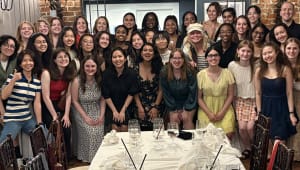
Mid-Atlantic Tour 2027
By Cornell Chorus
The Chorus is excited to travel to the Gulf Coast this spring!
The Chorus is excited to travel to the Gulf Coast this spring! Cornell Chorus The Chorus and Glee Club are so excited to travel to the Mid-Atlantic this spring! We are looking forward to sharing our music with audiences who may not typically have the chance to connect with Cornell’s students, and to exploring and learning more about the area. This spring, we’ll be traveling to Atlanta, Nashville, Knoxville, Charlotte, Charlottesville, and Washington, D.C.! The tour will culminate with a Return From Tour concert back at Cornell, in Ithaca. We’re especially excited to share our music with such a wide audience, and for the opportunity to visit an area of the United States with such rich musical and cultural history. This tour is a once-in-a-lifetime opportunity for our members, who will create lifelong memories and friendship with other members in the ensembles. We need your help A tour of this scale is a large financial investment, and your support and donations will allow us to make it the most memorable experience possible. Your support will help us cover items such as a member's airfare, group dinners, venue rentals, transportation, and much more—all contributing to making an incredibly memorable experience for these students. Any successful tour is not possible without widespread support, no matter the amount. Any contributions you can make to these ensembles will be deeply appreciated. Contact us To learn more about our groups or tour, visit the Chorus and Glee Club websites, or contact our tour managers: Claire Kurisko '27 & Codou Brumblay '29: tour@chorus.cornell.edu Sam DeLisa '27: tour@gleeclub.cornell.edu With questions regarding crowdfunding logistics, please contact our general manager, Suhana Sharma at gm@chorus.cornell.edu As a registered student organization, we are committed to equal access to all of our programs and do not discriminate based on any protected identity status.
0%
Funded
0
Donors
4
days
to go
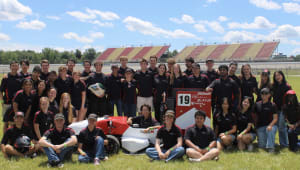
Cornell Racing FSAE
By Cornell Racing FSAE
For the past 38 years, we’ve designed, built, and tested Formula One-style racecars.
For the past 38 years, we’ve designed, built, and tested Formula One-style racecars. Cornell Racing FSAE Help Cornell Racing reach our 10th championship! Cornell’s Formula SAE Team was established in 1987. For nearly 40 years, we’ve designed, built, and tested Formula One-style racecars. Starting as a small team of a dozen students, we’ve grown our student-run organization to 60 members across eleven awesome subteams. As a nine-time World Champion in the combustion era, Cornell Racing is living up to its legacy in the electric vehicle era. Last year, Cornell Racing redesigned the monocoque geometry, accumulator configuration, aero package, and much more to lay a foundation for the next era of Cornell Racing's EV era. ARG27 marks as one of the most critical moments for Cornell Racing since switching to an electric powertrain. Focusing on data driven decisions and lots of testing, ARG27 will utilize a new motor and inverter package that increases torque output by 50%. Further, we have gone great lengths to establish a proper vehicle dynamics team for torque vectoring, launch control, regen, and much more firmware based controls to ensure we put as much power from the accumulator to the ground as possible. The chassis side of the team is being just as ambitious, utilizing an unsprung-aerodynamic package to optimize downforce for everything from fast straights to hard corners. We’re also improving aerodynamics integration, reducing weight in all systems, and have a new gearbox this year. These iterations, better materials, and new practices will results in a light, strong foundation to work cohesively with the powertrain as one system.This year we are pushing the limits, as we will be taking our previous vehicle, ARG26, and have it be autonomously driven by the spring. Autonomy is a new subteam this year dedicated to making our racecar fully autonomous and faster than a driver! With roles across compute, perception, estimation, controls, path planning, harnessing, software architecture, mechanical actuator design, and much more, we are going to new lengths this team has never went to. As one of the first US teams to attempt autonomy, we are pioneering a new part of the competition from scratch. Our team has made incredible progress so far, and we’re looking for your help to get us first place at Michigan this year! Our teamwork and experience The team is formed of 60 students across a variety of majors and backgrounds. We believe that each student offers a unique perspective to the project. Our vehicle is the result of our diverse skill sets and a shared passion for the team. During the semester, members individually spend at least 20 hours weekly designing, building, and tuning the car. For the month of January, team members forgo their winter breaks and return to Ithaca, New York, to manufacture the car and prepare for the upcoming competition in the summer. Additionally, over the summer months, up to a quarter of the team remains on campus to prepare for the following season. Cornell Racing offers an unrivaled learning experience that allows engineers to take their learning beyond the lecture hall. Each member has a specific area of ownership: a part of the car for which they are solely responsible. Being the lead engineer of their project encourages students to overcome any technical and collaborative roadblocks. The finished vehicle is a testament to the team’s incredible work ethic and the dedication of each part designer. Cornell FSAE Racing Members working on revealing the monocoque during January manufacturing - January '26 Sponsors With the competition mandated timeline of a brand new race car each year and the significant capital investment required to achieve this, sponsorships are critical to our success. Cornell Racing reaches out to all of our alumni through monthly newsletters that prominently feature our sponsors. Our active team resume stack is distributed to sponsors to facilitate long term professional relationships with our talented members. Cornell Racing has been featured in magazines such as The Wall Street Journal, Road & Track, Winding Road, and Race Car, and has been highlighted in a Discovery Channel special. Therefore, the team and our sponsors are actively being promoted across the United States and around the world. In addition, Cornell Racing proudly promotes all of our sponsors on our website, Instagram, and other social media platforms. As a registered student organization, we are committed to equal access to all of our programs and do not discriminate based on any protected identity status.
0%
Funded
0
Donors
4
days
to go

Help Speech and Debate Win it All!
By Speech & Debate
The Cornell Speech and Debate Society is the Ivy League's sole speech and debate society maintaining an open, no-try-out membership policy.
The Cornell Speech and Debate Society is the Ivy League's sole speech and debate society maintaining an open, no-try-out membership policy. Speech & Debate Why support the Cornell Speech & Debate Society? In a world increasingly in need of conscientious dialogue and discourse, The Cornell Speech and Debate Society, as the Ivy League's sole speech and debate society maintaining an open, no-try-out membership policy, is a beacon of intellectual inclusivity. Thanks to your donations and contributions, we can uphold our unwavering commitment to accessibility, ensuring that every aspiring speaker and debater, regardless of financial background or experience, can access world-class instruction and transformative opportunities in forensics. Being strongly committed to Ezra Cornell’s vision of “... any person ... any study" by fostering equity and inclusivity through financially sponsoring tournament attendance, we believe developing world-class debaters is about the journey, not the starting point. Through teamwork, international competition, quick thinking inspired by shared energy, and advocacy beyond Cornell, we support our students’ growth into the speakers and debaters they want to be. Over the past few years on the world stage, we’ve created new partnerships in China, India, and Vietnam, won the North American Championships in debate, and have topped the AFA National Championship in speech, and continued our long-standing community service programs, such as training through the National Prison Debate League, on-campus advocacy training, and in our many international programs. With an increasingly global world and many national and international championships to win and communities to engage, we need YOUR support to allow any aspiring speaker and debater to represent Cornell across the world! Above: The Speech Team at AFA Nationals at Lewis and Clark University in Portland, Oregon To uphold this mission, we must continue providing our members with access to the most distinguished competitive forums worldwide. Each tournament represents not merely a competition, but an investment in developing tomorrow's thought leaders and esteemed advocates. Your generous support is essential in keeping our vision of excellence and accessibility alive. Every gift, no matter the size, helps uphold our proud legacy and supports the democratic ideals of open dialogue and effective communication. The following programs are made possible by your generosity: 1. Global empowerment: Cornellians teach debate to students and adults in countries such as the United Arab Emirates, Uganda, South Africa, China, Vietnam, South Korea, and India—and in the Constitution State, Connecticut! 2. Local service: We’ve worked with everyone from incarcerated individuals to high school students to senior citizens, including programs with the National Prison Debate League and Ithaca High School. 3. Informing the campus: We’ve taught debate skills to ROTC cadets, hosted major intellectuals speaking on everything from the future of money to the midterm elections, and moderated campus political debates. 4. Speech & debate tournaments: Cornell speech and debate competitors made it to elimination rounds in multiple tournaments and achieved top results both domestically and internationally. Please donate today and join us in our journey to democratize speech and debate! Above: BP/Worlds at Harthouse InterVarsity in Canada Our programs all have one thing in common: a learning experience impossible anywhere else but open to all. Whether it’s raising awareness on campus, competing globally, or teaching speech and debate to others, the Cornell Speech and Debate Society fosters lasting community connections that transcend state and national borders. Our members gain not only the ability to advocate for themselves but also the fulfillment of passing that skill on to others. Your support helps this impactful work thrive, and with your donation, you can see the transformative growth of the students you’re empowering. Pictured below, Cornell Speech and Debate members in previous years: Above: Speech Team at Alabama State! Above: Armands Revelins and Sam Nelson at Cornell International Debate Camp! Above: Director Sam Nelson as part of our outreach missions in Africa Above: The participants of Cornell's International Debate Camp Above: English Worlds team competing at the World Universities Debating Championships in Vietnam Above: Cornell Speech Team with their trophies from OCHO IE Above: Spanish Worlds team competing in CMUDE in Medellín, Colombia Above: Policy debate team wins big at Suffolk University Support the Cornell Speech and Debate Society’s global achievements and outreach by donating today! Your generosity directly impacts hundreds of students, who are deeply grateful for your support. As a registered student organization, we are committed to equal access to all of our programs and do not discriminate based on any protected identity status.
0%
Funded
0
Donors
4
days
to go

Endowed Director of First Amendment Clinic
By Cornell First Amendment Clinic
You can ensure that the Clinic is able to expand its reach and extend its impact by taking on more cases throughout the country.
You can ensure that the Clinic is able to expand its reach and extend its impact by taking on more cases throughout the country. Cornell First Amendment Clinic An endowment to ensure essential freedoms For the past eight years, under Mark Jackson’s leadership, Cornell’s First Amendment Clinic has successfully advocated for clients across the political spectrum to protect their fundamental free speech and free press rights. Now, you can ensure that the Clinic is able to expand its reach and extend its impact by taking on more cases throughout the country—wherever the right to free speech and a free press is being threatened. We are more than halfway to our $1 million campaign goal to support the First Amendment Clinic, with the intent to endow the Mark H. Jackson Directorship when he vacates the role—honoring Mark’s lifelong commitment to free speech and ensuring the Clinic’s work lives on. Since the campaign launched last year, we have already raised more than $550,000. With your help, we can reach the $1 million goal, making the Clinic eligible for an additional $2 million in funding. That would be a 2-for-1 match on your gift. Your gift creates a permanent foundation for the Clinic’s growth, supporting its essential work—not just today—but for a new generation of legal advocates and warriors. Click to watch a short clip of Mark describing the importance of the Clinic’s work. Create an enduring impact By supporting the endowment, you are permanently securing the Clinic’s capacity to: PROTECT free speech rights across the political spectrum The First Amendment Clinic stands as a fiercely nonpartisan defender of free speech and a free press. We take on cases regardless of viewpoint or belief when there is a genuine threat to fundamental Constitutional freedoms. Our diverse casework includes: Challenging library book bans and anti-protest statutes. Supporting students’ rights to express conservative political viewpoints. Defending local journalists against costly defamation suits. EXPAND our reach: More cases, more defenders The Clinic’s resources and expertise are in extremely high demand. The endowment will provide the dedicated resources necessary to: Increase capacity to handle more pressing First Amendment cases nationwide. Provide valuable, hands-on training in complex Constitutional litigation to more students. Build a larger, more connected network of principled First Amendment defense attorneys. FOSTER sustainable, impactful journalism Through its groundbreaking Local Journalism Project, the Clinic not only protects and defends journalists but also provides them with a full range of legal services to sustain their underlying business models, ensuring local news can thrive as an essential pillar of democracy. SUSTAIN democracy at the local level A new initiative, the Local Government Project, examines how democratic values—especially free expression—are functioning at the local level. The project’s initial focus is on school boards across New York State, collecting and analyzing their policies and practices to assess how effectively they support open, democratic government. Supporting our project If you would like to make a gift via check, corporate match, or securities, please visit: https://community.lawschool.cornell.edu/alumni/give/ways-to-give/. For more information on this project or to make a larger gift, please contact Lynne Haberstock at lth7@cornell.edu or 607.255.2077. The Clinic in action: Book bans and press freedom Public library is forced to close its doors to children: A fight against book bans Sherry Scheline had no lawyer, no legal budget, and no clear idea which of her books a new Idaho law might deem "harmful." She did know that guessing wrong could get herself and her library sued. So she did the only thing she could: she closed the doors to children. Donnelly Idaho Public Library Sherry is the director of the Donnelly Idaho Public Library, a one-room log cabin filled with books by authors like Tolkien, Koontz, and Sendak. Since opening its doors in 2018, the library has been a source of town pride and a hub of activity—schoolchildren attend “camp library” in the summer, and the library hosts weekly community activities like scrapbooking for seniors. On July 1, 2024, Sherry’s library faced a crisis. Idaho law HB710 required all libraries in Idaho to restrict minors’ access to any books deemed "harmful to minors." Rural libraries like Sherry’s were hit hardest—without the resources or legal counsel to navigate the new law, they were forced to take drastic action. Sherry adopted an “adults only” policy requiring minors to enter the library with a guardian or a signed waiver form. “Until the Cornell First Amendment Clinic and co-counsel came to my aid, I felt totally alone trying to both navigate the statute’s requirements and fight back against the unconstitutional ban. The Clinic has been an invaluable resource to us—we simply could not have afforded to mount this fight without their help.” —Sherry Scheline, Director of the Donnelly Public Library In February 2025, the Cornell First Amendment Clinic took up Sherry’s cause. The Clinic and co-counsel filed suit in Idaho federal court on behalf of Sherry, other librarians, authors, and publishers against the Idaho attorney general, county prosecutors, and others, alleging the law is vague, overbroad, and viewpoint discriminatory in violation of the First and Fourteenth Amendments. The law makes no distinction between what is “harmful” to a kindergartener and what is harmful to a 16-year-old. The law also deputizes private individuals to bring a private right of action against schools or libraries that violate the law’s terms. Sherry Scheline, Director of the Donnelly Idaho Public Library, speaks to the audience after the screening of The Librarians at Cornell. “HB710 forced us to limit library access to adults only, which was heartbreaking,” said Scheline. “Until the Cornell First Amendment Clinic and co-counsel came to my aid, I felt totally alone trying to both navigate the statute’s requirements and fight back against the unconstitutional ban. The Clinic has been an invaluable resource to us—we simply could not have afforded to mount this fight without their help.” While the case moves through the courts, Sherry and the Clinic are making sure the public understands what’s at stake, not just for one Idaho library but for every community’s freedom to read. On September 29, 2026, Sherry joined her counsel, Clinic Stanton Fellow Daniela del Rosario Wertheimer, and Foley Hoag partner Kelly L. McNamee, for an eCornell Keynote, The Right to Read: A First Amendment Challenge to Book Bans. That evening, the Clinic hosted a free screening of The Librarians, a documentary about librarians on the front lines of the nationwide wave of book bans, followed by a conversation with Sherry, Dani, and Kelly about the lawsuit and what it means for libraries everywhere. Although a tough film to watch, audience members received a crash course in book banning and the ways they can help fight to restore access to free speech—no matter where the bans occur. Clinic scores big win for public scrutiny of immigration enforcement On October 8, U.S. District Judge Anthony Brindisi of the Northern District of New York ordered key records unsealed in a federal prosecution that arose from an immigration arrest. The Clinic brought the motion on behalf of The Post-Standard and Syracuse.com, after the government abruptly dropped its case against Marvin Aguilar-Garcia, who had been charged with assaulting a U.S. Border Patrol officer with a car manual during the arrest. The case was dismissed just five days before trial, but much of the record remained under seal, depriving the public of key information about immigration enforcement activity in its neighborhoods. "Our client asked a simple question: why did the government drop this case five days before the scheduled trial date? Today’s decision brings us much closer to an answer. Courts work in the open, and that principle doesn’t change because a case involves immigration enforcement." —Michael Grygiel, Foley Hoag partner and adjunct professor at Cornell Law School The Court ordered the release of the U.S. Attorney’s letter asking to drop the case, with only limited redactions. The parties have 14 days to propose redacted versions of the letter and remaining sealed filings, including the dismissal letter, and the Court also directed that three missing files be added to the public docket. The Court unsealed filings revealing social media evidence that the Border Patrol agents involved in the arrest were members of “I’m 10-15,” a private Facebook group for agents that drew national scrutiny for posts joking about migrant deaths. These documents directly affect the officers’ credibility. The court allowed only narrow redactions of personal identifying information and rejected the government’s argument that the filings should stay fully sealed. Shortly before trial, the grand jury returned a “no true bill,” rejecting the government’s request to issue a superseding indictment against Aguilar-Garcia. Finding no governing precedent on the question, Judge Brindisi ruled that this grand jury action should not be kept from the public, notwithstanding the secrecy that attaches to most grand jury deliberations. When the government brings and then abandons a prosecution—particularly in the highly charged context of immigration enforcement—the public has a right to understand why. Here, the docket was so heavily sealed that the public could not know why the case was voluntarily dismissed. This decision reaffirms that courts operate in the open, even when they involve grand jury actions, and it gives local journalists the records they need to hold public officials accountable. As co-counsel Michael Grygiel, a partner at Foley Hoag and adjunct professor at Cornell Law School, put it: “Our client asked a simple question: why did the government drop this case five days before the scheduled trial date? Today’s decision brings us much closer to an answer. Courts work in the open, and that principle doesn’t change because a case involves immigration enforcement.” Read more about the case from Syracuse.com: Syracuse.com goes to court to unseal documents in suspicious immigration arrest - syracuse.com Records in suspicious Upstate NY immigration case must be public, judge rules in Syracuse.com request - syracuse.com Your support matters: Secure the cornerstone of democracy Free speech isn’t partisan—it’s the cornerstone of our democracy. When this cornerstone is under attack from all sides, we need bold, principled defenders more than ever. Your gift today is the first step in establishing a permanent endowment that will expand our capacity to take on more vital cases, give more students transformative legal experience, and, most importantly, train the next generation of principled advocates for free expression. Join us in protecting that vision—for today, and for years to come. Supporting our project If you would like to make a gift via check, corporate match, or securities, please visit: https://community.lawschool.cornell.edu/alumni/give/ways-to-give/. For more information on this project or to make a larger gift, please contact Lynne Haberstock at lth7@cornell.edu or 607.255.2077. As a registered student organization, we are committed to equal access to all of our programs and do not discriminate based on any protected identity status.
0%
Funded
0
Donors
4
days
to go

Support NYC Cornellians Running for the Student Scholarship Fund
By NYC Cornellians
Support our marathon runners in raising funds to make Cornell more affordable for students with financial needs. Every dollar goes directly to students!
Support our marathon runners in raising funds to make Cornell more affordable for students with financial needs. Every dollar goes directly to students! NYC Cornellians NYC Cornellians is in its third year of a partnership with New York Road Runners to support the annual NYC Marathon. This year, on November 1st, Cornell will have over 50 volunteers spread throughout the racecourse supporting the water stations that runners depend on as they make their 26.2 mile journey. In recognition of Cornell's volunteer spirit, NYRR has granted NYC Cornellians two spots in this year's marathon! NYC Cornellians is using these spots to promote its undergraduate scholarship fund, which makes Cornell more affordable for students with financial needs. Our runners this year are Jennifer Fisher and Arianna Kohilakis. You can read more about them below. Please join us in making a contribution to this meaningful cause. Any support you can provide will be greatly appreciated! Meet Our Runner: Arianna Kohilakis My name is Arianna Kohilakis, I’m a 2022 graduate of CALS where I double majored in Applied Economics and Management (go Dyson!) and Information Sciences. During my time on campus, I was involved in various pre-professional and social groups including the Cornell Consulting Group, D&I Business Advisory Council, and Alpha Phi. I'm part of a Cornell red family as my older sister graduated before me and my younger sister is there now! I'm originally from Rye Brook, NY but have lived in New York City since graduation. I worked at McKinsey for two years and am now in my last year of Columbia’s 3-year JD/MBA program. I’ve had the honor of serving on the board of NYC Cornellians the past two years and founded the NYC Cornellians Run Club. It is one of my missions to help connect our Cornell community through running. So please reach out if you're interested – we support every runner from casual joggers to serious long distancers. As I look back at how running became important to me, Cornell stands at the center point. I remember all the beautiful hiking trails and gorges where I first started running. Now several years removed from campus, I’ve focused more time on marathons – this will be my fourth marathon run in New York City. And more importantly, it will be my third as a member of the Cornell team! I am so grateful for the opportunity to participate again in this quintessential NYC day and to represent our alma mater. As someone who was able to pursue my degree with the assistance of financial aid, I understand, firsthand, the financial burden that many students face. The scholarship fund not only allows students in need to focus on their academic studies, it also gives them access to a lifetime of opportunities - something I’m reminded of regularly. Especially in New York, there’s nothing that makes me happier than attending Cornell events, chatting with or recruiting students, hosting undergraduate networking events in the city, and running into fellow alumni on the sidewalk. Our special Cornell network may be the greatest benefit for the future students we support through the scholarship fund. Thank you for the opportunity to run. I am looking forward to seeing many of the Cornell volunteers on the racecourse. Meet Our Runner: Jennifer Fisher Hello fellow Cornellians! My name is Jennifer Fisher (A&S ’97). I am a psychotherapist in private practice in Larchmont, NY and I feel so fortunate to be running for the NYC Cornellians scholarship fund this year. Cornell was such a special place for me – I was able to fully explore my love of English Language Arts, spend a great deal of time in the natural beauty surrounding Ithaca and volunteer regularly at a local woman’s shelter. While it wasn’t until after college that I met my husband, (Gregg ’94) our mutual love for Cornell prompted two of our children, Jacob ’28 and Jesse ‘30 to continue our family experience there. I’ve also continued to be connected to Cornell through the Cornell Alumni Ambassador Network where I’ve had the opportunity to interview many applicants from my community. In addition, for the past several years, I have been a volunteer for Scholar Match, an organization that pairs college bound students from underserved communities with volunteers to guide them through the application process and improve their access to higher education. As for marathons, this will be my seventh overall and my fourth in NYC. Running is a passion of mine and there is no better feeling than to join that interest with the great cause of educational affordability for students with financial needs. Please help with any donation you can make so we can give more kids access to the incredible Cornell experience we all had. Thank you for the support and I look forward to hearing your cheers on marathon day!
4%
Funded
9
Donors
9
days
left