



Description
Defending Human Rights
The Cornell Center on the Death Penalty Worldwide (CCDPW) is a nonprofit dedicated to abolishing the death penalty and exposing discrimination in the criminal legal system. Since our seminal 2018 report Judged for More than Her Crime, we have also become the foremost anti-death penalty organization focused on gender discrimination in the application of the death penalty. We know that intersectional gender bias is real and weaponized inside courtrooms. The ubiquity of this discrimination makes it invisible and accepted, but we are here to change that.
Our approach to initiating that change is multifaceted. CCDPW engages in advocacy, research, public education, and targeted litigation and client representation on behalf of the estimated 30,000 people worldwide facing execution. We then apply the lessons learned from both research and practice and synthesize it into training curricula that we offer advocates, lawyers, and human rights defenders around the world.
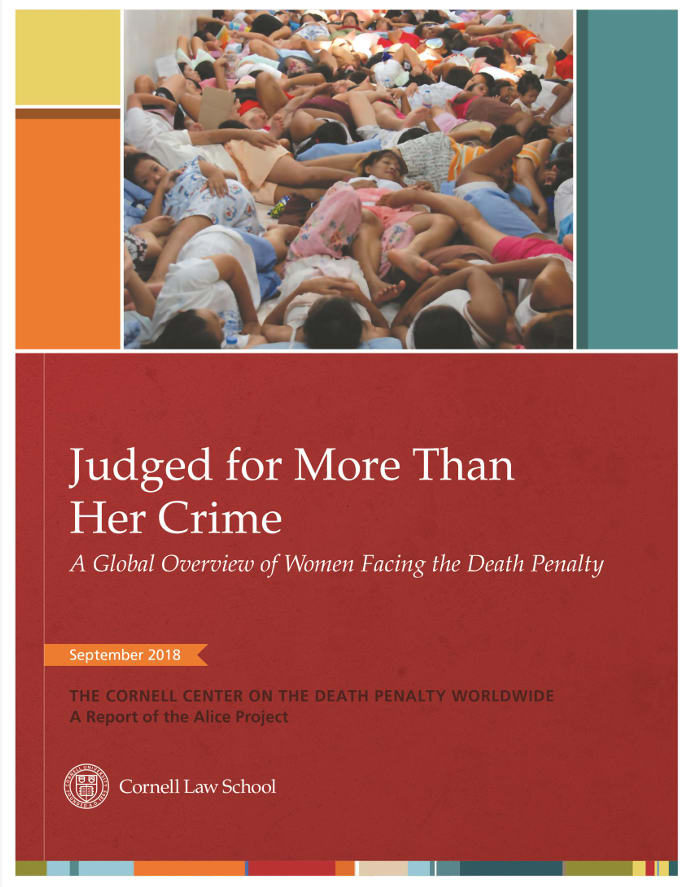 Your support will help us conduct the research and devote the staff time necessary towards publishing a follow up to our 2018 report, which remains the only global report on women facing executionOur work focuses on women and gender-diverse clients, but the victories we win are beneficial to all incarcerated people as we work to bring equality and fairness into deeply flawed systems. We fight for universal global abolition of the death penalty. With your support, all this work can continue. There is a dire need for our work and in the coming months, we hope to secure enough support to produce an updated global report on women facing the death penalty. This updated report builds on our work in Judged for More than Her Crime, which remains the only study on women facing capital punishment globally.
Our Work in 2026
2026 has been a busy and challenging year for CCDPW. We fought against capital punishment both on the individual case level and on the international stage. Our small but mighty team contributed to UN reports, lodged complaints with international actors like the Inter-American Court of Human Rights and continued our efforts to publish practical guidance for advocates in the field.
Ultimately, Christa was denied clemency by Tennessee Governor Bill Lee. What
happened next has become international news and has spurred important
conversations around capital punishment. Christa suffered hours of torture after being
given two fatal doses of pentobarbital that failed to kill her in what has come to be
known as one of the worst botched executions in US history. Her case has helped
expose the barbaric reality that there is no humane way to carry out a state-sponsored
execution.
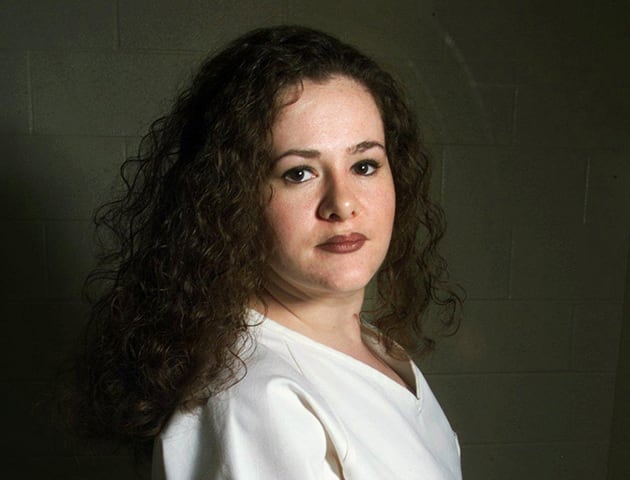
We do not know what is next for Christa and the legal battle ahead. What we do know is
that her story is emblematic of so many women facing capital punishment. It’s a story of
the failure of governments to protect women from harm, and the failure of the criminal
legal system to take into account the ways in which that harm is critical to understanding
women’s pathways to prison.
Capital Punishment is an Affront to Human Rights
Women are sentenced to death for killing their abusers after lifetimes of gender-based violence in courts across the world. A study by CCDPW researchers found that at least 96% of the women on death row in the United States had survived at least one form of gender-based violence. In places like Tanzania, women are sentenced to death even when acting in self defense because the penal code makes the death penalty mandatory for murder. In Uganda, women, LGBTQIA+ folks, and trans individuals are given death sentences for consensual same sex relationships under the anti-homosexuality act. In Iran, women are being executed for standing up for basic human rights. While these contexts and judicial systems vary, the thread that unites them is the incompatibility of capital punishment to exist in societies that truly value freedom, the possibility of rehabilitation, and human rights.
If we want to make global abolition a reality, it’s imperative we understand the stories, lives, and experiences of the most marginalized members of the global death row population, people who until now have been left out of the broader advocacy movements challenging capital punishment.
To tackle this complex issue, we are training capital defense lawyers, conducting research to enlighten policy makers and courts, and working directly with women and gender diverse individuals to tell their stories.
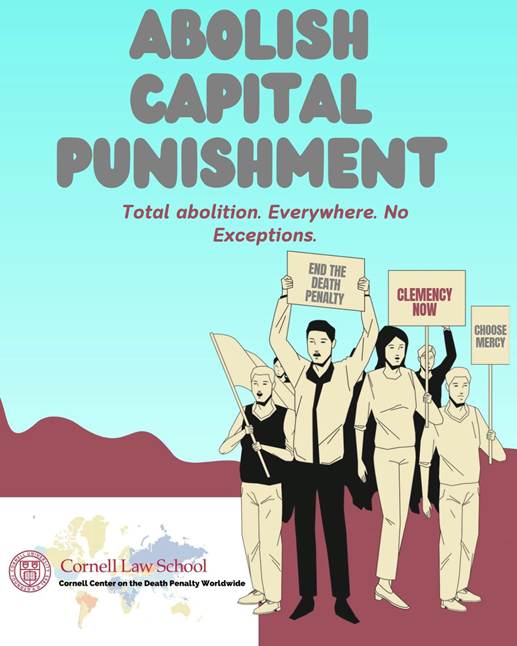
We need your help to get marginalized people at risk of execution the justice they deserve. Join us in this struggle and support our efforts to eradicate capital punishment forever. Together, we can uplift human dignity and make state execution a relic of the past.
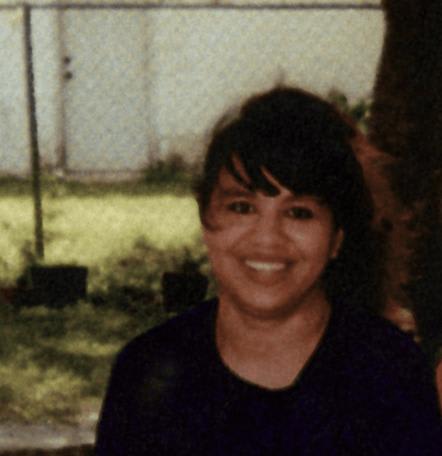
CCDPW was part of the legal team that helped save Melissa Lucio an innocent woman on death row in Texas, from execution in April 2022. We continue to fight for her release. Despite the fact that a court found her to be actually innocent and recommended her sentence be overturned, in September 2026 the Texas Court of Criminal Appeals denied her relief. We refuse to give up fighting for Melissa, and we hope you will join us in fighting for her freedom.
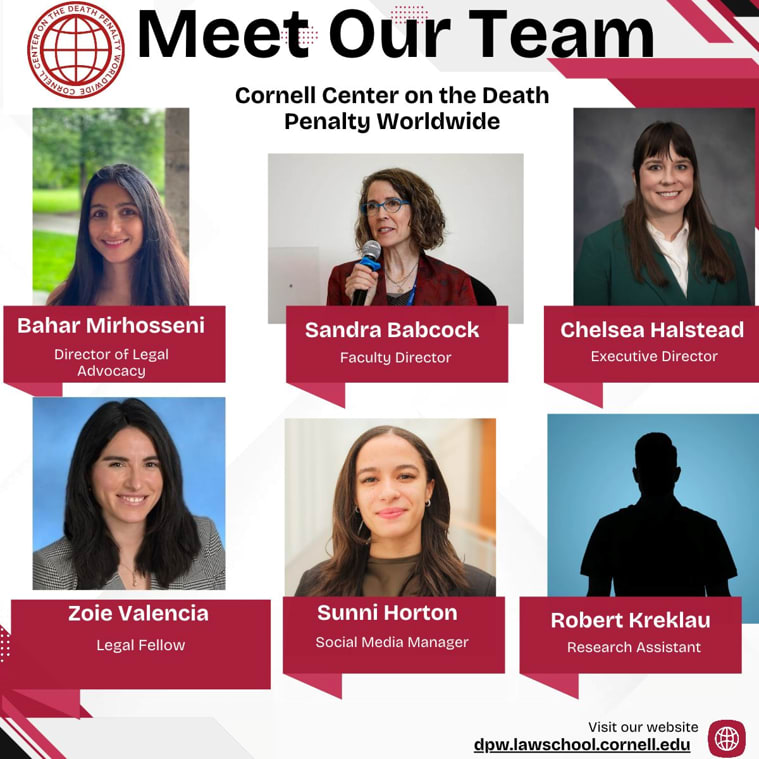
As a registered student organization, we are committed to equal access to all of our programs and do not discriminate based on any protected identity status.
$25
Research
Our research will lead to further thematic reports exploring the intersection between gender and the death penalty.
$50
Advocacy
Building a movement lies at the heart of our advocacy to promote the rights of women and gender non-conforming people facing a sentence of death.
$150
Training
In order to build a movement for positive change, it is critical that advocates educate stakeholders on issues of gender and intersectional discrimination.
$300
Save lives
Your donation saves lives. The Cornell Center on the Death Penalty Worldwide produces groundbreaking research on capital punishment around the world, advocates on behalf of the most vulnerable prisoners, and trains attorneys to represent indigent people facing capital charges.
$1,000
Achieve
Since the Center’s launch, our work has saved lives and helped to achieve justice.