


Description
Our story
Students at Cornell's Space Systems Design Studio are building spacecraft, rockets, and other technologies to make space exploration more accessible! From tiny ChipSats to experimental light sails, our team gives students the opportunity to design, build, test, and fly real space hardware.
Our lab has over two decades of experience designing and developing small spacecraft, with projects spanning autonomous rendezvous and docking (PAN), water-based propulsion (Cislunar Explorers), high-agility attitude control (Violet), and precision spacecraft navigation (CUSat).
More recently, our Alpha CubeSat mission successfully deployed a free-flying light sail, demonstrating technology that could one day pave the way for interstellar exploration. Alongside another light-sail experiment aboard the International Space Station, these projects marked two successful launches in 2025! Building on these successes, we're already looking ahead to the next chapter of the Alpha program.
Our team brings together NASA scientists, industry mentors, and, of course, Cornell students! We work across disciplines to turn ideas into working hardware, giving students hands-on experience with every stage of a mission, from early design to launch and operations.
Your donation helps us purchase components, build prototypes, conduct tests, and launch student-designed hardware. With your support, we can continue developing new technologies, training the next generation of engineers, and working toward future missions to the Moon, Mars, and beyond!
The DeSCENT ChipSat mission!
DeSCENT is our next major step in demonstrating what ChipSats can do! This mission plans to release 100 palm-sized spacecraft from approximately 100 kilometers above Earth. Working with the Johns Hopkins Applied Physics Laboratory, our student team is preparing to deploy these tiny spacecraft near the edge of space, where they will independently collect and transmit data as they fall through the atmosphere. The goal is to demonstrate how large groups of inexpensive spacecraft can be used to study Earth's atmosphere, with future applications in planetary exploration! DeSCENT concept of operations and logo
Each ChipSat is a fully independent spacecraft built onto a circuit board measuring just five by six centimeters! Despite their small size, they carry GPS receivers, motion and environmental sensors, radios, batteries, and solar cells. By tracking all 100 spacecraft simultaneously, we hope to better understand how small objects tumble and disperse through the atmosphere, while demonstrating a new approach to distributed atmospheric sensing.
 ChipSat artistic impressions
DeSCENT also features several technology demonstrations. Our updated ChipSats combine rechargeable batteries with solar power, allowing them to continue operating while tumbling and after landing. We've already demonstrated long-range radio communications over approximately 200 kilometers during high-altitude balloon testing! We're also developing a mechanical deployment system that can release all 100 ChipSats, along with a network of ground stations to receive their transmissions.
Our students are now working toward flight readiness, assembling and testing the ChipSats, refining the deployment system, and preparing for mission operations. Your donations will help us manufacture flight hardware, purchase electronic components, expand our ground station capabilities, and conduct the testing needed to bring DeSCENT to flight!
ASCENT: Launching our ChipSats to new heights!
Before we can study how ChipSats behave during descent, we need a way to get them into the sky. ASCENT is a student-built rocket designed to carry ChipSats to high altitudes and release them during flight. This lets us study how they descend and test their communication and sensing systems in real-world conditions.
To accomplish this, our team has developed the rocket's propulsion system, lightweight structure, and parachute recovery system, and has completed cold-flow and hot-fire tests. Our first rocket reached 4,280 feet, and our next rocket is designed to reach over 6,000 feet.
With your support, we can continue building and testing ASCENT and move closer to future ChipSat drop tests.
 ASCENT field test
CreSCENT: Taking ChipSat recovery to new heights!
One of our biggest challenges is finding ChipSats after they land. These small spacecraft can end up in hard-to-reach areas, where trees and terrain block their radio signals from reaching our ground station.
CreSCENT is our new drone designed to solve this problem. Equipped with radio receivers and transmitters, the drone will fly above obstacles to get a clear signal from landed ChipSats, receive their GPS coordinates, and relay that information back to our ground station. This will help our team locate and recover ChipSats for analysis and future experiments.
We are currently developing and testing CreSCENT's communication system. Your donations will help us buy electronic components, install communication hardware on the drone, and run flight tests.
 CreSCENT field test
Impact
These missions are largely undergraduate-led and provide many of our members with their first engineering experience. For all of us, this is the first spacecraft we’ve ever had the chance to build.
Contributing to SSDS flight projects does more than launch a spacecraft—it’s also launched the careers of nearly 100 alumni. Students have secured internships and jobs in the space industry with the experience they developed here at SSDS.
By supporting our projects, you're investing in the next generation of engineers and the technologies that will shape the future of space exploration.
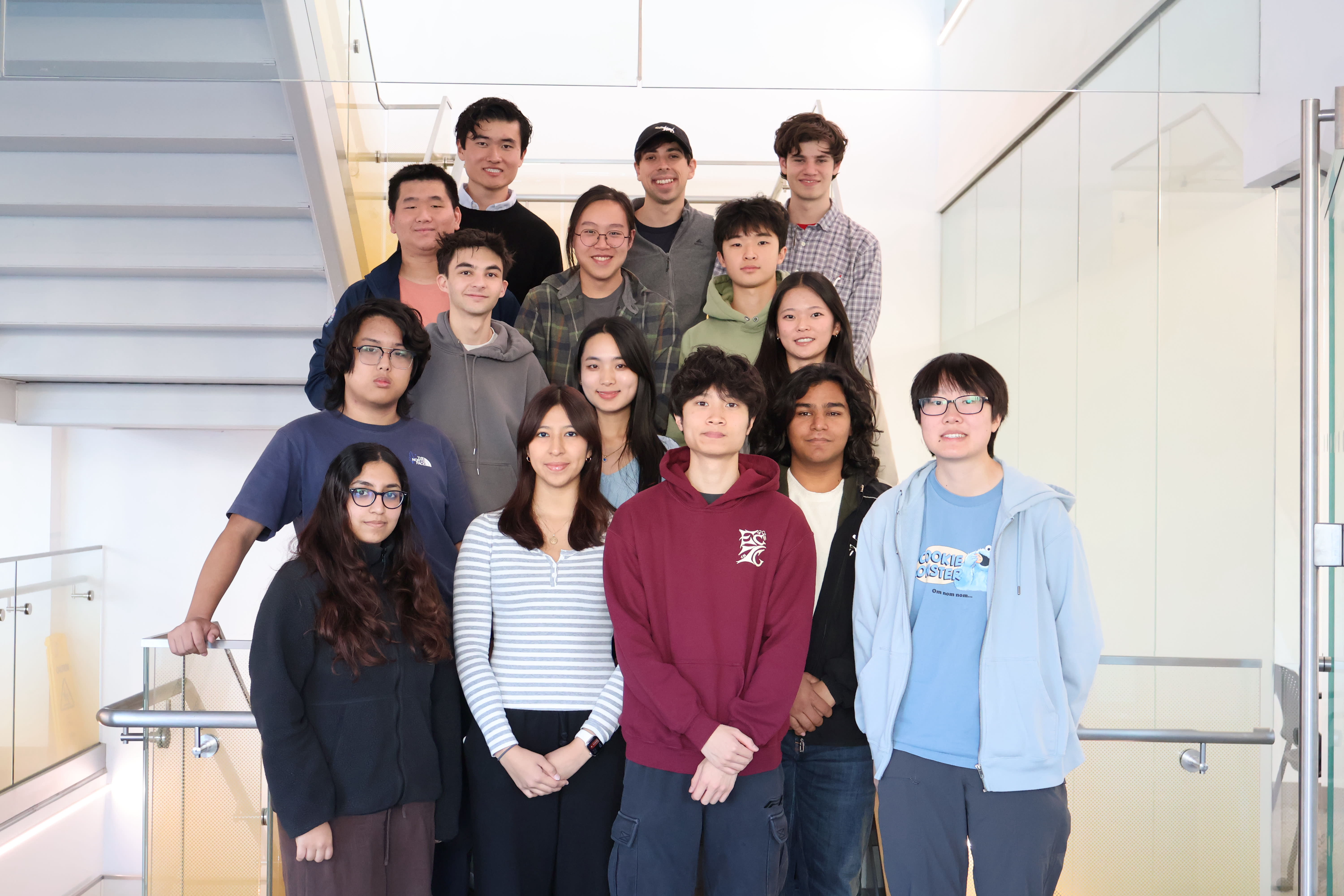 SSDS Flight Projects - Fall 2026 team photo!
We sincerely appreciate any contributions you can make to bring our project to fruition!
Help us build the future of space exploration, one spacecraft at a time.
As a registered student organization, we are committed to equal access to all of our programs and do not discriminate based on any protected identity status.
$10
Soldering Supplies
Your donation will help us purchase soldering supplies and electronic components to assemble our student-designed hardware! These materials allow students to build, repair, and test the electronics used across our ChipSat, rocket, and drone projects!
$25
3D Printer Supplies
Your donation will support the fabrication of custom 3D-printed parts for our ChipSats, rockets, and drones! Students will design and manufacture these components to prototype new systems and prepare our hardware for flight!
$50
ChipSat Circuit Boards
Your donation will allow us to prototype student-designed circuit boards for our DeSCENT ChipSats and other flight hardware! Students will solder, test, and improve these designs as we prepare our systems for flight!
$100
Build a ChipSat
Your donation will help us build the miniature satellites for our DeSCENT mission! These student-designed ChipSats will collect and transmit data as they descend through Earth's atmosphere after being released from a Blue Origin New Shepard rocket!
$150
ChipSat Ground Station
Your donation will help us build ground stations to receive data from our ChipSats during flight! Students will develop and test antennas, radios, and software to track and communicate with our satellites as they descend toward Earth!
$250
Drone Flight Testing
Your donation will support our drone flight testing program, allowing students to test ChipSat hardware and communications systems in real flight conditions! These experiments help us identify problems and improve our designs before the DeSCENT mission!
$500
ASCENT Rocket Flight Testing
Your donation will support the development and flight testing of ASCENT, our student-designed rocket! Students will build and test the rocket's avionics, sensors, and communications systems, gaining valuable experience while developing flight-testing capabilities for our ChipSat research!