


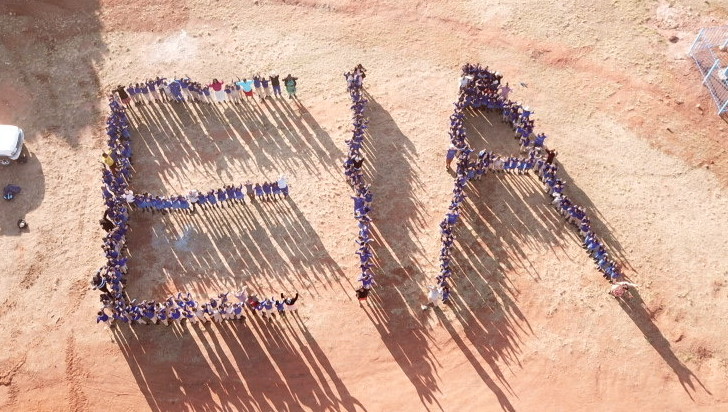


Description
For more updates, follow us on Instagram @cornell_eia, visit our website eia.engineering.cornell.edu, join our newsletter, or email us at eiacornelluniversity@gmail.com!
WHO WE ARE
Rural isolation, or the inability to access essential resources such as hospitals, schools, and markets due to geographic barriers, directly contributes to global poverty. Lack of access to consistent and clean water directly contributes to global health disparities, and in the school setting, decreases attendance and performance. The mission of Engineers in Action (EIA) and our University Chapter is to help rurally isolated communities gain access to these essential resources with sustainable infrastructure, by harnessing local expertise and global partnerships. In addition to the physical bridges, we hope to inspire meaningful intercultural and intergenerational exchange. By living with a host family inside the towns we are working with and for, our team gets a truly immersive experience in global development and makes lifelong friendships with people across the globe.
The Cornell University Chapter of Engineers in Action is a student-run project team with the College of Engineering that works with the non-for-profit organization Engineers in Action to design and build pedestrian footbridges, WASH systems, and suspension bridges for rurally isolated communities. We operate with four subteams; Bridge Engineering, WASH Engineering, Business, and Cultural; and each one is critical to the success of our organization in building critical infrastructure, engaging with mentors and community members, and educating the next generation of changemakers.

SUMMER 2026 PROJECTS
This past summer of 2026, our team took on two projects: a WASH system at Manyovu and a suspension bridge at Manzimbongolo. The WASH team sent 6 students, in collaboration with 2 students from Western University, to Eswatini for 8 weeks to turn our design into reality. The system will provide clean, consistently available water to ~225 students, teachers, and staff, improving public health outcomes through a solar-powered well with a 20,000-liter storage and distribution capacity.
The Bridge team sent 7 students to Eswatini for 8 weeks to construct a suspension bridge over the Meleti River connecting the KuboNgwenya and Eplasteni communities. The Manzimbongolo Suspension Bridge provides access to nearby primary schools and the Ngowane high school, markets, health clinics, and public transportation, safely linking residents who previously had no safe crossing. Before the Manzimbongolo Bridge, there wasn't a bridge in place and community members would cross on rocks, with the floods during the wet season making it impossible to cross for days. The bridge spans 56.3 meters and serves an estimated 1,800 people, including 700 children, in the surrounding area.

SUMMER 2025 PROJECTS
This past summer of 2025, our team took on two projects: a WASH system at Herefords Primary School and a suspension bridge at Hlanganani. The WASH team sent six students, in collaboration with six students from Duke University, to Eswatini for eight weeks to turn our design into reality. The system will provide clean, consistently available water to 300 students, teachers, and staff, improving public health outcomes through a solar-powered well with a 10,000 liter storage and distribution capacity.
The bridge team sent eight students, in partnership with students from University College London and the University of Southern Indiana, to Eswatini, also for eight weeks. This was EIA's pilot student-led suspension bridge project, and it will help thousands of community members gain access to towns, schools, and neighboring communities, especially during the rainy season when crossing the river is dangerous. Compared to the suspended bridges we had built in the past, these bridges provide greater clearance over the water level, and will allow us to meet the needs of a wider range of sites. Suspension bridges are more technically challenging to design and construct, and have given our team an opportunity to learn new skills.

Your impact
Your contribution enables us to design and build durable bridges and water systems that meet the rigorous demands of the communities we serve. With our sponsors' support, we have been able to design, test, and construct our projects with precision and care. Beyond giving students invaluable hands-on technical experience, the challenges we’ve encountered in the field have driven us to continuously improve our designs and approach.
Your support is essential to Cornell Engineers in Action's ongoing success. It helps us cultivate the next generation of engineers and brings us closer to achieving our ultimate goal: reaching even more communities across Eswatini with the clean water and safe passage they need.
As a registered student organization, we are committed to equal access to all of our programs and do not discriminate based on any protected identity status.
$10
Nuts and bolts
These will help attach deck boards to the cable crossbeams, making it possible to walk across the bridge!
$30
Personal protective equipment
Covers the cost of a hard hat, gloves, and safety glasses for one team member!
$200
Pipes
Covers part of the cost of the pipes needed for the water and hygiene sanitation units. This will include 100m of small pipe and 100m of mainline pipe.
$500
Accomodations
Covers the cost of one traveler to stay with a local family for eight weeks.
$1,000
Storage tank
Covers the cost of one of the storage tank needed for our WASH system! These tanks will be able to store 10,000L of water which will hold the clean water to provide to the communities.
$2,000
Flight to Eswatini
Covers the approximate cost of flights to send one student builder to Eswatini.